The recent summit between US President Joe Biden and Chinese leader Xi Jinping in Washington drew widespread skepticism, with many dismissing it as diplomatic theater. Yet beneath the surface, one outcome deserves closer attention: the possibility that it has kept alive the prospect of renewed dialogue between Washington and Pyongyang. North Korea was, after all, a topic of discussion between the two leaders, even if the details remain undisclosed.
What is telling is what was absent from the summit's public statements. Unlike the May meeting between Biden and Xi, there was no explicit reference to "North Korean denuclearization." That omission is significant. It suggests a growing recognition that the elusive goal of complete denuclearization may no longer be the only viable starting point for negotiations. Instead, a more practical approach—beginning with a revival of US-North Korea talks—could offer a way out of the current impasse, which has persisted since the failed 2019 Trump-Kim summit in Hanoi. China, for its part, has little reason to oppose such a development.
A Phased Approach from Seoul
Another potential opening comes from South Korea's President Lee Jae-myung, who has proposed a phased strategy to address the North Korean nuclear issue. In his address to the UN General Assembly, Lee outlined a three-step process: first, halt further advances in North Korea's nuclear and missile capabilities; second, achieve reductions over the medium term; and finally, reach the ultimate goal of a nuclear-free Korean Peninsula. Earlier, Lee had floated a trade-off, suggesting that some sanctions could be eased in exchange for a freeze on further nuclear development.
For South Korea, a primary stakeholder in this issue, prioritizing a halt to further nuclear development before pursuing full denuclearization is a pragmatic proposition. It sets a realistic baseline for what both Washington and Pyongyang might expect from negotiations, easing the political burden on both leaders while creating a workable point of contact for restarting talks.
The Window for Halting North Korea's Nuclear Buildup
Whether US-North Korea dialogue resumes now ultimately depends on Kim Jong Un's strategic calculations. But Pyongyang cannot simply dismiss the diplomatic opening before it. If North Korea continues to advance its nuclear and missile programs, deterrence efforts by South Korea, the United States, and Japan will inevitably intensify. Nor is it realistic to assume that cooperation with Russia alone can offset those strategic pressures.
If Kim passes up yet another opportunity for dialogue, the security burden North Korea will have to bear may ultimately outweigh whatever strategic gains it expects to make. It would be a mistake to regard cooperation with Russia as a permanent safeguard that can substitute for dialogue with the United States. The choices Pyongyang makes now could leave it with even fewer diplomatic options later.
Recent statements from Pyongyang have been uncompromising. In a Foreign Ministry memorandum, North Korea again described its nuclear forces as a means of guaranteeing national security. Vice Foreign Minister Kim Son Gyong went further in his address to the UN General Assembly, declaring that the country's status as a nuclear-armed state had been "permanently fixed both physically and legally," effectively dismissing the prospect of denuclearization.
On the face of it, North Korea may appear to be using its advancing nuclear and missile capabilities to gain leverage and draw strategic concessions from surrounding countries. But the deadlock will not be broken by treating denuclearization and recognition of North Korea as a nuclear-armed state as the only two choices. With Pyongyang expanding its nuclear capabilities and hardening its rejection of denuclearization, insisting that the ultimate goal must also be the sole precondition for negotiations risks pushing the situation deeper into a quagmire—and potentially inviting a catastrophic crisis.
This is where a halt to further nuclear development becomes relevant. It can serve as a practical intermediate step between the ultimate goal of denuclearization and the immediate need to manage the nuclear threat. The point is not to recognize North Korea as a nuclear-armed state. It is to stop the further expansion of its nuclear and missile capabilities first, and from there create room for dialogue and negotiation. Keeping denuclearization as the ultimate objective while dealing first with the threat at hand offers a realistic starting point for reviving US-North Korea negotiations after years of paralysis.
The Deeper the Chill, the Greater the Opening for Peace
Diplomacy has its paradoxes. The most severe moments of crisis can also open the way to negotiation and reconciliation. Amid intense strategic competition between the United States and China, the two countries need strategic coordination to curb further advances in North Korea's nuclear capabilities if they are to reduce tensions on the Korean Peninsula and institutionalize the principle of "common security."
North Korea was discussed at the latest US-China summit. What matters now is whether that discussion can be turned into real momentum for reopening dialogue with Pyongyang. South Korea has an important role to play as well. President Lee's phased approach at the UN General Assembly—halt, reduction, and denuclearization—now needs to be developed into a more concrete diplomatic framework. What exactly would a halt cover? What reciprocal measures would follow North Korean steps? And how would compliance be verified? These questions require workable answers. Without them, a halt to further nuclear development will remain a declaratory goal rather than become a realistic starting point for renewed US-North Korea dialogue.
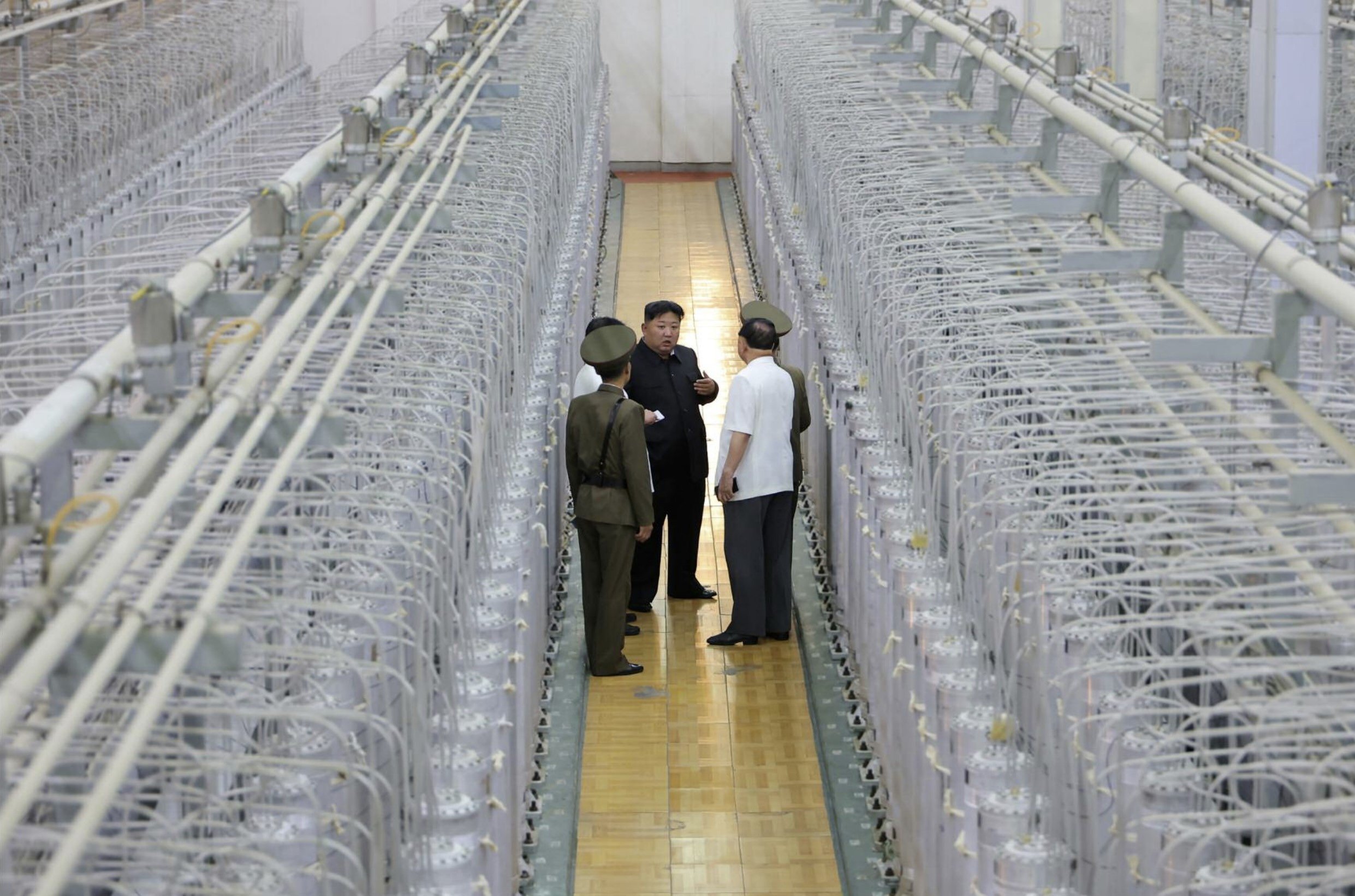
The United States and China—and Russia as well—have little justification for standing by as North Korea continues to expand its nuclear capabilities unchecked. Breaking the deadlock will ultimately require a willingness to engage with Pyongyang on its own terms, even as the international community maintains pressure. The alternative is a continued escalation that serves no one's interests. As North Korea's recent missile tests demonstrate, the threat is not static. And as reports of North Korean workers at Russian drone plants suggest, the regime's cooperation with Moscow is deepening. These developments underscore the urgency of finding a practical path forward.