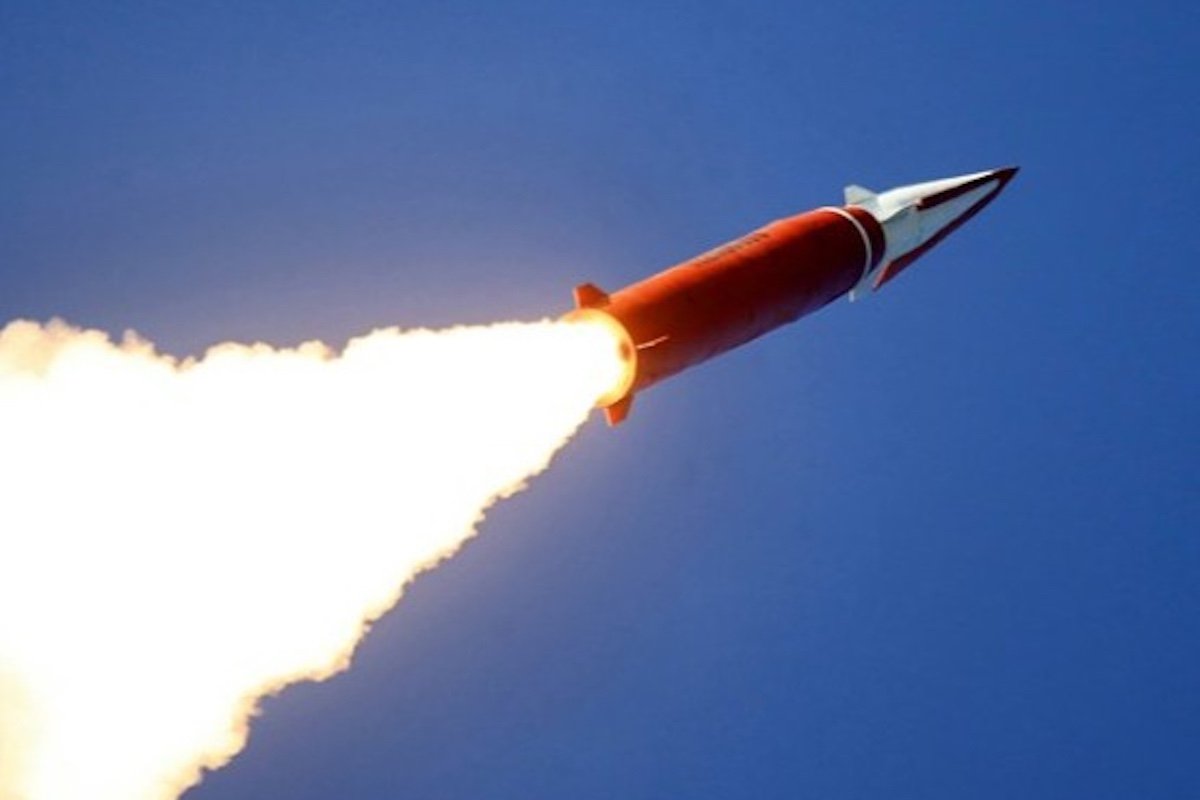
North Korea's latest hypersonic missile test is more than a display of military prowess—it is a pointed message to Japan as Tokyo reconsiders its long-standing nuclear taboos. The launch, overseen by leader Kim Jong Un from the eastern coastal city of Wonsan, showcased a weapon designed to pierce regional missile shields and complicate diplomatic overtures from Washington and Seoul.
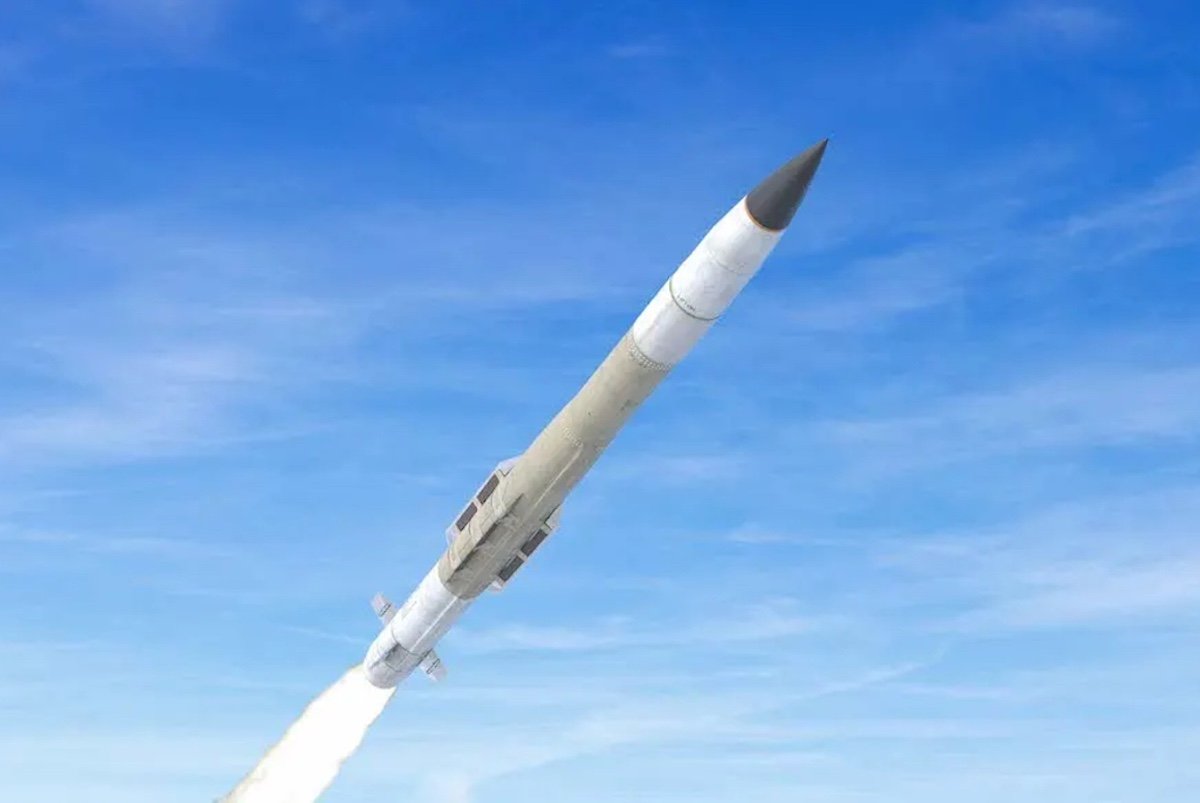
According to state media, the Hwasongpho-11Ma-1 is a short-range ballistic missile (SRBM) paired with a dart-like hypersonic glide vehicle (HGV) that maneuvers at low altitudes to evade interceptors. South Korean and Japanese defense officials tracked two missiles flying 440 to 600 kilometers into the Sea of Japan, reaching altitudes of 60 to 70 kilometers before landing outside Japan's exclusive economic zone.
Kim, accompanied by his daughter Kim Ju Ae, described the weapon as an “irresistible force” that would inflict an “incurable headache” on adversaries. The test comes amid North Korea's deepening military cooperation with Russia and follows diplomatic overtures at the UN General Assembly, where the US and South Korea sought dialogue without preconditions.
A weapon aimed at Japan's nuclear debate
The Hwasongpho-11Ma-1 is not just a conventional precision-strike asset. Its strategic value lies in its potential as a regional nuclear delivery system, where even a single warhead penetrating theater defenses could devastate critical infrastructure. This capability is a direct counter to Japan's evolving defense posture, which includes debates over nuclear-powered submarines and reluctance to reaffirm its Three Non-Nuclear Principles.
North Korea is not acting alone. Its hypersonic missile signaling serves as a proxy warning for China and Russia, both of which view Japan's nuclear discussions as a threat to the regional balance of power. While Beijing applies diplomatic pressure and Moscow deepens its alignment with Pyongyang, it is North Korea that fires the tangible warning shot.
The missile's design reflects a broader push to accelerate SRBM production and miniaturize nuclear warheads. An August 2024 report by the International Institute for Strategic Studies (IISS) highlighted the delivery of 250 transporter-erector-launchers (TELs) for the Hwasong-11D SRBM, capable of carrying up to 1,000 projectiles. Analyst Zuzanna Gwadera noted that North Korea aims to pair these mobile launchers with miniaturized Hwasan-31 warheads under its centralized “Nuclear Trigger” command framework, designed to overwhelm South Korean and US missile defenses with mass salvo strikes.
Production capacity is expanding rapidly. Vann Van Diepen, writing for 38 North in July 2026, reported that Kim Jong Un ordered a 2.5-fold increase in ballistic and cruise missile production over five years, with dozens of KN-23 SRBM bodies awaiting completion. The wars in Ukraine and the Middle East have provided impetus for higher output, but Van Diepen cautioned that stockpiling missiles for domestic war plans while supplying Russia's battlefield needs creates a severe industrial balancing act.
North Korea's nuclear fuel production is also accelerating. The Chosun Daily reported that a second uranium enrichment facility at the Yongbyon complex is now operational, capable of producing 85 kilograms of highly enriched uranium annually—enough for three to four additional warheads. Combined with enrichment at Kangson and Kusong and ongoing plutonium reprocessing, Pyongyang's fissile material stockpile is growing steadily.
For Japan, the message is clear: any move toward nuclear armament will be met with an asymmetric response. As Tokyo debates its defense options, North Korea's hypersonic test serves as a reminder that the region's security dynamics are shifting, with implications that extend far beyond the Korean Peninsula. The development also raises concerns about North Korean workers at Russian drone plants, which could further blur the lines between conventional and nuclear proliferation.
While South Korea and the US continue to seek dialogue, Pyongyang's actions suggest it is betting on military deterrence over diplomacy. The Hwasongpho-11Ma-1 is not just a weapon—it is a statement of intent, aimed at reshaping the strategic calculus in Northeast Asia.