The resignation of Nvidia CEO Jensen Huang has sent shockwaves through the global technology industry, but it has also resurrected a centuries-old espionage concept: the 'beauty stratagem.' Huang stepped down on Nov. 12, 2026, after acknowledging an affair with Alice Huang, a Singapore-based executive suspected of ties to Chinese intelligence. A second alleged relationship with a subordinate at Nvidia added to the pressure on the board.
Huang's departure is not merely a corporate scandal. As artificial intelligence becomes central to national security, the case has escalated into an international incident. China's Foreign Ministry has denied the espionage allegations, accusing Washington of 'fabricating so-called spy narratives' to justify a technological blockade. Nvidia, for its part, says it has no evidence that company secrets were leaked.
Yet the plausibility of the accusations rests on a long history of personal relationships being weaponized in espionage. In China, this tactic is known as meiren ji, or the 'beauty stratagem,' one of the Thirty-Six Stratagems, a military treatise dating back to the Warring States period (475–221 BCE). The 31st stratagem advises exploiting an adversary's desires and emotional vulnerabilities to weaken their judgment.
Ancient roots, modern relevance
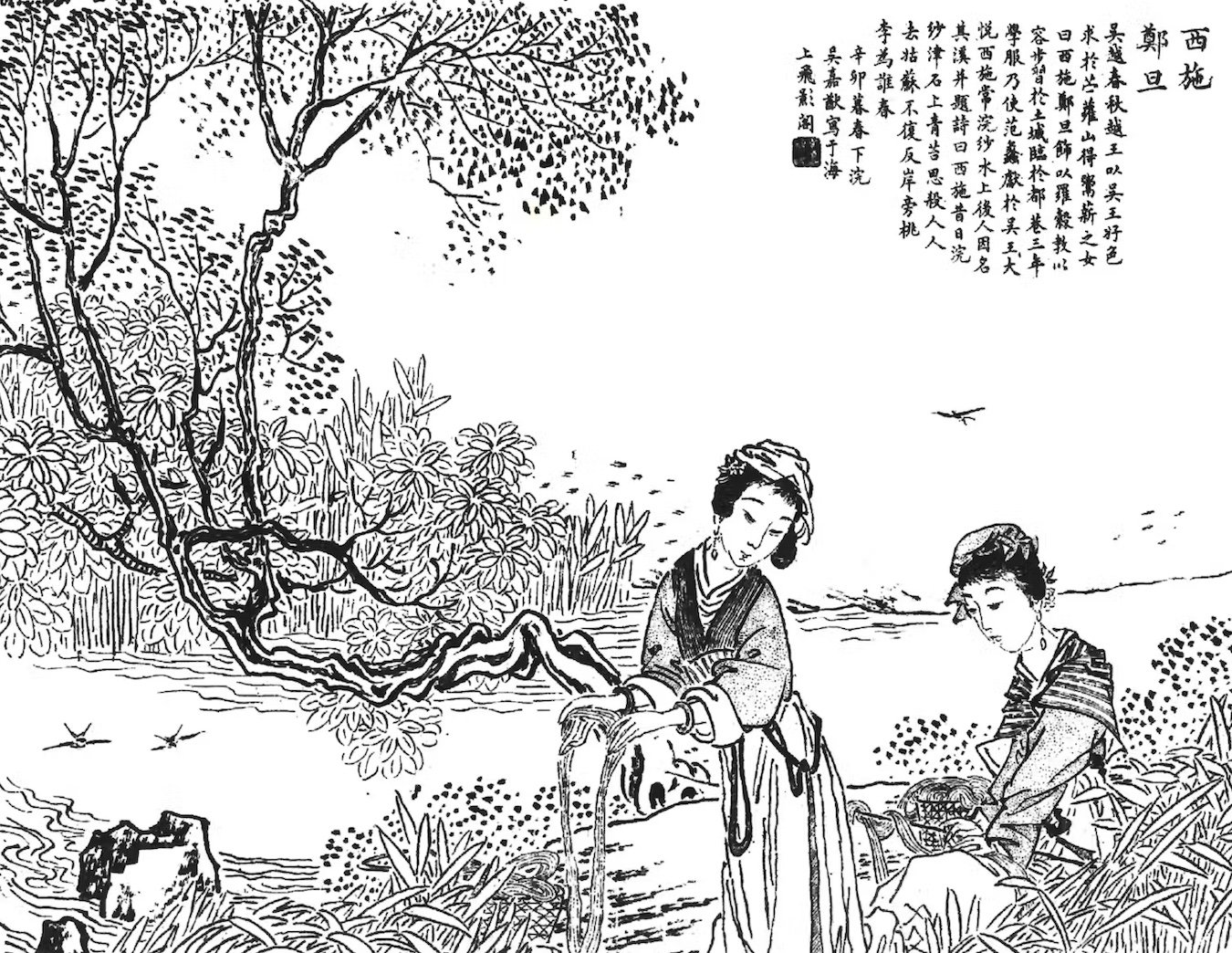
The classic example is King Goujian of Yue, who, after defeat by King Fuchai of Wu in the fifth century BCE, sent two beautiful women, Xi Shi and Zheng Dan, to distract his rival. Fuchai's infatuation allegedly led him to neglect state affairs, allowing Goujian to conquer Wu in 473 BCE. While historians debate Xi Shi's actual role, the story illustrates a core principle: exploiting personal weaknesses can be more effective than direct confrontation.
The tactic recurs in Chinese literature, notably in the 14th-century novel Romance of the Three Kingdoms, where the court official Wang Yun uses the beautiful Diaochan to sow jealousy between the warlord Dong Zhuo and his adopted son, Lü Bu, ultimately leading to Dong Zhuo's assassination.
In modern times, 'honey traps' have been employed by intelligence agencies worldwide, not just China. The Cold War saw numerous cases, and China has its own documented examples. French diplomat Bernard Boursicot passed documents to China after a long intimate relationship with opera performer Shi Pei Pu, leading to espionage convictions in the 1980s. More recently, former US Representative Eric Swalwell acknowledged a physical relationship with Christine Fang, a suspected Chinese operative who also helped fund his campaign.
Jensen Huang's strategic importance cannot be overstated. Nvidia dominates the market for AI chips, which are critical for military applications and technological supremacy. The US has imposed export controls to limit China's access to these chips, and the scandal could further complicate China's AI ambitions. The timing is particularly sensitive as Washington and Beijing compete fiercely in semiconductors and AI.
Whether Huang was actually compromised remains unclear. But the case has revived debate about the enduring allure of sexpionage in great-power competition. As one scholar of US-China relations noted, the political logic behind the beauty stratagem—using personal relationships to obtain information, influence decisions, and weaken opponents—remains as relevant today as it was 2,500 years ago.
For now, Nvidia faces the challenge of replacing a visionary leader while reassuring investors and governments that its technology remains secure. The affair may cost the company billions in market value and trust, as analysts have warned. But the broader lesson is that in the high-stakes world of AI, personal vulnerabilities can become national security liabilities.