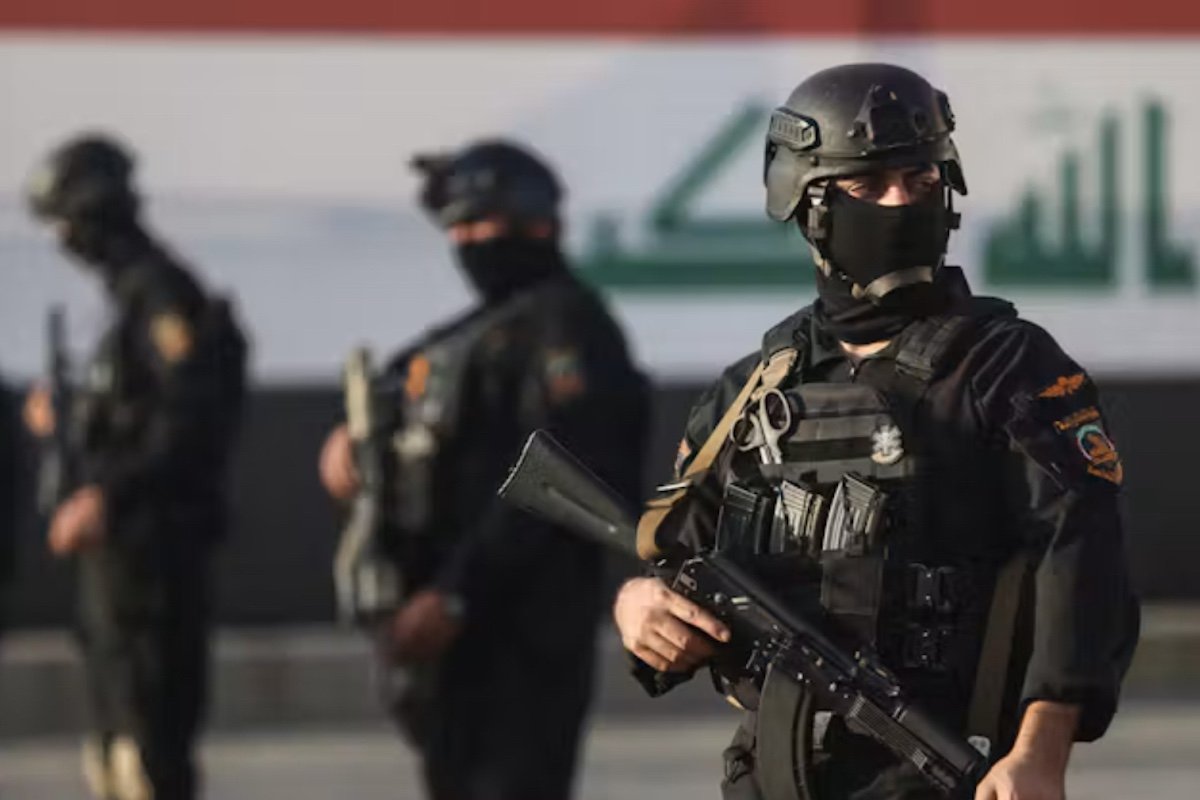
Iraq marked its Sovereignty Day on September 30, 2026, with a four-day national holiday celebrating the departure of US-led international forces. American troops, the largest contingent, had been in the country since 2014 as part of an 87-member coalition providing military and intelligence support. Their exit was widely seen as a crucial step toward Iraq's full sovereignty.
The same date was meant to herald another milestone: the establishment of a "state monopoly" on arms, aimed at curbing Iranian-backed militias that have proliferated since the 2003 US invasion. But the Iraqi government missed that target, pushing the deadline to June 2027. As an expert on Iraqi politics and security, I believe this initial delay signals a deeper problem: Washington and Baghdad are fundamentally at odds over what disarmament should look like.
Two visions of control
In early November 2026, President Donald Trump reportedly warned Iraqi Prime Minister Ali al-Zaidi of consequences—financial penalties or direct strikes—if disarmament did not proceed. But the two governments have very different ideas. For Baghdad, a "state monopoly" means pulling armed groups under the umbrella of the Popular Mobilization Forces (PMF), a state-sponsored network of militias. Washington, however, envisions demilitarization and a likely restructuring of the PMF itself.
This disconnect stems from contrasting views of the Iraqi state. The US, echoing Max Weber's classic definition, sees the state as the sole legitimate holder of armed force. Iraq, by contrast, operates through a decentralized patchwork of security actors, many with ties to Iran and varying degrees of loyalty to Baghdad.
The PMF, formed in 2014 to fight the Islamic State, comprises 60-70 brigades, mostly Shiite but including Sunni and other minorities. It is legally part of Iraq's security apparatus, answerable to the prime minister. Yet some units act independently. Alongside the PMF exist "resistance groups"—ideologically aligned with Tehran, such as the Hezbollah Brigades and al-Nujaba Movement, both tracing roots to the Mahdi Army of 2003. The line between the PMF and these groups is often blurred, with some factions operating in both spheres.
Washington has long protested the presence of these groups. In October 2025, then-US Special Envoy Mark Savaya warned that "there is no place for armed groups operating outside the authority of the Iraqi state." The concern is practical: since US-Iran hostilities erupted in February 2026, Iraqi-based factions have launched hundreds of rocket attacks on American forces, as well as strikes on Gulf infrastructure and Israeli targets. In April, the US criticized Baghdad for failing to prevent such attacks by "Iran-aligned terrorist militia groups."
Prime Minister al-Zaidi also wants an end to these attacks, but his approach is integration, not dismantlement. In October, he announced that three of the five main resistance factions outside the PMF had agreed to surrender their weapons to the state, with negotiations ongoing for the other two. By "state," he means the PMF Commission, the official body that administers the militias.
This incremental approach may not satisfy Washington, which appears to want a more radical overhaul. The US pressure, including threats of financial penalties, risks destabilizing Iraq's fragile political order. Forcing a showdown with Iranian-backed groups could reignite violence and undermine the very sovereignty the US claims to support.
The Iraqi government's delay is not a failure of will but a reflection of complex realities on the ground. A state monopoly on arms cannot be imposed from above; it requires building trust and capacity. Washington's demand, however well-intentioned, misreads the security reality. The path forward lies in patient engagement, not ultimatums. As the region watches, the US and Iraq must find common ground—or risk repeating the mistakes of the past.