Canada's decision to join the Global Combat Air Program (GCAP) as an observer nation underscores a broader strategic challenge facing middle powers in the Indo-Pacific: how to modernize air forces without deepening reliance on any single supplier, while preserving the interoperability that collective defense commitments demand.
Multiple media outlets reported this month that Canadian Defense Minister David McGuinty signed a non-binding agreement with his British, Italian and Japanese counterparts in London, on the sidelines of the Farnborough International Airshow. Under the arrangement, Canada incurs no financial obligations but gains privileged access to governance, capability development and industrial frameworks. Ottawa is expected to contribute flight simulation training technology and testing resources.
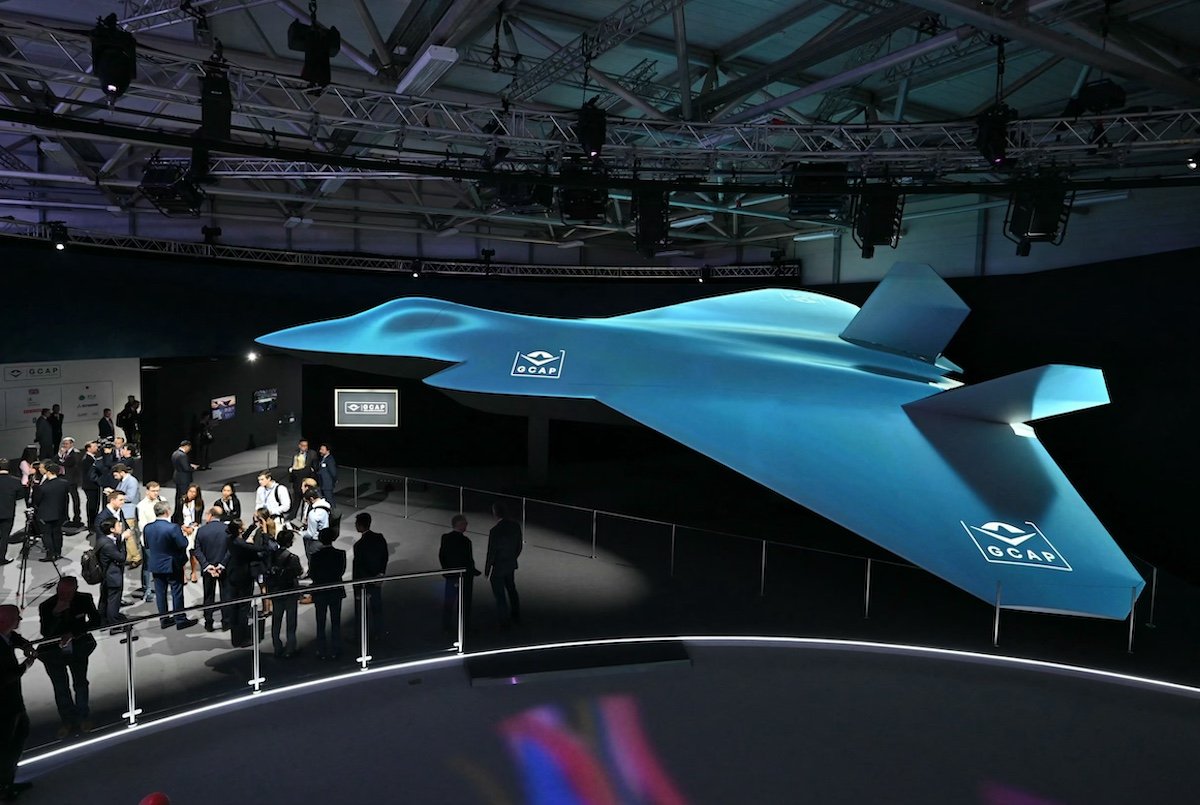
GCAP, led by BAE Systems, Leonardo and Mitsubishi Heavy Industries, aims to field a sixth-generation combat aircraft by 2035, replacing Japan's Mitsubishi F-2 and the Eurofighter Typhoon. The program bridges Euro-Atlantic and Indo-Pacific security priorities while helping allies diversify defense technology away from sole reliance on the United States—a response to heightened geopolitical tensions, including recent joint Russian and Chinese military exercises around Japan.
Canada's fighter procurement dilemma
Shaun McDougall, writing in a Defense Security Monitor article this month, notes that Canada was initially driven by the need to replace its aging CF-18 Hornets, originally due for retirement in 2020. Ottawa named the F-35 the top-ranked bidder in 2022 and finalized an agreement in 2023 to acquire 88 aircraft after extensive procurement delays. However, relations with Washington deteriorated amid trade tariffs and annexation rhetoric from US President Donald Trump, prompting Canadian Prime Minister Mark Carney to review the purchase and consider alternatives such as the Saab Gripen.
Gio Kaikatsishvili, in an April 2026 article for the NATO Association of Canada, outlines the trade-offs. The F-35 excels in alliance interoperability, stealth, intelligence gathering and heavy payload, making it ideal for joint NATO and North American Aerospace Defense Command (NORAD) missions. But it suffers from escalating procurement costs, high hourly operating expenses, modernization delays and US supply chain dependence. The Gripen offers superior suitability for harsh Arctic environments, longer range, a small maintenance footprint, road-landing capability and domestic production that could create 10,000 jobs. Yet it still depends on US-owned Link-16 encryption software for secure communication with NATO allies, maintaining an unavoidable degree of foreign strategic dependency.
Neither option fully resolves Canada's problem, particularly as Chinese and Russian fifth-generation fighters, and China's prospective sixth-generation designs, raise the technological standard Canada's future fleet may have to meet.
GCAP as a strategic hedge
Observer participation in GCAP allows Canada to examine whether a sixth-generation program could offer a more durable alternative without yet committing to finance or purchase the aircraft. Brian Wu, in a Network for Strategic Analyses article this month, argues that joining GCAP provides an unprecedented opportunity to advance Canada's defense sector through collaborative R&D, leveraging domestic strengths in avionics, sensors, radars and flight simulation alongside major defense primes from partner states. He also points out that Canada can supply critical rare earth minerals, reducing allied reliance on China. He stresses that GCAP grants Canada access to cutting-edge "system of systems" sixth-generation fighter technology, which includes AI-enhanced autonomous drones and combat clouds to boost its expeditionary capabilities across Europe and the Indo-Pacific.
The attraction, therefore, lies not simply in acquiring another fighter, but in gaining a role in the technologies, supply chains and industrial partnerships that may shape the next generation of air combat.
Funding and governance risks
However, GCAP's ambitions remain constrained by funding. Justin Bronk argued in an April 2023 Royal United Services Institute (RUSI) article that the program rests on unrealistically optimistic cost estimates. Bronk points out that developing the Eurofighter Typhoon historically cost its partner states roughly US$130 billion, while Reuters reported this month that GCAP funding totals approximately US$11.51 billion over the next four years. Bronk says that without tens of billions in new funding, GCAP risks producing an inferior fighter unable to compete with upgraded F-35 variants backed by US$412 billion in US investment.
Beyond funding concerns, Mark Soo notes in an April 2026 Geopolitical Monitor article that Japan may be wary of expanding GCAP while already facing pressure to meet the program's 2035 delivery target. Soo says that adding members could complicate decision-making by introducing more national priorities that must be reconciled.
For Canada, those funding and governance risks translate into a more immediate problem: even as a future full partner, it may have to wait until at least 2035 for the first aircraft, forcing it to extend the CF-18's service life or procure F-35s and Gripens as interim solutions. Such a mixed fleet could create as many problems as it solves. Christopher Coates says in a June 2026 Macdonald-Laurier Institute (MLI) article that a diverse force would require separate training, sustainment and technical systems, weakening efficiency, interoperability and operational depth.
Diversification, he argues, may ultimately test the limits of Canada's ability to balance sovereignty with the practical demands of alliance warfare. As the yen and won flash a currency risk that global markets are underpricing, and as the Houthi threat to the Bab el-Mandeb Strait risks global inflation, the strategic calculus for middle powers like Canada is becoming ever more complex.