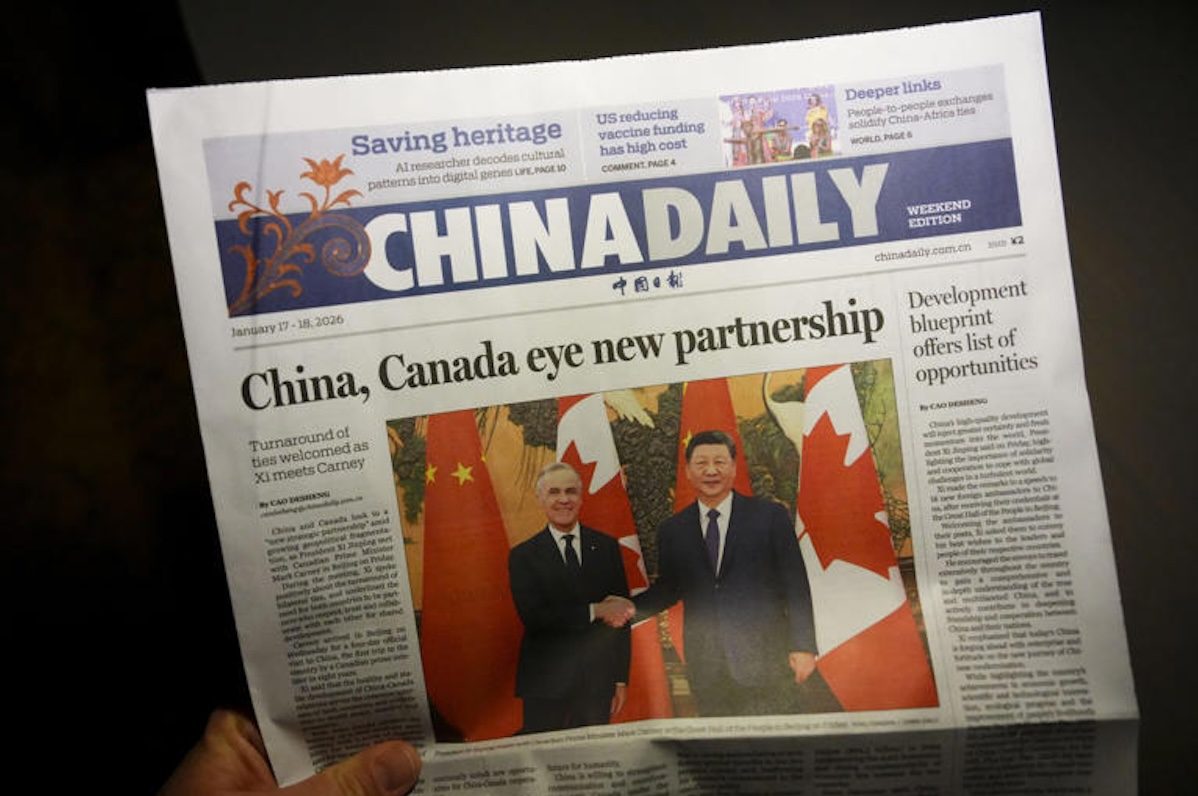
Canada has agreed to slash its 100% tariff on electric vehicle imports from China to 6.1%, replacing the blanket levy with a phased quota system. Starting in 2026, Canada will allow up to 49,000 Chinese EVs annually, rising to 70,000 by 2030. In return, Beijing will reduce tariffs on Canadian canola oil to 15% by March and remove duties on several other goods.
The move marks a notable de-escalation in trade tensions between Ottawa and Beijing, coming amid broader economic uncertainty driven by protectionist US policies. For Canada, the agreement is a strategic pivot: it opens the door to affordable Chinese EVs while reducing reliance on the United States, which absorbs roughly 92% of Canada's auto and auto parts exports.
A Modest Opening with Potential for Growth
The initial quota of 49,000 vehicles represents about 2.5% of Canada's total new vehicle sales in 2025, which hovered just below two million. In global terms, it is a small fraction—equivalent to 2.2% of BYD's estimated 2025 EV sales and 3% of Tesla's. Yet for Canada's struggling EV market, the change could be significant.
After the federal Incentives for Zero-Emission Vehicles program ended in 2025, EV prices rose by 8% to 12%, causing demand to slump. EVs now account for roughly 9% of new vehicle sales, down from 15% in 2024. By granting access to Chinese brands like BYD, Geely, SAIC, Nio, and XPeng—many offering models around CA$30,000—the policy could narrow the affordability gap and revive consumer interest.
China's EV market boasts over 100 brands, and BYD recently overtook Tesla as the world's largest EV maker. Increased competition may pressure incumbents like Tesla and GM to cut prices, further benefiting Canadian consumers.
Diversification Beyond the US
The quota system suggests Ottawa is wary of flooding the domestic market and disrupting local manufacturing. A phased opening gives automakers time to adjust and allows consumers to become familiar with new Chinese brands. The government expects the deal to attract Chinese joint-venture investment, deepening Canada's EV supply chain.
While China is Canada's second-largest trading partner, merchandise exports to China were only CA$29.9 billion in 2024—about 7.3% of exports to the US. The target of increasing exports to China by 50% by 2030 will not fundamentally alter Canada's dependence on its southern neighbor, but it signals a broader strategy to reduce exposure to an increasingly unpredictable partner. As US tariff plans inject volatility into global trade, Canada's move is a hedge against future disruptions.
The deal could also complicate Canada's position in upcoming renegotiations of the Canada-United States-Mexico Agreement. Prime Minister Mark Carney can argue that import volumes are small relative to total sales, while deeper engagement with China modestly strengthens Canada's leverage.
Fiscal and Environmental Benefits
The trade opening supports EV adoption at lower fiscal cost. The Incentives for Zero-Emission Vehicles program cost CA$2.6 billion and supported 546,000 purchases before its funding ran out. When rebates lapsed, annual EV sales fell from 264,000 in 2024 to 191,000 in 2025. Expanding consumer choice through trade may prove more durable than subsidies, especially as Canada faces a growing fiscal deficit.
Lower-cost models should lift demand and strengthen the case for faster charging network expansion. This could help Canada return to its paused mandates of 50% EV sales by 2030 and 100% by 2035.
However, the quota system risks becoming permanent. Tariffs and quotas are often defended by beneficiaries long after their intended purpose. Canada should commit to eliminating the quota by 2030, moving to an open market that benefits consumers and supports environmental goals. The rollback of Canada's tariff wall on Chinese EVs is unusual, precipitated by trade tensions with the US and reciprocal tariffs on canola. Without similar pressure, the quotas could outlive their five-year window.
This agreement also reflects broader shifts in global trade dynamics. As China's industrial overcapacity reshapes global trade, Canada's willingness to engage with Chinese EV makers signals a pragmatic approach to diversification. For Asian economies watching closely, the deal underscores how trade tensions with the US are driving new alignments across the Indo-Pacific.