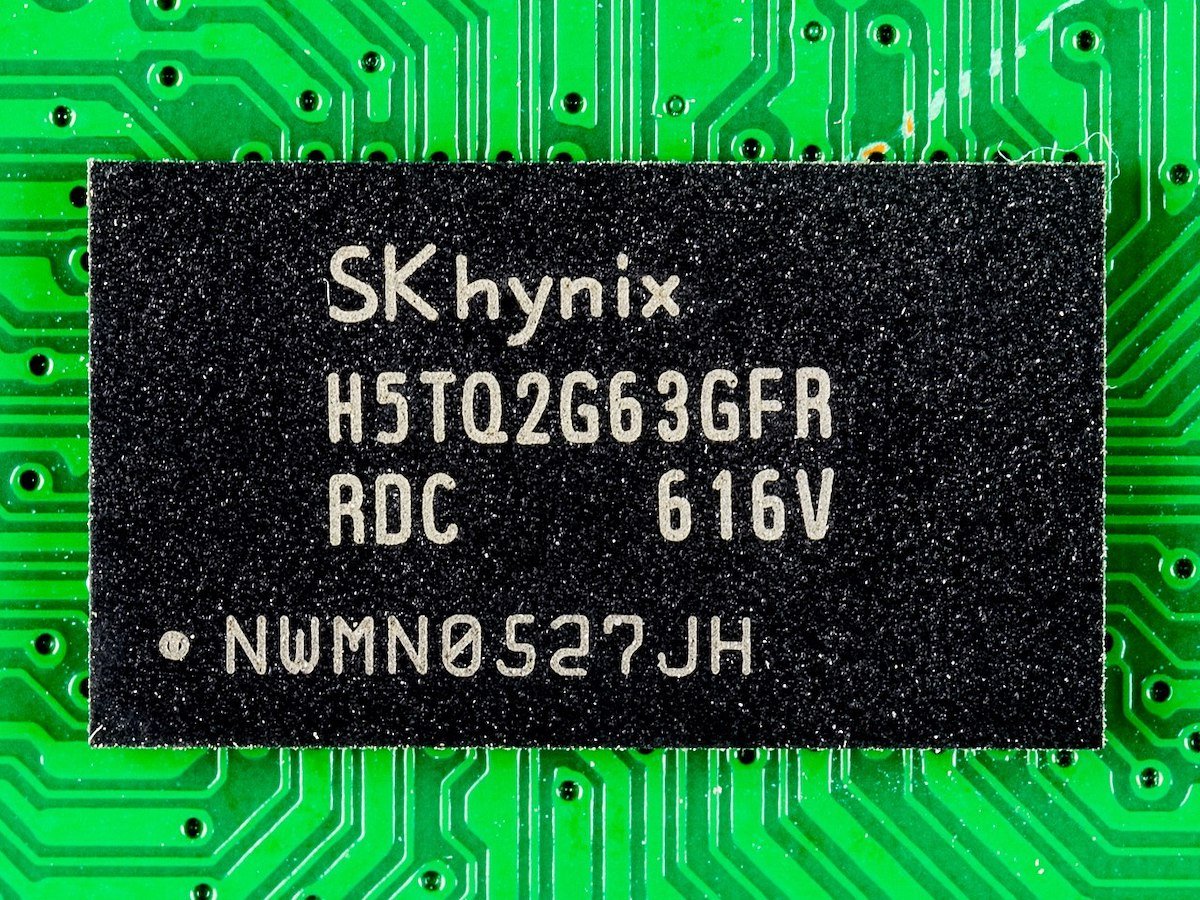
When South Korea's semiconductor giant SK Hynix launches its planned US$29 billion listing on the New York Stock Exchange, many investors will frame it as a bet on one of the world's most critical chipmakers. But the real wager is far larger: it is a bet that artificial intelligence will drive an infrastructure buildout on a scale not seen since the dawn of the internet.
SK Hynix, headquartered in Icheon, South Korea, has long been a cyclical memory-chip manufacturer, its fortunes tied to volatile pricing and supply gluts. Today, however, the company occupies a strategic bottleneck in the AI supply chain. Without its advanced high-bandwidth memory (HBM) chips, the generative AI boom—and the hyperscale data centers that power it—would grind to a halt. This transformation has turned SK Hynix from a semiconductor stock into a leveraged proxy for global AI capital expenditure.
From Chipmaker to Macro Trade
Historically, investors valued companies on straightforward metrics: revenue growth, margins, cash flow, and management execution. In the AI era, those questions have become secondary. The primary question now is: How large will the AI economy ultimately be? This shift is not unique to SK Hynix. Nvidia is no longer valued primarily as a chipmaker; utilities serving AI data centers are no longer valued as utilities; and data-center operators are no longer seen as real estate businesses. Entire sectors are being repriced based on the assumption that AI will require an unprecedented infrastructure buildout.
This phenomenon echoes earlier technological revolutions. Railroads transformed economies, and the internet reshaped society, but both also triggered periods of spectacular over-investment. Investors assumed that revolutionary technologies guaranteed extraordinary returns—a lesson that history suggests is not always true. What revolutionary technologies do guarantee is extraordinary capital spending, and that is exactly what is happening now.
The world's largest tech companies are expected to spend hundreds of billions of dollars on AI-related capital expenditure this year alone. Every new generation of AI models demands more computing power, more electricity, more networking capacity, and more memory. If AI develops as its proponents expect, today's spending boom may look modest in hindsight. But the self-reinforcing cycle—where tech firms spend more because they expect demand to explode, and suppliers expand to meet that demand, which investors reward—carries inherent risks.
SK Hynix's blockbuster listing reveals a deeper shift in market psychology. Investors are no longer asking whether AI companies can build profitable businesses. They are asking whether AI itself will become the defining economic project of the 21st century. That is no longer a company-specific investment thesis; it is a macroeconomic bet, and one that Wall Street is making with increasing conviction.
This dynamic has implications beyond the semiconductor industry. In South Korea, the government has been grappling with the broader consequences of chip-driven growth, including tensions over chip inflation and global backlash. Meanwhile, other Asian economies are racing to build their own AI capabilities. Japan, for instance, recently launched a US$6.1 billion AI consortium to develop a sovereign foundation model, as reported in our coverage.
None of this means we are in an AI-blown bubble. AI may ultimately justify every dollar currently being invested, and perhaps considerably more. But SK Hynix's IPO is a reminder that the market is now pricing in a future where AI infrastructure spending becomes the dominant economic force of the coming decades. For investors, the question is no longer whether SK Hynix is a good company—it is whether the AI boom will be as big as the most optimistic forecasts suggest.