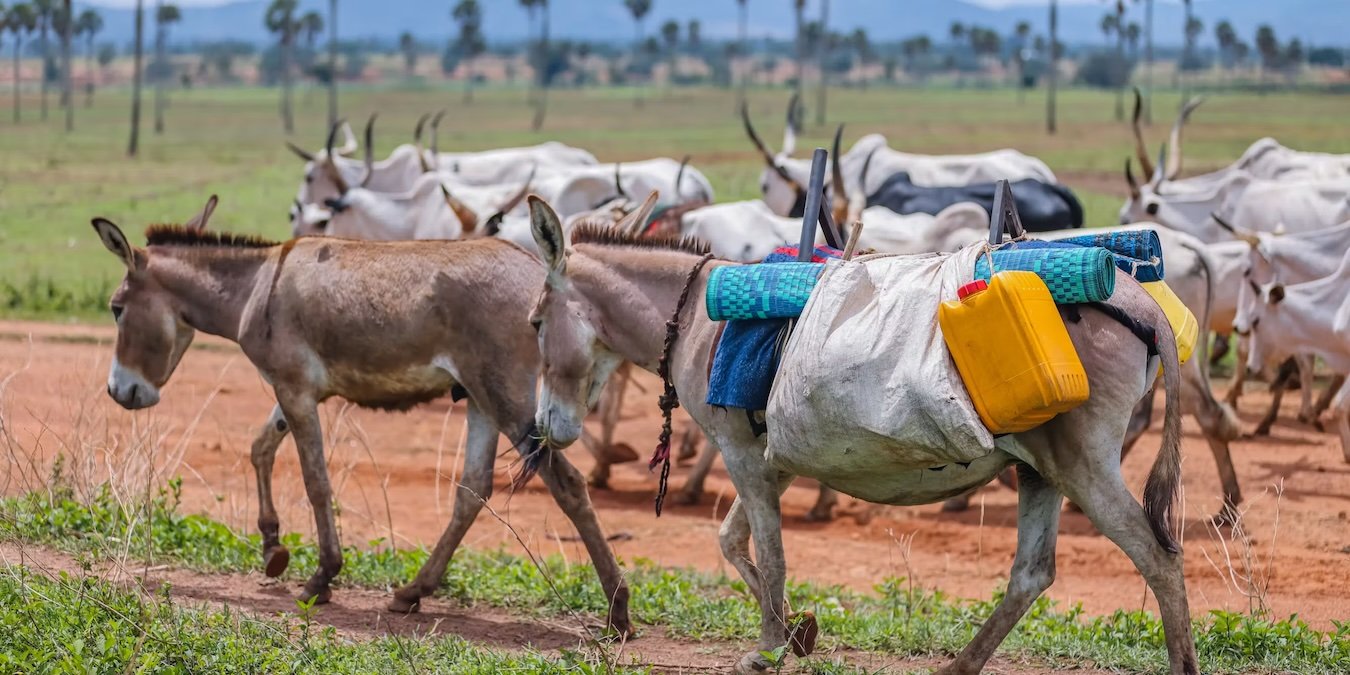
For over a decade, a surge in demand for a traditional Chinese remedy has reshaped the fortunes of donkeys across Africa. The medicine, known as ejiao, is a gelatinous tonic made from donkey hide, and its popularity has turned the continent's working animals into a hot commodity, with profound consequences for rural communities.
Lauren Johnston, a researcher specializing in China-Africa trade, has spent years investigating this trade and has just published a book, China, Africa and the Market for Donkeys. In it, she details how a product once reserved for imperial elites has become a mass-market phenomenon, and how that shift has put Africa's donkey population at risk.
The rise of ejiao
Ejiao has been used in Chinese medicine for millennia, traditionally to treat fatigue, dizziness, and irregular bleeding, and to support women's health. Its reputation is tied to its collagen-rich composition and the bioactive peptides produced during processing, though clinical evidence for its efficacy remains debated. What is not in dispute is its commercial success.
Once a handmade elixir for a small circle of imperial elites, ejiao is now industrially produced and consumed by tens of millions of Chinese women. The market has expanded beyond medicinal uses to include cakes, drinks, cosmetics, and other wellness products. The lead producer, Dong'e Ejiao, has seen its premium prices rise faster than property values in Shanghai and Beijing during the 2000s and 2010s.
While the primary market is mainland China, demand also comes from Hong Kong, Taiwan, the United States, Europe, Australia, and Southeast Asia.
Africa as the supply base
Africa is home to the world's largest donkey population, and as China's domestic supply of hides began to fall short around 2010, the continent became a target for both legal and illicit trade. Ethiopia, Kenya, and Tanzania were early sources, but the demand grew so intense that no donkey in Africa was considered safe.
A single donkey hide can fetch over $400 in China, a price that makes the animals more valuable dead than alive. This has led to widespread theft, as donkeys are essential to rural livelihoods, providing transport and labor for farming and water collection. The slow breeding rate of donkeys compounds the problem, creating a cycle that threatens the species' survival.
The trade is largely informal, and porous borders, differing regulations, and weak enforcement have made it difficult to control. Tanzania, for example, tried to secure a continent-wide agreement to halt the trade but gave up after frustration with smuggling across the Kenyan border and a failure to regulate slaughter standards.
Efforts to halt the trade
In 2022, the first Pan-African Donkey Conference brought together representatives from the African Union, governments, and welfare charities. The outcome was the Dar es Salaam Declaration, which called for a 15-year continental moratorium on donkey slaughter for hides. The African Union endorsed this in February 2024, a historic step for protecting biodiversity and the rural poor, especially women.
However, implementation has been uneven. Each member country must change its laws and enforce them consistently, and progress has been slow. Bans can also push the trade underground, as seen in South Africa, where restrictions led to supply moving through Lesotho, where abattoir standards are lower.
The current demand for ejiao requires four to five million hides a year, far more than China's donkey stock can supply. The Donkey Sanctuary, a UK-based welfare group, estimates that China imports over three million hides annually, with 25% to 35% from stolen animals.
The trade's impact is not just on donkeys but on the communities that depend on them. As Johnston's research shows, the loss of these animals undermines the economic mobility of rural households, particularly women, who often rely on donkeys for daily tasks. The moratorium is a step in the right direction, but without robust enforcement and sustainable alternatives, the donkey's future remains uncertain.