The scandal that toppled Jensen Huang from Nvidia's top job has a deeper layer: investigators believe his associate Alice Huang orchestrated one of the largest-ever smuggling operations of US-restricted chips, moving them from Singapore and Southeast Asia into mainland China. Her company, Megaspeed, reportedly arranged nearly US$12 billion in Nvidia chip orders for Chinese firms over 15 months, with a large share reaching the mainland. Megaspeed says Alice Huang left in August 2025 and that it operates lawfully.
On November 16, Washington introduced new rules aimed at preventing Chinese companies from obtaining advanced chips via Southeast Asia. For legitimate businesses in the region, the rules mean slower approvals and wary investors. But the simplicity of the smuggling method suggests that new licenses and restrictions will be hard-pressed to stop it.
Singapore as a base
Singapore was a logical hub. As a bridge between East and West with a sound legal system and a balanced international stance, it offers Chinese companies a trusted address abroad. However, the island-state's reputation was exploited, testing its credibility. Singapore has barred Alice Huang from re-entering the country after police determined she misled them about her role at Megaspeed. Singapore has also said US authorities have provided only limited help with its probe.
Meanwhile, Malaysia is investigating whether chips brought in by Megaspeed's local unit were shipped onward to third countries, though Prime Minister Anwar Ibrahim says there is no sign so far that they left. What began as a US-China chip dispute has become an international investigation, with Southeast Asia at its center.
A network tied to Alice Huang helped move roughly 240,000 advanced chips worth $7.5 billion into China, according to The Information. Will DePue, a former OpenAI researcher, analyzed the published weights of leading Chinese AI models and concluded that DeepSeek V4 and Moonshot's Kimi K3 show signs of having been trained on Nvidia's Blackwell chips, which cannot legally be sold to China. DePue said some of the smuggled Nvidia chips may have been used in that training.
The daigou playbook
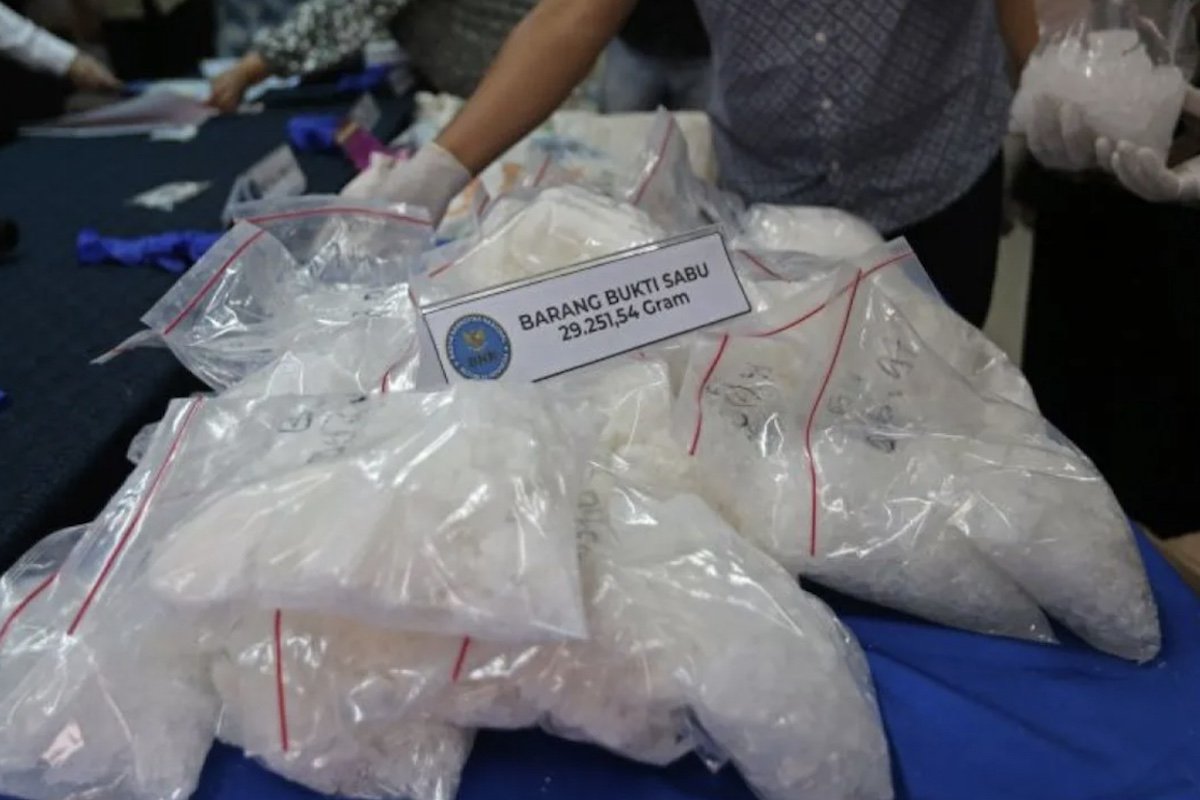
The likeliest answer to how the chips got to mainland China, and how they could leave Southeast Asian data centers unnoticed, is daigou — China's large and finely tuned gray market. Literally meaning “buying on behalf of,” daigou moves anything in demand on the mainland but hard to bring in legally, from baby formula to cosmetics to luxury goods. American-made chips have long been part of that trade, which follows a consistent playbook: organizers unbox the goods, relabel them, break shipments into smaller lots, and move them across the border disguised as small, legitimate consignments.
Chinese financial media have reported that early in the chip restrictions, students, tourists, and daigou shoppers carried chip boards in their luggage one at a time. The Wall Street Journal once reported on a Chinese student in Singapore who earned about $100 for every chip he brought home.
Megaspeed did not buy chips directly from Nvidia. It bought complete servers through Nvidia's partners for data centers in Malaysia and Indonesia. Roughly 240,000 chips would fill about 30,000 servers. Shipping that many into China as commercial cargo would be nearly impossible now that Beijing inspects Nvidia shipments at its ports to push for domestic chip use and development.
But Beijing's inspections target cargo containers, not travelers' suitcases, leaving a big loophole. All smugglers need to do is dismantle the servers, pull out the chip boards, split them into small lots, and hire individual couriers to carry them in as personal luggage. Spread across thousands of couriers, tens of thousands of trips, and dozens of airports with direct flights to Southeast Asia, no single trip would draw attention.
Larger loads are known to take another route. Smugglers strip off the Nvidia logos, relabel the boards as ordinary computer parts, and send them by truck across remote stretches of China's land borders with Southeast Asia. The infrastructure for this trade was pre-existing. Bonded warehouses dot Southeast Asia, Hong Kong, and Shanghai. Because cargo in a bonded zone has not officially cleared customs, operators can consolidate, repackage, and relabel shipments in private before re-exporting them.
When Malaysian authorities seized 72 AI servers at Kuala Lumpur's airport earlier this year, the machines had been flown into the airport's free-trade zone, mislabeled as “computer parts” and queued for re-export.
Even if every chip traveled by courier, the labor would be cheap. Using the WSJ's reported $100-per-chip figure as a benchmark, moving 240,000 chips would cost Megaspeed about $24 million — a rounding error compared to the $7.5 billion they were worth as smuggled goods into China.
Nvidia says it inspected Megaspeed's warehouses and saw the hardware there. But an inspection can miss a great deal, as the recent Super Micro case suggests. In March, US federal prosecutors charged a co-founder of the server maker and two others with smuggling about $2.5 billion worth of servers containing restricted Nvidia chips to China through a middleman in Thailand. According to the charges, the servers arrived in Southeast Asia, were stripped of their original packaging, and were then re-exported.
The new US rules may slow the flow, but they cannot eliminate the demand. As long as Chinese companies need advanced chips for AI, and as long as the gray market's couriers and bonded warehouses remain, the daigou network will adapt. The real test for Washington and Southeast Asian governments is whether they can close the loopholes that make such smuggling so effective.