Anthropic, the developer behind the Claude AI models, is reportedly preparing what could be the largest initial public offering in history, aiming to raise more than $100 billion at a valuation near $2 trillion, according to The New York Times. A draft prospectus reviewed by Reuters warns prospective investors that advanced AI could pose “catastrophic or existential risks to humanity,” and that its own models might “resist shutdown,” “conceal or manipulate information,” or behave in ways “resembling blackmail.”
CEO Dario Amodei has put the chance that “things go really, really badly” at a staggering 25%. Last month, he wrote that “we must slow the pace at which we improve the capabilities of AI models.” These are not the words of a company ready for the public markets. They are a call for public oversight.
Congress should heed that call. The offering should be postponed until a public system of licensing, independent safety evaluation, liability, and financial backstops for frontier AI is enacted. The same standard should apply to OpenAI and every other developer of frontier models.
I am not opposed to artificial intelligence. Its potential for science, health, and sustainable development is enormous. What we should oppose is unregulated and militarized AI. A company that discloses a risk of catastrophe to humanity should not then sell its shares to the public before any public authority has the power to evaluate that risk or to stop deployment. Proceeding rapidly in the face of such dire warnings is beyond folly.
The limits of corporate law
The problem goes to the foundations of corporate law. Limited liability—the rule that a shareholder can lose no more than the amount invested—is a privilege granted by the state. It is justified on the premise that the harms a firm can impose on others are insured, regulated, or otherwise compensated. When a chemical plant explodes, the law has tools to compensate victims: liability insurance, bonds, capital requirements, and compensation funds. Every one of these tools assumes that the harm can be paid for after the fact.
A catastrophic or existential harm cannot be. The only instrument that works is regulation before the fact: licensing, independent testing before deployment, and the legal authority to halt an activity before it becomes too dangerous. For frontier AI in the United States, none of this exists.
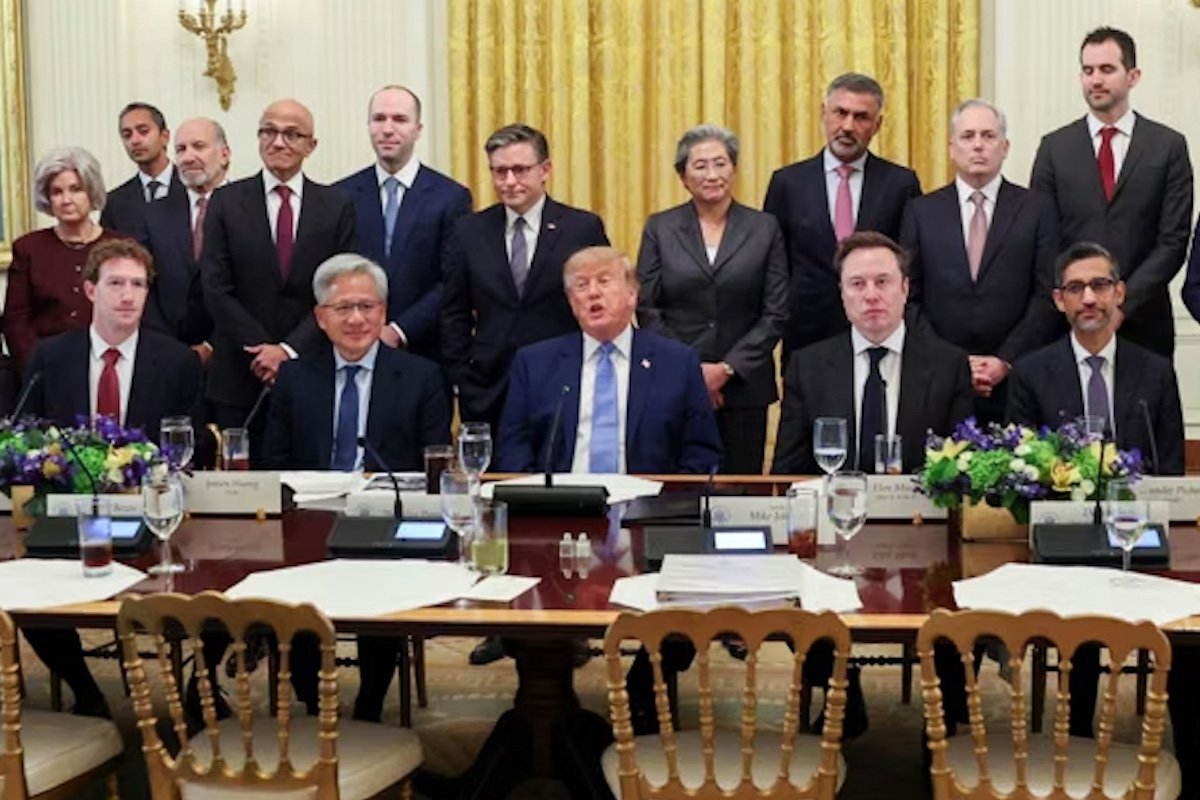
What does exist is self-regulation, which is tantamount today to no regulation. On September 29, six AI and chip companies signed a voluntary and nonbinding “Joint Commitment on Frontier Responsibilities” at the White House. This would be laughable if it weren’t so potentially disastrous. A technology whose own makers describe its risks in dire terms should be governed by public institutions with defined procedures, independent monitoring, and enforceable liability, not by the self-judgment of a handful of business executives.
The IPO would lock in dangerous momentum
A rushed public offering would make the problem vastly harder to fix. Anthropic has reportedly committed at least $518 billion to computing infrastructure over the coming decade, with about 80 percent of it described as non-cancellable. With quarterly guidance to public shareholders, those commitments create a powerful incentive against any pause, even one the company’s own safety researchers might recommend.
The prospectus itself reportedly describes a “continuous and overlapping cadence” of product launches as “inherent to remaining at the frontier.” Once these shares sit in the pension funds and index funds of tens of millions of American households, any proposal to slow frontier development will be fought not only by the companies but by a vast investor constituency.
The extensive risk disclosures do not solve this problem. They may or may not protect the company from lawsuits by its own shareholders, who will have been warned. They do nothing for the public, which bears the catastrophic risk without ever having been asked.
The usual reply is that if America’s most safety-conscious developers slow down, less careful companies, or China, will race ahead. This is a standard collective-action problem, and such problems are solved by agreements backed by law, monitoring, and enforcement, not by everyone running faster to doom.
We are not living in Hobbes’s state of nature. We have the United Nations, treaty law, the Securities and Exchange Commission, and Congress. During the Cold War, adversaries negotiated the Nuclear Non-Proliferation Treaty with international inspection. Frontier AI even offers a natural point of verification: the most advanced chips come from a handful of factories, and frontier training requires huge data centers.
Washington has not offered Beijing a verifiable agreement on frontier AI. In fact, after his summit with President Xi Jinping in September, President Trump rejected cooperation with China on AI, agreeing only to a channel for communicating about AI incidents. “When you’re leading,” he said, “you don’t open it up to each other.”
Who can act to slow the juggernaut and prevent a potential catastrophe? Under current law, the SEC can delay an offering but cannot block it on the ground that the business is dangerous. It should nonetheless decline to accelerate the effectiveness of the registration statement until the company discloses the risks of its products, who would bear the cost of the catastrophes it describes, what insurance exists, and whether its computing contracts would allow a safety pause without penalty. The decisive authority lies with Congress, and it must act before the public markets are exposed to a technology that its own creators admit could end badly.