The global artificial intelligence race is often framed as a two-horse contest between the United States and China. But across East Asia, a more nuanced story is unfolding. Taiwan, South Korea, Japan, and Vietnam are each positioning themselves to command critical segments of the AI supply chain, driven by a shared desire for technological sovereignty.
These governments are not trying to replicate the full AI ecosystem. Instead, they are identifying specific niches—chip manufacturing, memory technology, robotics, or raw materials—where they can become indispensable. The goal is to avoid being mere rule-takers in the next technological era, and instead shape the rules themselves.
Taiwan: The indispensable chipmaker
Taiwan occupies perhaps the strongest strategic position. Home to Taiwan Semiconductor Manufacturing Company (TSMC), it produces the world's most advanced semiconductors, including the AI processors that power cutting-edge models. Nvidia, the leading designer of these chips, outsources their physical production primarily to TSMC.
Nvidia's founder and CEO, Jensen Huang, who is Taiwanese, recently called the island the “epicenter” of the AI revolution. Taiwan's foreign minister, Francois Chih-chung Wu, made the country's stance clear in late 2025: the most advanced chipmaking capabilities must remain in Taiwan. While TSMC has facilities in Germany, Japan, and the United States, none produce at the leading edge—that remains reserved for the home island.
South Korea: Memory chips and industrial AI
South Korea is pursuing a similar strategy, with a focus on a distinct part of the AI value chain. Samsung and SK Hynix together control nearly 80% of the global market for high-bandwidth memory (HBM) chips—the ultra-fast memory that AI processors rely on to train and run sophisticated models. If Nvidia-designed, TSMC-manufactured processors are the “brains,” then Samsung and SK Hynix's HBM chips are the short-term memory that feeds them data.
The South Korean government and its leading chipmakers have announced a combined investment of nearly US$600 billion in two new chip plants in the country's southwest. Seoul has also actively courted global AI leaders. During his Asia tour, Jensen Huang met with the chairmen of SK Hynix, LG, and Naver, and declared that South Korea is set to be a global AI leader given its infrastructure strengths. American AI firm Anthropic is reportedly collaborating with Samsung on a new AI chip.
Japan: Physical AI and robotics
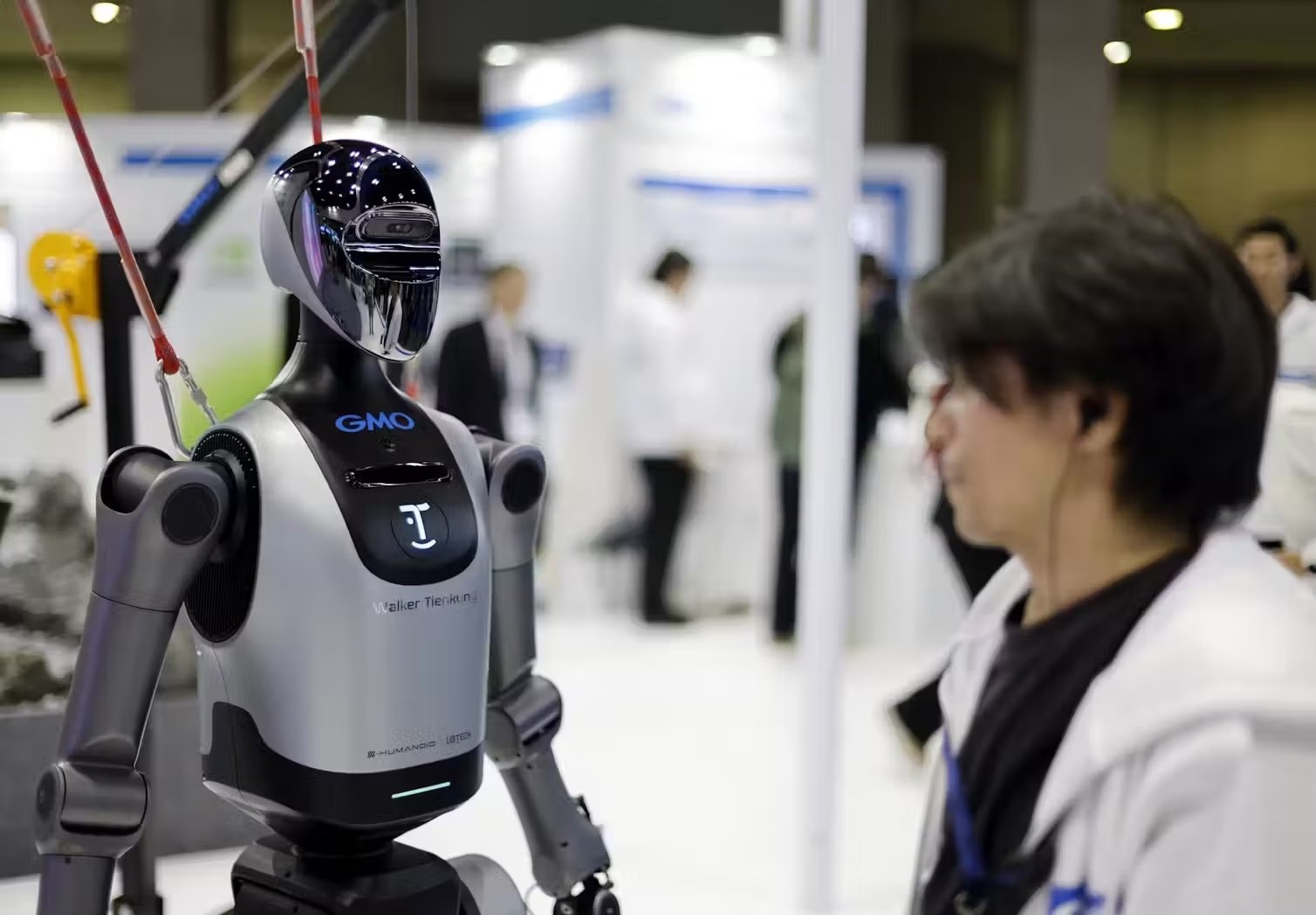
Japan's approach is different. Its government has set a target of US$65 billion in public and private investment in physical AI by 2040—about a tenth of South Korea's commitment. But Japan is betting on its strengths in robotics and factory-floor automation, which it sees as central to addressing its demographic challenges.
Corporate giants SoftBank and Sony are leading Noetra, a consortium to develop an AI model specifically for robotics. Jensen Huang's July visit to Japan emphasized the country's advantages in automotive production and robotics. The visit was a relief in Tokyo, as his earlier spring tour had skipped Japan, stirring anxiety.
Vietnam: Catching up from a lower base
Vietnam starts from a lower technological base but has an ambitious catch-up plan. Hanoi aims to train 50,000 chip engineers by 2030 and is courting major investments. Nvidia has committed to building R&D and AI data centers in partnership with Vietnam's telecoms giant, FTP.
Vietnam's restrictions on exporting unprocessed rare earth minerals signal a longer-term ambition to manufacture chips, not just assemble and test them. Rare earths are critical inputs for advanced electronics, robotics, and data-center infrastructure.
Winning the race, bearing the costs
Taiwan currently leads because it controls the most irreplaceable part of the supply chain: advanced chip manufacturing. South Korea follows closely with its memory chips and industrial AI capabilities. Japan's strength lies in physical AI, while Vietnam is investing in talent, minerals, and facilities for future gains.
Success brings new challenges. The outperformance of South Korean and Taiwanese chipmakers has driven their stock markets to record highs—only to see them plummet, raising concerns about wealth inequality and volatility. In the short run, “winning” the AI race carries social costs.
The broader lesson is that AI competitiveness is not about self-sufficiency. Even the US and China cannot achieve that. Instead, Asia's middle powers are cultivating indispensability in specific niches, building complementary strengths alongside major US tech firms like Nvidia. This is how they pursue sovereignty through, not in, AI.