On a sweltering October afternoon in 2025, Kanangwa Newlove walked through her 10-acre farm on the outskirts of Lusaka, Zambia, watching her livelihood wither. Spinach, lettuce, and mustard greens lay wilted under the sun; tomatoes shriveled on the vine. She pulled up entire rows of organic vegetables—once prized by local buyers—and fed them to her pigs.
“The crops that suffered the most without water were our mainstay,” she told a reporter from the International Consortium of Investigative Journalists (ICIJ). “There was nothing we could do. There was no water for the crops because there was no electricity.”
Newlove’s farm depended on borehole pumps that required nearly 8,000 gallons of water every few days. But since March 2024, Zambia’s rolling blackouts had left large parts of the country without power, sometimes for 20 hours a day. Without electricity, she couldn’t refrigerate her harvest, breed livestock, or supply her regular customers—small shops that relied on her produce. She cut her planting area, stopped hiring seasonal workers, and for the first time in over a decade, considered shutting down entirely.
“Farmers are optimistic people until that is obliterated entirely by reality,” she said. “It’s a mammoth thing to fathom, that you’re going to kill a business that you’ve worked so hard for for so many years.”
A perfect storm of drought and debt
Newlove’s plight is emblematic of a broader crisis gripping Zambia, where roughly 60% of the population lives in poverty. The country relies almost entirely on hydropower, but a severe drought in 2024 left dams empty, forcing ZESCO, the state-owned utility, to ration electricity. While Zambia is no stranger to drought, ZESCO’s financial troubles left it uniquely unprepared for the worst dry spell in decades.
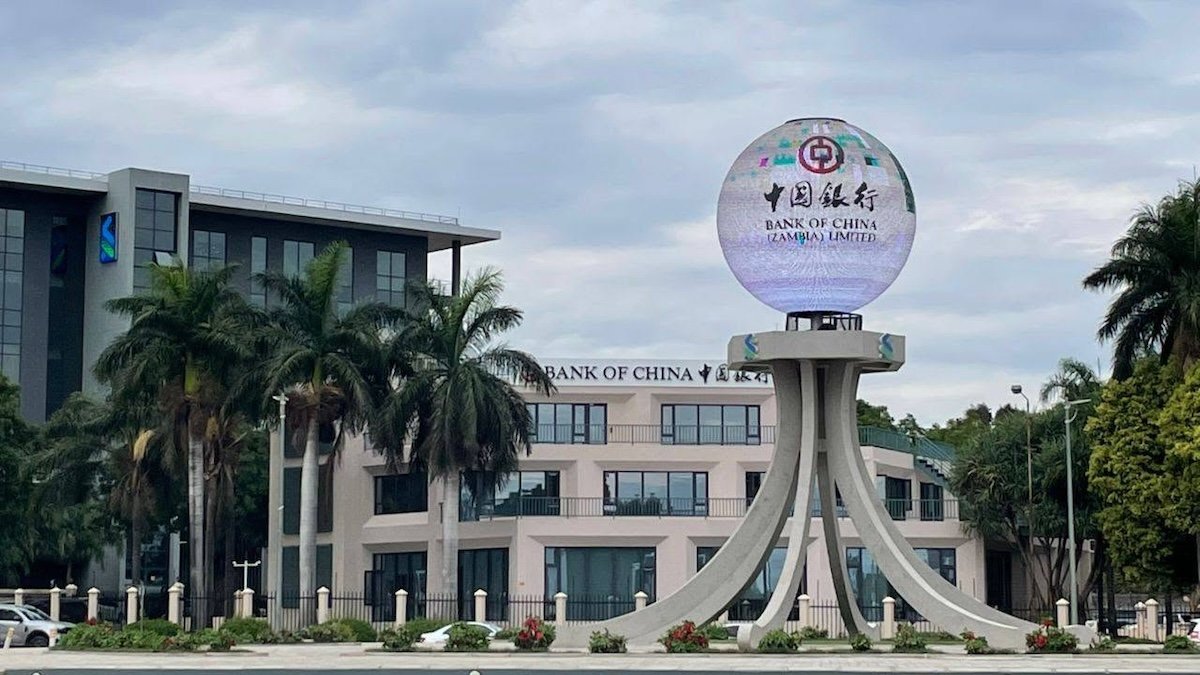
The company was drowning in debt. Its largest obligation was a nearly $285 million loan from the Industrial and Commercial Bank of China (ICBC), signed in 2011 with stringent repayment terms. Over the following years, ZESCO took on additional loans from ICBC and other Chinese lenders, mirroring Zambia’s own trajectory as one of the world’s most indebted nations—and the first in Africa to default on its sovereign debt during the Covid-19 pandemic.
Newly revealed documents, part of the ICIJ-led China Capital investigation, show how Chinese lenders and contractors worked together to pile loans onto Zambia and its state enterprises. When ZESCO struggled to repay, ICBC adopted what analysts describe as a hardball approach to recover its money, further squeezing a borrower already on the brink.
The investigation, based on 4.8 million documents including loan agreements, due diligence reports, and internal emails, exposes the inner workings of ICBC’s London branch and its pivotal role in advancing Chinese interests in Africa. It reveals what experts call the bank’s muscular lending tactics, which burdened some of the continent’s most vulnerable economies—a claim the Chinese Embassy in Zambia has denied.
ICBC presents itself as a commercial bank, but it operates as a foreign policy tool of the Chinese state, advancing strategic interests in resource-rich countries like Zambia. While China helped fill Zambia’s infrastructure gap, its objectives were not always aligned with the country’s well-being. Chinese lenders were willing to make risky, onerous loans to a nation that could not afford them, while Chinese contractors urged Zambian entities to take on new debt to fund projects. Zambia’s government, eager for easy credit, needed little encouragement.
The result was a disastrous debt spiral that left Zambia unable to service its obligations, followed by years of sluggish recovery. For small business owners like Newlove, the consequences are immediate and devastating. “One week you’d get a schedule from, say, morning to midday and you’d make a plan based on that,” she said of the load-shedding schedules. “Then, without prior notice, it would change.”
As Zambia grapples with its debt crisis, the role of Chinese lenders remains a contentious issue. The China Capital documents highlight a pattern that extends beyond Zambia, raising questions about the sustainability of Chinese-financed projects across Africa and the broader Indo-Pacific. For a deeper look at how China’s lending practices are evolving, see this analysis of the Belt and Road's shifting priorities.
Meanwhile, Newlove’s farm—once a thriving enterprise—now stands as a stark reminder of the human cost of financial mismanagement and external debt. “It’s a mammoth thing to fathom,” she repeated, “that you’re going to kill a business that you’ve worked so hard for for so many years.”