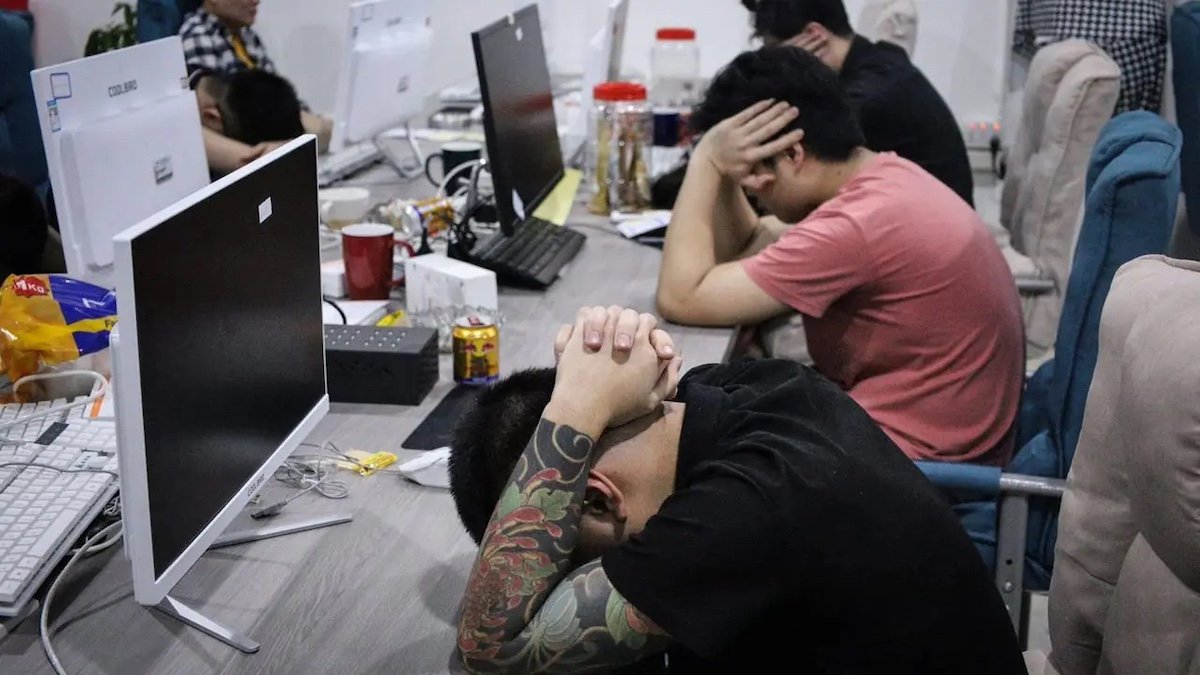
Washington's campaign against Southeast Asia's industrial-scale scam compounds has been aggressive, even theatrical at times, yet it remains strikingly incomplete. The Justice Department's Scam Center Strike Force, launched in April 2026, has seized 503 domains impersonating trading platforms, restrained roughly $702 million in cryptocurrency, and dismantled a Telegram recruitment channel that lured over 6,000 people toward Cambodian compounds. By June, the Treasury and FinCEN had blacklisted nine individuals and 26 entities tied to Cambodia's Prince Group and cut off the payment platform H-Pay from the US financial system. July brought another $25 million in forfeitures, pushing cumulative recoveries past $800 million.
These are not trivial numbers. They show capacity and political will. But they also expose the limits of an approach that treats the problem as essentially offshore, rooted in Myanmar or Cambodia. The pattern of designations and seizures has focused almost exclusively on international operators and a handful of Cambodian financial nodes. That framing is convenient and partly accurate. It is also insufficient.
The labor that staffs the compounds and the financial corridors that move the proceeds after they leave a victim's account both run heavily through South and Southeast Asian economies that export workers and, in some cases, tolerate or fail to police domestic mule networks. India and Indonesia sit at the center of both pipelines.
The workforce pipeline
Consider the workforce first. Indian government figures from early 2025 placed roughly 2,000 Indian nationals inside scam operations around Myawaddy, the Myanmar border town that, alongside Shwe Kokko, remains one of the industry's principal hubs. Many responded to fabricated job advertisements for computer operators or data-entry clerks circulating on Facebook groups and WhatsApp forwards, offering monthly salaries of 60,000 to 70,000 rupees. Some were trafficked in the classic sense; others appear to have entered knowingly, or at least with eyes half-open, calculating that the risks were manageable. The distinction rarely survives media coverage, which prefers a single narrative of victims held under guard and awaiting rescue.
India has repatriated more than 2,500 of its nationals from these compounds since 2022, with recent flights continuing into late August 2026. The foreign ministry still lists dozens as unaccounted for. Yet a labor force large enough to sustain round-the-clock English-language outreach across WhatsApp, Instagram, Tinder, and LinkedIn cannot be assembled solely through kidnapping. Recruitment networks reach deep into Indian towns and cities long before any border is crossed. The Central Bureau of Investigation's recent arrests of recruiters in Haryana and elsewhere underscore that the supply chain is domestic as well as transnational.
Indonesia's experience compresses the same story into sharper numbers. Jakarta's Ministry of Migrant Worker Protection recorded more than 12,000 Indonesians entangled in Cambodia's scam economy in the first half of 2026 alone, more than double the entire previous year's count. The mechanics are nearly identical: fake job postings, brokers who undercut slower official channels, and workers who discover too late that the promised employment is forced cybercrime. Cambodian authorities claim to have closed hundreds of sites and deported tens of thousands, yet Amnesty International's mid-2026 assessment found that more than 70% of the compounds it tracked had been bypassed or quickly reconstituted. UN experts, speaking in May and reiterated in subsequent reporting, described the situation as a humanitarian and human-rights crisis involving forced labor and forced criminality on an industrial scale. Compounds relocate faster than governments can announce their closure.
The money pipeline
The money moves in the opposite direction but follows a comparable geography. Stolen funds typically leave the compounds as Tether on the Tron blockchain, selected for low transaction costs and for operating outside the formal SWIFT system. From there, they pass through mixers and decentralized exchanges before portions reappear, cleaned, inside domestic banking systems that ask too few questions.
India's cybercrime losses are no longer marginal. The Indian Cybercrime Coordination Center recorded losses of roughly 11,333 crore rupees, about $1.3 billion, in the first nine months of 2024, with a substantial share traced to Southeast Asian operations. Full-year 2025 figures from the Ministry of Home Affairs reached approximately 22,495 crore rupees, or $2.6 billion. Across all digital fraud, the Reserve Bank of India estimated national losses near $25 billion in 2025, a dramatic rise from earlier years. The central bank's subsequent discussion paper, proposing a one-hour delay on payments above 10,000 rupees and tighter scrutiny of accounts receiving unusually large credits, amounts to an official acknowledgment that mule accounts—ordinary Indian bank accounts rented or recruited to receive and forward stolen funds—have become working infrastructure. Many account holders were themselves deceived by fake loan applications; that fact does not alter the function those accounts perform once they enter the pipeline.
American victims are not abstractions either. The FBI's Internet Crime Complaint Center recorded cryptocurrency fraud losses exceeding $11 billion in 2025. Within that total, cryptocurrency investment fraud, the category that covers most pig-butchering schemes, accounted for $7.2 billion, up 24% year-on-year. Average losses per victim in that category exceeded $117,000, frequently drawn from retirement savings accumulated over decades. The scams are engineered as prolonged relationships rather than one-off heists.
The US response, for all its vigor, has yet to confront the Indian and Indonesian nodes that make the industry possible. As India recalibrates its global posture and Indonesia's commodity exchange plan hinges on global trust, both governments face pressure to act on domestic recruitment and money-mule networks. Without addressing these hidden hands, the crackdown will remain a game of whack-a-mole, chasing compounds that simply relocate across the border.