Seventy years ago this summer, Gamal Abdel Nasser's nationalization of the Suez Canal set off a chain of events that ultimately sealed the fate of the British pound as a global reserve currency. Today, as the Strait of Hormuz crisis unfolds, the United States finds itself in a strikingly similar position—and the implications for the dollar, and for Asia's energy-dependent economies, are profound.
In 1956, a joint British-French-Israeli military operation successfully retook the canal, but the diplomatic backlash—led by Washington—forced a humiliating withdrawal. The loss of confidence in sterling, already burdened by heavy debt and fragile external balances, triggered massive selloffs. The pound never recovered its global standing.
America's Debt Dilemma
The United States today mirrors mid-1950s Britain in uncomfortable ways. America's debt-to-GDP ratio has climbed above 120%, a level not seen since the aftermath of World War II, except briefly during the Covid-19 pandemic. The current account deficit, which narrowed after the 2008 global financial crisis, has widened again, briefly exceeding 5% of GDP early last year. Even the dollar, long considered a safe haven, has lost value over the past twelve months.
Make no mistake: the dollar remains the world's premier currency. It still accounts for roughly three-fifths of global foreign exchange reserves, and most international trade—especially energy—is invoiced in dollars. The rise of stablecoins, many pegged to the greenback, has even given it new life. Strong US financial markets continue to attract capital.
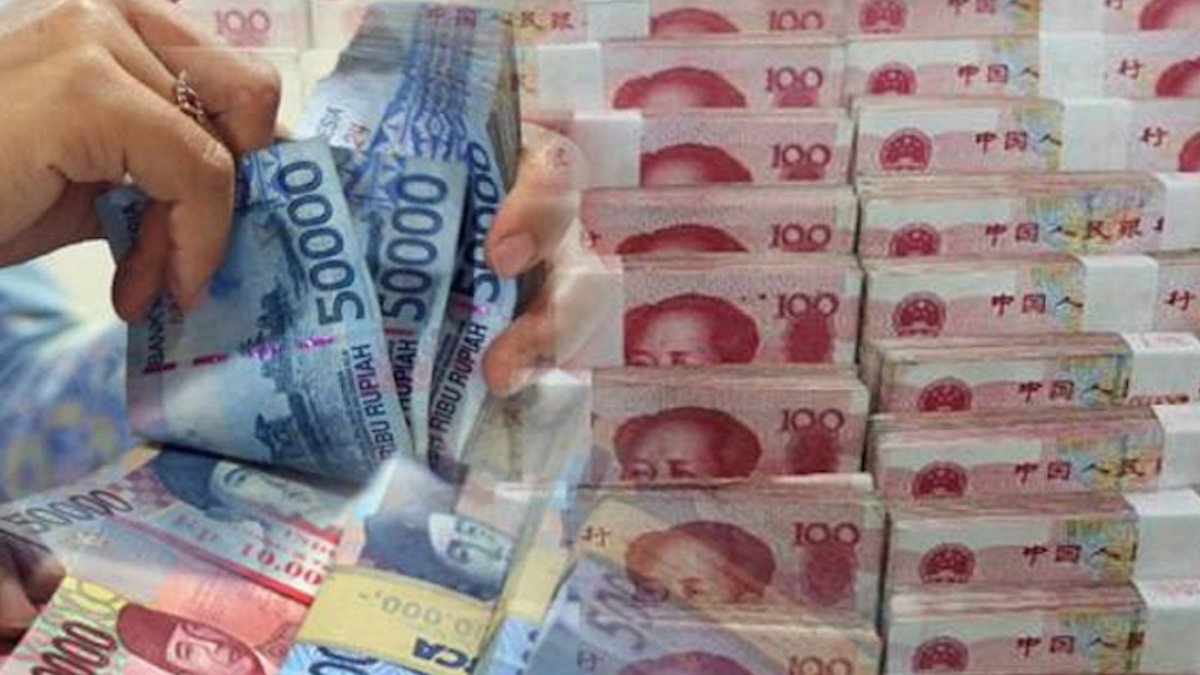
Yet the world is steadily moving toward a multipolar monetary system. The European Union, still the third-largest economy globally, now conducts most of its trade in euros. Beijing is increasingly pricing energy contracts in renminbi, and the yuan has become the backbone of the Cross-Border Interbank Payment System (CIPS), which bypasses the dollar-dominated SWIFT network. Iran's use of petroyuan tariffs in the Strait of Hormuz is a direct challenge to dollar hegemony.
Barriers to a Multipolar Shift
But the euro and yuan face significant hurdles. The Euro Area remains reluctant to issue union-wide safe assets, as fiscally conservative northern states—Germany, the Netherlands, Austria—fear that Eurobonds would socialize liabilities from the profligate south or the poorer east. Never mind that Belgium and France already carry debt burdens greater than Spain and Portugal, and Austria and Finland exceed Slovakia and Slovenia.
China, meanwhile, has shown remarkable reluctance to make the yuan fully convertible. Without that, there will never be sufficient demand for it as a reserve currency. It is hard to blame Beijing: memories of the wrenching adjustment during the 1997-98 Asian financial crisis still haunt policymakers. From Latin America in the 1980s to Southeast Asia in the 1990s to Argentina and Turkey in the 2000s, countries that liberalized capital accounts too quickly have suffered currency crises.
Geopolitical Catalysts
History shows that geopolitical pressure often accelerates the decline of a dominant currency. The Anglo-Dutch wars of the 17th century strained Dutch resources and weakened the guilder's global role. The fragmentation of the Holy Roman Empire after the Thirty Years' War doomed the thaler. Roman military adventurism after the 3rd century emptied state coffers and led to widespread debasement of the denarius—piles of Roman coins found in India testify to the large trade imbalances Rome was running.
The Suez Crisis was the final nail in the coffin for sterling. While the Hormuz crisis may not immediately do the same for the dollar, it is the first of what could be many more nails in the exorbitant privilege the greenback has enjoyed. For Asia, which depends on the Strait of Hormuz for a significant share of its energy imports, the stakes are especially high. A prolonged blockade would not only disrupt oil supplies but also accelerate the search for alternative payment systems and reserve currencies.
The question is no longer whether the dollar's dominance will erode, but how quickly—and whether the Strait of Hormuz will be remembered as the moment the process became irreversible.