Empires rise and fall, and their declines are rarely linear. They are shaped by gradual economic shifts but punctuated by critical, often sudden, tipping points. The current confrontation between the United States and Iran over the Strait of Hormuz bears striking parallels to the Suez Crisis of 1956, when Britain's imperial ambitions met their decisive end. For informed observers across Asia—from Tokyo to New Delhi, Jakarta to Seoul—the lesson is clear: the United States may be facing its own Suez moment.
In 1956, the British Empire, though weakened, still maintained global military bases and fought colonial wars in Kenya and Malaya. Britain's control of the Suez Canal, acquired through a 44% share purchase in 1875 and a full invasion in 1882, had been a linchpin of its imperial trade route to India and East Asia. But after Egypt's 1952 revolution, President Gamal Abdel Nasser nationalized the canal, prompting Britain, France, and Israel to launch a secret invasion. The operation failed spectacularly when the United States and the Soviet Union intervened, forcing a humiliating withdrawal. Prime Minister Anthony Eden resigned, and Britain never again acted as an independent imperial power.
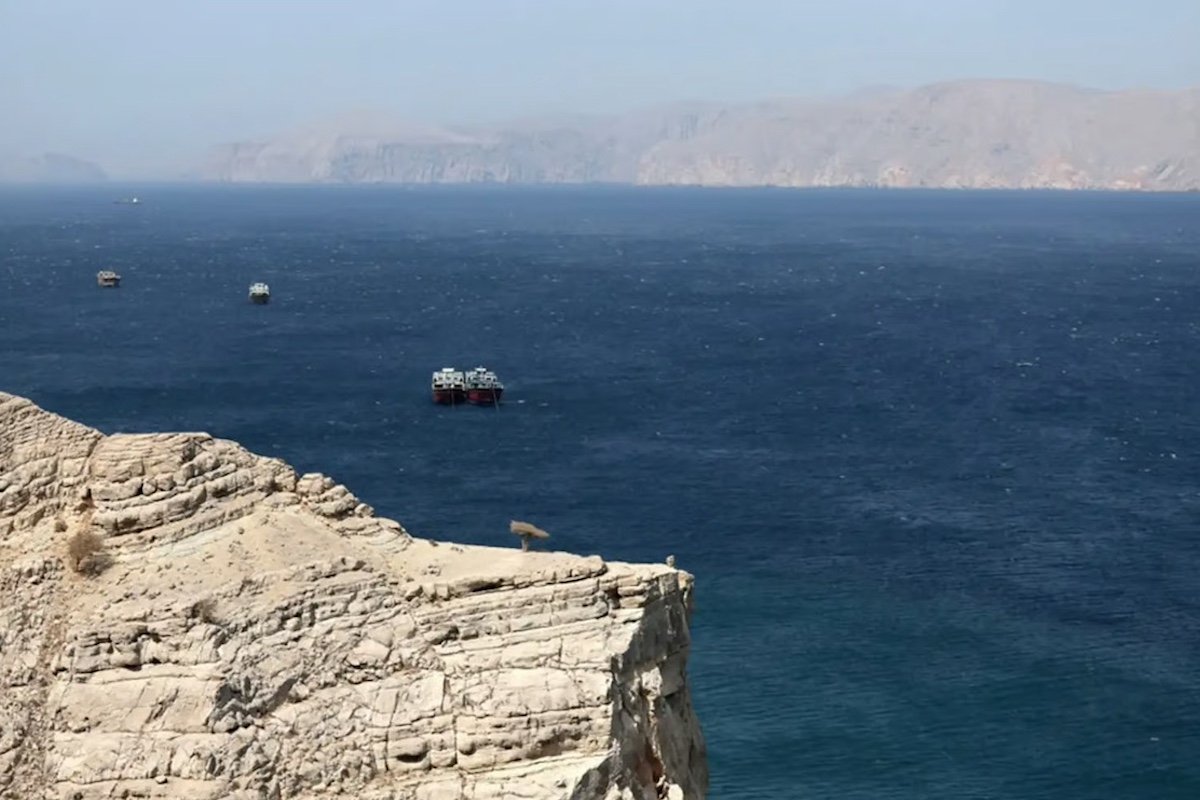
Today, the United States confronts Iran over the Strait of Hormuz, a chokepoint for roughly 20% of the world's oil supply. Washington has imposed a naval blockade and demanded that Iran cease its threats to shipping, but the strategy is unraveling. As the International Energy Agency has warned, global oil reserves are at critical lows, and the crisis is already disrupting energy markets from Tokyo to Mumbai. The US approach mirrors Britain's Suez miscalculation: an overreliance on military force to control a strategic waterway, without a viable diplomatic or economic exit plan.
The Economic and Diplomatic Fallout
The parallels extend beyond strategy to economics. During Suez, the US weaponized financial markets against Britain by selling off pound sterling reserves and blocking an IMF loan, triggering a sterling crisis. Today, the US faces its own financial vulnerabilities. The dollar's dominance is under pressure from de-dollarization efforts by China, Russia, and even some US allies. Iran has already begun using petroyuan tariffs in the Strait of Hormuz to reshape global energy trade, as reported by Asian Examiner. This shift could accelerate the erosion of the dollar's role in energy markets, a development that would have profound implications for the US economy and its global influence.
Diplomatically, the US is increasingly isolated. While Washington has rallied some allies, key Asian powers—China, India, Japan, and South Korea—are deeply dependent on Gulf oil and have resisted full alignment with the US blockade. They are exploring alternative routes, including a strategic pivot to the Arctic, as detailed in our analysis. This fragmentation of the US-led order echoes the Suez crisis, when Britain's closest allies, including the US, abandoned it.
Domestic politics also mirror the Suez era. In 1956, British public opinion was divided: 44% opposed the use of force, and 30,000 protesters gathered in Trafalgar Square. Today, US public support for military action in the Middle East is tepid, and anti-war sentiment is growing. President Donald Trump's administration, like Eden's, faces a credibility gap. The recent incident where US forces sank Iranian boats in the Strait of Hormuz, despite claims of a ceasefire, underscores the volatility and lack of a coherent strategy, as noted by our defense correspondent.
What Comes After
Britain's post-Suez transition was painful but ultimately successful. Under Prime Minister Harold Macmillan, the country withdrew from bases in Asia, accelerated decolonization, and repositioned itself as a junior partner to the United States. Domestically, it built a mixed economy with strong public services. The lesson for the US is that imperial overreach can be managed, but only by accepting a diminished global role and focusing on domestic renewal.
For Asia, the stakes are immense. The Strait of Hormuz crisis is not just a US-Iran issue; it is a test of the region's ability to secure its energy lifelines and navigate a multipolar world. As the US confronts its Suez moment, Asian capitals must prepare for a future where American guarantees are no longer reliable. The decline of empires is never neat, but it is always instructive.