United States Defense Secretary Pete Hegseth told reporters on Tuesday that the ceasefire agreement reached last month between the Trump administration and Iran remains intact, even as American naval forces engaged Iranian vessels in the Strait of Hormuz. Hegseth characterized the US response as “aggressive” but insisted it did not violate the truce.
“The ceasefire is not over,” Hegseth said. “We expected there would be some churn, which happened, and we said we would defend and defend aggressively, and we absolutely have.” He added that the US is “not looking for a fight.”
The comments come after US Central Command reported that its warships shot down Iranian cruise missiles fired by the Islamic Revolutionary Guard Corps (IRGC) at vessels being escorted by the US Navy. Army helicopter gunships also sank six Iranian military speedboats. Hegseth described the US posture as a “powerful red, white, and blue dome” over the strategic waterway, calling it a “direct gift from the US to the world.”
Project Freedom and the Fragile Truce
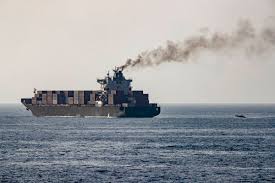
The new US operation, dubbed Project Freedom, began Monday and involves guiding commercial ships through the Strait of Hormuz. Iran had effectively closed the strait more than two months ago in retaliation for the US-Israeli military campaign against the country, which began on February 28 with the stated aim of eliminating Iran’s missile and nuclear capabilities. The US Navy subsequently blocked vessels traveling to or from Iran.
Hegseth emphasized that Project Freedom is “separate and distinct” from the broader military assault on Iran. However, the distinction has drawn skepticism. Analysts have noted that the US weapons depletion from the Iran campaign raises questions for Asia, as the Pentagon’s focus on the Middle East could affect its ability to respond to contingencies in the Indo-Pacific.
Admiral Brad Cooper, head of US Central Command, confirmed that US forces engaged Iranian cruise missiles and speedboats on Monday. But an IRGC commander told Iranian state-affiliated media that US forces actually attacked “two small boats carrying people on their way from Khasab on the coast of Oman to the coast of Iran” and killed five civilians, denying that any IRGC vessels were hit.
Hegseth dismissed the Iranian account, insisting that Iran is the “aggressor.” He warned that if President Donald Trump deems it “necessary,” the US could restart “major combat operations.”
War Powers Act Controversy
The administration’s legal interpretation of the ceasefire has come under fire. Trump notified Congress last Friday that hostilities with Iran had been terminated, meeting the 60-day deadline set by the 1973 War Powers Act. The law requires US presidents to end conflicts not authorized by Congress within 60 days of notifying lawmakers.
Hegseth argued that the ceasefire “stops the clock” on that 60-day period. “If it were to restart that would be the president’s decision,” he said. “That option is always there and Iran knows that.”
NBC News senior national politics reporter Jonathan Allen said he had “never heard” of such reasoning. Fred Wellman, a Democratic congressional candidate in Missouri, accused the administration of making up “a new interpretation” to avoid the War Powers Act. “Now they are lying and saying this is an all-new, shiny war and not the same one,” Wellman said.
The controversy underscores the fragility of the ceasefire and its implications for global energy markets. The Strait of Hormuz is a critical chokepoint for oil shipments, and any disruption affects economies across Asia, from Japan and South Korea to India and China. Hegseth’s framing of the war as a “gift to the world” has been met with skepticism, particularly as food and fuel prices remain elevated.
For now, the ceasefire holds in name, but the waters of the Strait of Hormuz remain contested. Whether the Trump administration can sustain this balancing act—projecting force while claiming restraint—will determine not only the fate of the truce but also the stability of a region that supplies much of Asia’s energy.