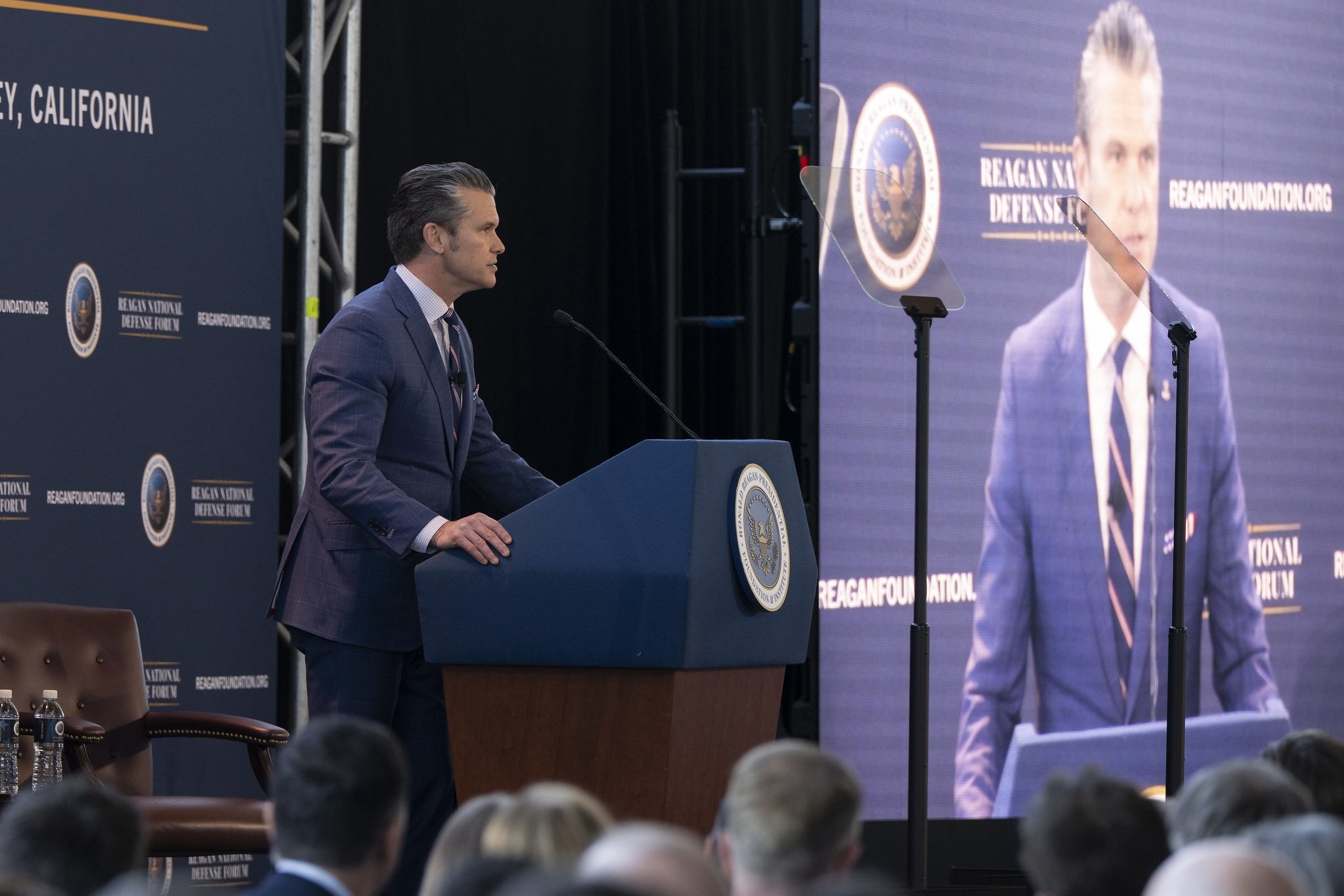
US Defense Secretary Pete Hegseth on Friday once again framed the Trump administration's war with Iran as a boon to the international community, even as the conflict disrupts global oil markets and threatens food supplies across Asia and beyond. Speaking at the Pentagon, Hegseth described the campaign, launched in late February without European consultation, as a "bold and dangerous mission" and a "gift to the world" courtesy of President Donald Trump.
The war, which has already cost US taxpayers an estimated $60 billion, has triggered a sharp rise in jet fuel prices, forcing airlines worldwide to cut flights. German carrier Lufthansa announced it is reducing 20,000 flights through October, while Delta Air Lines has also trimmed schedules. But the most severe consequences may be felt in Asia, where the conflict has disrupted fertilizer shipments through the Strait of Hormuz, a critical chokepoint for global trade.
Asia Braces for Food Shortages
According to a report by the South China Morning Post, Asian nations are preparing for potential food shortages as the war limits access to fertilizers essential for the current planting season. Scientists have warned that a "super El Niño" could compound the crisis by bringing lower-than-average rainfall to the region. Gnanasekar Thiagarajan, founder of India-based Commtrendz Research, told the newspaper: "It is very concerning because this year is supposed to be a super El Niño, and you are getting into the planting season. This is going to be widespread across South and Southeast Asia. There will be dryness everywhere."
Jorge Moreira da Silva, executive director of the United Nations Office for Project Services (UNOPS), warned on Tuesday that the closure of the Strait of Hormuz to fertilizer shipments poses a real risk of a global food crisis. "The planting season has already started, and in most countries in Africa it will end in May," he said. "So, if we don't get some solution immediately, the crisis will be very significant and severe, particularly for the poorest countries and for the poorest citizens."
The war's impact on Asia is not limited to agriculture. The blockade has also raised energy costs for major importers like Japan, South Korea, and India, compounding inflationary pressures. For a deeper look at the strategic stakes, see our analysis: Hormuz Blockade Raises Stakes Ahead of Trump-Xi Summit.
Hegseth Chides Allies, Threatens Press
Hegseth used the briefing to criticize European allies for not joining the US-led campaign, which was launched jointly with Israeli Prime Minister Benjamin Netanyahu. "America and the free world deserve allies who are capable, who are loyal, and who understand being an ally is not a one-way street," he said. "We are not counting on Europe, but they need the Strait of Hormuz much more than we do, and might want to start doing less talking and having less fancy conferences in Europe, and get in a boat. This is much more their fight than ours."
The Pentagon chief also directed sharp words at the American press, urging reporters to "think twice" before publishing stories based on classified information—a practice that has historically exposed government abuses, including war crimes. Hegseth described such reporting as "incredibly irresponsible and unpatriotic." The Trump administration has sought to curtail press freedoms during the Iran conflict, with President Trump threatening to jail journalists who publish leaked information about a US fighter jet shot down over Iran. Last month, the Pentagon temporarily barred press photographers from war briefings after Hegseth's staff objected to "unflattering" images.
In a separate move, the Pentagon attempted to force journalists to pledge not to publish or solicit unauthorized information, with violators risking their press passes. A federal judge blocked that policy and rebuked the department for trying to reimpose it with minor changes. Seth Stern, chief of advocacy at the Freedom of the Press Foundation, noted that the Pentagon's legal arguments imply reporters could face criminal charges for soliciting non-public information from unauthorized personnel. "The government's argument would have turned countless Pulitzer-winning national security reporters into criminals," Stern wrote.
The broader implications of the conflict for regional stability are explored in Trump's Iran Campaign: A Pyrrhic Victory in the Making?, which questions whether the military gains justify the economic and diplomatic costs.