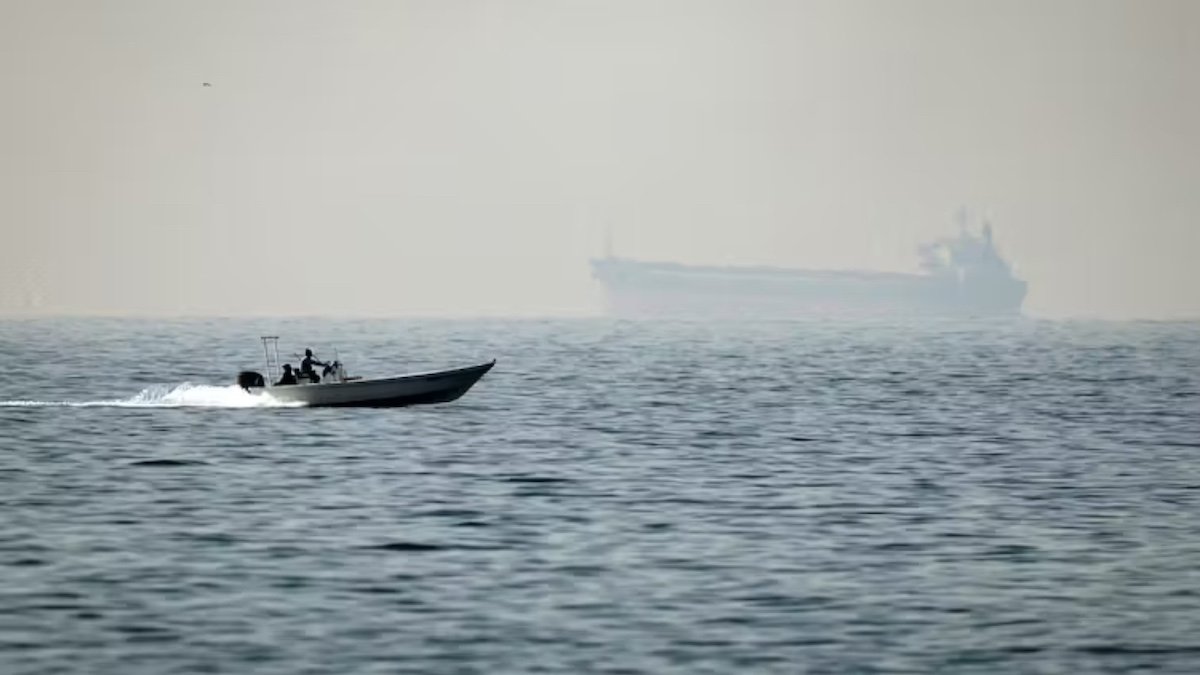
For weeks, the Strait of Hormuz has been a focal point of military confrontation between Iran and the United States, with both sides imposing blockades and the US Navy escorting commercial shipping. But beneath the surface of these tactical maneuvers, a more profound shift is underway: the weaponization of energy payments to challenge the dollar's dominance and advance Iranian war reparations claims.
Iran has announced plans to levy tariffs on vessels passing through the strait, denominated in Chinese yuan rather than US dollars. These fees, estimated to be worth between $40 billion and $50 billion annually, are framed as reparations for damage inflicted during the conflict. The move is designed to circumvent US economic sanctions and deepen Tehran's financial integration with Beijing.
According to reports, some vessels bound for China, India, and Japan have already made such payments, and the Iranian parliament is working to formalize the process. Iran has also begun accepting cryptocurrency for certain transactions, signaling a broader effort to diversify away from dollar-based systems.
Petrodollar Under Pressure
The petrodollar system, established in the 1970s when the US secured Saudi Arabia's agreement to price oil exclusively in dollars in exchange for military protection, has long underpinned American global influence. OPEC members and other oil exporters accumulated vast dollar surpluses, which were recycled into US Treasury securities and other assets, financing American deficits and reducing borrowing costs.
Iran's tariff scheme, if widely adopted, could erode this arrangement. As economist Antonio Bhardwaj has noted, payments in petroyuan would represent "the systematic erosion of the petrodollar system and the emergence of the petroyuan as a credible, institutionally embedded alternative framework for settling global energy transactions."
The United Arab Emirates, a key US ally, has already withdrawn from OPEC, a move widely seen as a blow to the cartel's cohesion. Meanwhile, the UAE and other Gulf states—Bahrain, Qatar, Kuwait, and Saudi Arabia—face a dilemma: pay Iranian tariffs in yuan and align more closely with China, or refuse and risk higher costs or exclusion from the strait.
International relations analyst Pakizah Parveen has described the potential emergence of "a bifurcated global oil market: barrels from compliant parties would move through Hormuz in yuan. In contrast, non-compliant parties would incur significantly higher costs in dollar-denominated barrels."
This choice would directly affect major US allies in Asia, including Pakistan, South Korea, Japan, and the Philippines, all of which have faced severe economic pressures from Gulf disruptions. Paying in yuan would draw them closer to China and reinforce Beijing's narrative as a stable economic partner. It also mirrors Russia's demand for yuan payments for its oil exports since 2025.
The broader implications extend beyond the Gulf. For the first time since 1996, global central banks hold more gold in their reserves than US debt securities. BRICS members—China, India, and Brazil—have all reduced their US holdings in 2025. While it would be premature to declare a general de-dollarization, Iranian tariffs could accelerate a gradual devaluation of the dollar and reduce dependence on Washington.
As the Strait of Hormuz reshapes global power dynamics, Iran's move signals an emerging multipolar world where US preeminence is no longer assured. For countries across Asia and the Indo-Pacific, this means greater strategic flexibility—but also heightened uncertainty.