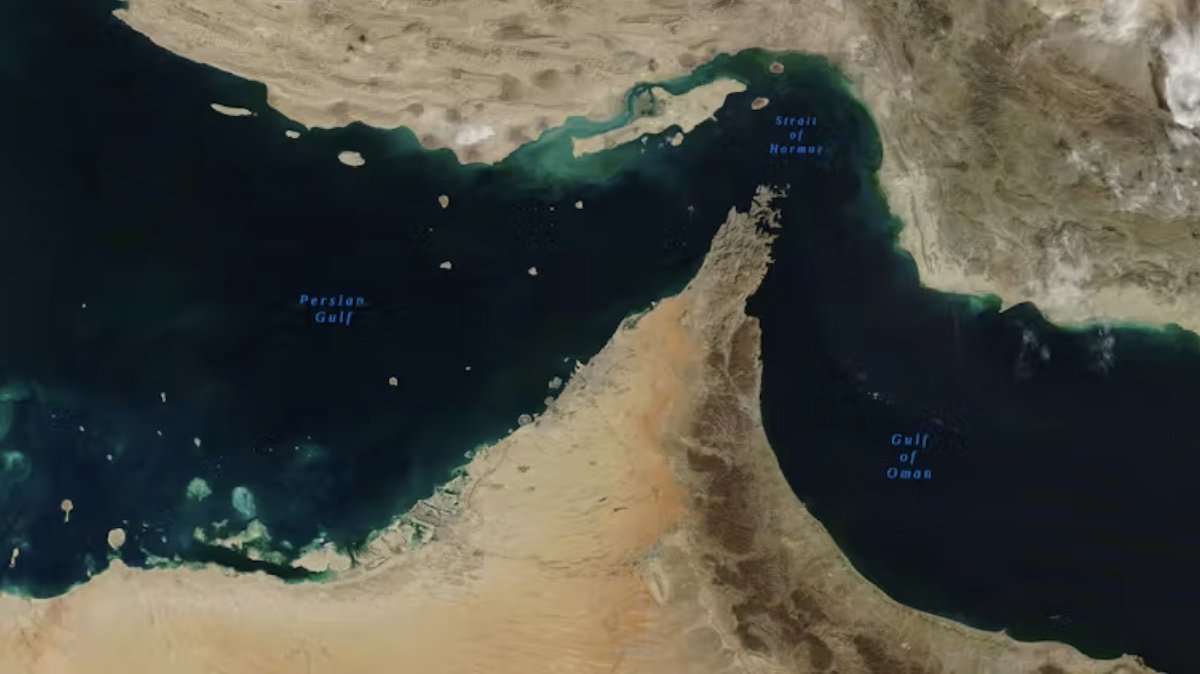
Confronting superior military forces from the United States and Israel, Iran has deployed its most potent strategic weapon: its geography. By threatening to blockade the Strait of Hormuz, Tehran has demonstrated that in modern conflicts, leverage often trumps raw firepower. This narrow maritime chokepoint, through which approximately 20% of the world's seaborne oil and a significant portion of its liquefied natural gas flows, represents an asymmetric advantage that has forced a recalculation in Washington and global capitals.
The immediate economic impact has been severe, with crude oil prices doubling and triggering inflationary pressures on fuel, food, and transportation costs worldwide. This pressure has introduced new urgency into diplomatic calculations, notably for the US administration facing domestic economic concerns. The situation underscores a core principle of strategic interaction: power is derived not just from military capability, but from control over assets others cannot do without.
The Calculus of Strategic Patience
This standoff illustrates a classic game theory dynamic, where each side's strength is defined by its vulnerability to a prolonged conflict and its capacity for patience. While Iran would suffer from depleted missile stockpiles and damaged infrastructure under continued hostilities, its political structure allows it to endure domestic hardship. In contrast, the United States faces the compounding costs of military engagement alongside the political and economic fallout from sustained high energy prices, a potent concern ahead of electoral cycles.
The result is a surprising recalibration of power. The US position is weaker than its military dominance would suggest, constrained by a global dependency on a waterway it does not control. For more on the potential pathways out of this impasse, see our analysis on how Washington and Tehran could avert conflict. This dynamic is straining traditional alliances, as explored in how the US-Iran stalemate reshapes Asian energy security.
Asia's Varied Forms of Leverage
The lesson of Hormuz is not lost on Asia's major powers, each of which is cultivating its own unique forms of strategic leverage. For China, it is the nation's entrenched position as the world's primary manufacturing hub. The global economy's deep reliance on Chinese production for everything from electronics to pharmaceuticals grants Beijing substantial diplomatic and economic sway, a form of leverage it has not hesitated to use in trade disputes.
India's growing leverage stems from its massive consumer market, demographic dividend, and strategic location in the Indian Ocean. Under Prime Minister Narendra Modi, New Delhi has skillfully used its position as a swing state in a multipolar world to extract concessions from both Western and Eastern blocs. Japan, despite its pacifist constitution, holds leverage through advanced technology, financial capital, and a quietly expanding security role, a tension examined in Japan's strategic ambiguity.
In Southeast Asia, nations like Indonesia under President Joko Widodo leverage critical natural resources, such as nickel for electric vehicle batteries, while Vietnam positions itself as a crucial alternative node in diversified supply chains. South Korea's leverage is rooted in its technological dominance in semiconductors and batteries, making its cooperation essential for global industries.
Beyond Geography: The New Currency of Power
The pursuit of leverage extends beyond traditional geographic or resource control. The European Union has long used the size of its single market to set global standards and secure preferential trade terms. However, as economic gravity shifts toward Asia, with growth centered on China, India, and Indonesia, the EU's relative leverage is diminishing, prompting discussions about deeper integration and enlargement.
This new reality explains why alliances have become more fluid and transactional. When President Donald Trump threatened to leave NATO or made remarks about annexing territories, it signaled a world where traditional security guarantees are no longer absolute. In this environment, interdependence is the new constant. Complex global supply chains mean a disruption in the Strait of Hormuz can lead to shortages of goods in supermarkets in London or Tokyo, linking regional stability directly to household economies.
Consequently, strategic success in the coming decades will belong to nations that master a dual imperative: avoiding over-reliance on any single partner while cultivating an asset—be it a shipping lane, a rare mineral, a technological monopoly, or a vast market—that makes them indispensable to others. The goal is to possess your own 'Strait of Hormuz' while minimizing your need to sail through anyone else's. For nations across the Indo-Pacific, from Tokyo to New Delhi to Jakarta, this is the defining strategic challenge of the age.