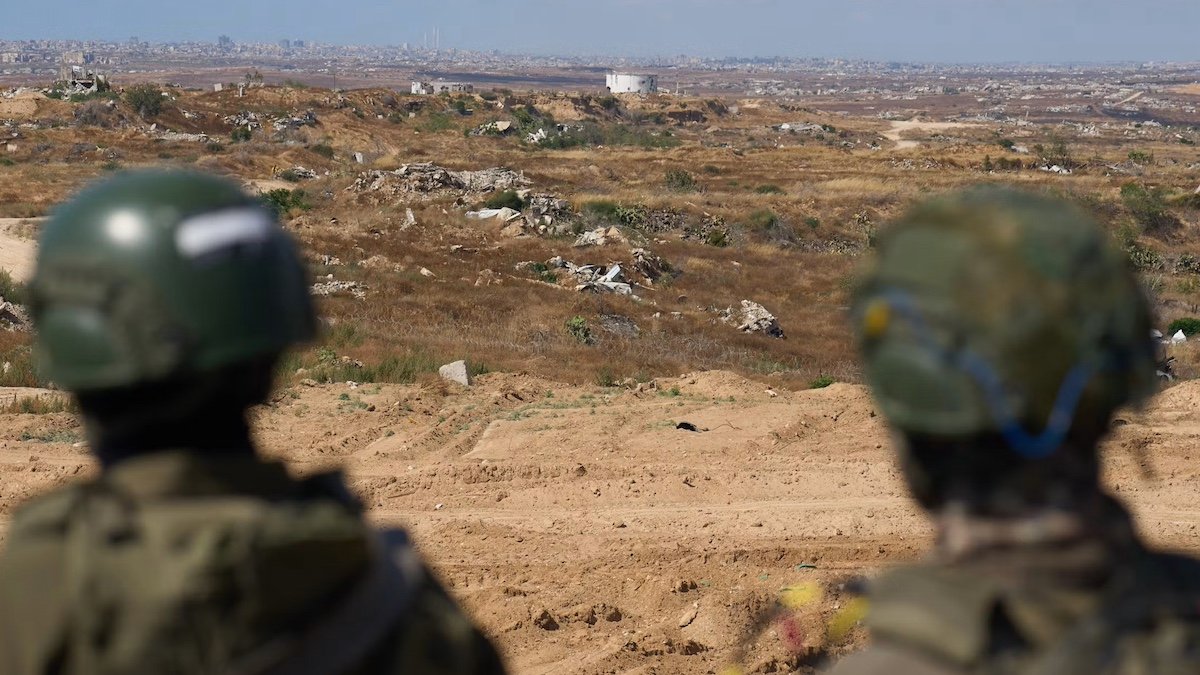
In recent weeks, Israeli Prime Minister Benjamin Netanyahu has directed the Israel Defense Forces to extend their control over 70% of the Gaza Strip, a significant increase from the 60% they already held. This move follows an updated map circulated to aid agencies in late March, which introduced a new "orange line" demarcating a restricted military zone roughly 11% larger than the area agreed upon under the "yellow line" in the October ceasefire with Hamas.
Israel's defense minister has also confirmed the government's intention to relocate large numbers of Palestinians out of Gaza "at the right time and in the right manner." These developments occur against a backdrop of political turmoil in Israel: the Knesset dissolved itself on May 20, paving the way for a potential early election in September.
Violating the Ceasefire Agreement
The actions directly contravene the 20-point Gaza peace plan, which called for a phased withdrawal of Israeli troops and explicitly encouraged residents to remain. The plan states: "No one will be forced to leave Gaza, and those who wish to leave will be free to do so and free to return. We will encourage people to stay and offer them the opportunity to build a better Gaza." US Secretary of State Marco Rubio acknowledged this week that the peace plan "doesn't call for" expanded military control of the strip.
The 2.1 million Palestinians in Gaza are being squeezed into an ever-shrinking pocket of the devastated, overcrowded territory. The international community appears largely passive in the face of this expansion.
International Legal Constraints
International law permits military occupation in pursuit of war aims but imposes two critical limitations. First, an occupying power cannot assert sovereignty over the territory. The UN Charter's Article 2(4) explicitly prohibits conquest, a breach considered a war crime—the crime of aggression. For Israel, this means its control of Gaza cannot lead to a claim of sovereignty over any part of the strip, as the International Court of Justice (ICJ) underscored in its 2024 advisory opinion on Israel's actions in the occupied Palestinian territories.
Second, any occupying military power must comply with international humanitarian and human rights law, ensuring the welfare of the population under its control. This has been Israel's obligation since it captured Gaza from Egypt in the 1967 Six-Day War, and it continued even after Israel withdrew its troops and dismantled settlements in 2005. The occupying power must preserve the demographic composition of the territory, prohibiting the removal of Palestinians and the transfer of Israeli settlers onto occupied land.
A Flawed Peace Process
Despite these legal principles, enforcement remains difficult. The ICJ's 2024 advisory opinion ordered Israel to withdraw fully from the occupied Palestinian territories, but Israel ignored the September 14, 2025 deadline set by the UN General Assembly. The General Assembly cannot enforce ICJ rulings; only the Security Council can, and that avenue is blocked by the US veto.
The 20-point peace plan, mediated by US President Donald Trump and overseen by the so-called Board of Peace, has further blurred the clarity of international law. The UN Security Council endorsed the plan last November, aiming to end the conflict, disarm Hamas, and establish a transitional government under the Board of Peace and an International Stabilisation Force. However, the ceasefire agreement was flawed from the start, lacking specifications on Israel's presence, accountability for alleged crimes, or demilitarization of Palestinian groups.
Since the ceasefire, Israeli strikes have continued, killing over 900 Palestinians. Aid delivery remains far below the needs of the desperate population, and Hamas refuses to disarm without firm guarantees on future Palestinian self-determination. This stalemate suits Israel, which has used the ceasefire to expand its military footprint.
Behind the Yellow Line
Under the ceasefire map, Israel was permitted to keep troops behind a "yellow line" encircling the majority of the population along the coast, giving it control of just over half of Gaza. Since then, Israel has leveled entire neighborhoods and hundreds of buildings, turning this area into a wasteland devoid of inhabitants and landmarks. On this blank canvas, it has constructed military roads, outposts, and permanent earthen berms, as detailed in satellite imagery revealing Israel's permanent military buildup inside Gaza.
This infrastructure suggests a long-term strategy of perpetual control over a territory emptied of Palestinians. If this status quo continues, it amounts to forced displacement and conquest. Day by day, Palestinian Gaza is shrinking, and the peace plan is dying.
The implications for the Indo-Pacific are significant. As the US focuses on the Middle East, its strategic attention may be diverted from Asia, potentially affecting alliances with countries like Japan, South Korea, and India. The erosion of international norms in Gaza could embolden other regional actors, complicating security dynamics from the South China Sea to the Korean Peninsula.