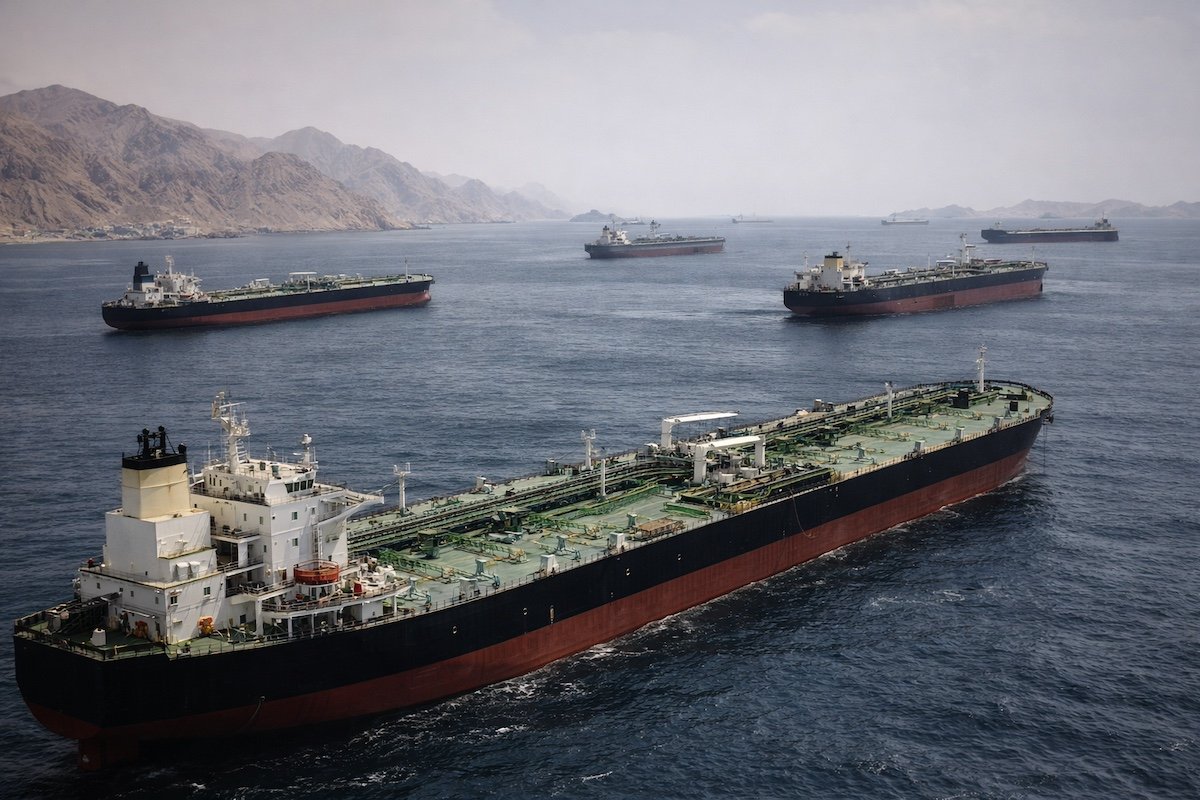
The ongoing military escalation in the Middle East, particularly around the Strait of Hormuz, the Bab al-Mandab Strait, and the Suez Canal, is exposing deep vulnerabilities in global logistics that extend far beyond energy markets. While much of the security debate focuses on oil price volatility, a more devastating crisis is unfolding at the intersection of maritime chokepoints and agricultural supply chains.
For decades, global freight operators treated major sea routes as fixed constants, enabling hyper-efficient "just-in-time" logistics that minimized inventory costs. But this optimization stripped the system of buffer capacity, making the global food trade acutely sensitive to geopolitical shocks. Unlike industrial components, agricultural goods and humanitarian aid cannot survive prolonged disruptions—they are perishable and operate on razor-thin margins.
The Land Corridor Myth
A dominant narrative in Western and Eurasian policy circles holds that land-based intermodal corridors, especially the Trans-Caspian International Transport Route (the Middle Corridor), can serve as an emergency safety valve. To test this, researchers at an Asian institute conducted a network flow optimization analysis using the Edmonds-Karp maximum flow algorithm. The results deliver a harsh reality check.
The simulation shows that the Middle Corridor reaches saturation at just 12 intermodal container trains per day. Each train carries roughly 100 twenty-foot equivalent units (TEU), yielding a maximum throughput of 1,200 TEU per day. By contrast, a single modern ultra-large container vessel (ULCV) routinely carries up to 24,000 TEU. The entire daily capacity of the main land-based Eurasian rail corridor equals just 5% of the cargo displaced by one container ship.
The primary bottleneck lies at the Caspian Sea transshipment point between Aktau, Kazakhstan, and Baku, Azerbaijan. Pushing cargo beyond 1,200 TEU causes terminal yard dwell times to jump from 48 hours to over 240 hours—10 days of severe gridlock. This paralysis is worsened by a shortage of rail-car ferries and delays at track-gauge transition points, where trains must shift from the 1,520-millimeter Russian gauge to the 1,435-millimeter European standard.
The Maritime Detour and Its Costs
With land corridors saturated, global logistics must rely on the maritime detour around Africa via the Cape of Good Hope. While the open ocean offers unlimited capacity, it imposes severe time and cost penalties. Rerouting adds 3,500 to 4,000 nautical miles, delaying voyages by 10 to 14 days. Fuel consumption rises by 450 to 600 metric tons per vessel, driving operational costs up by 34.6%.
For low-margin agricultural commodities like wheat and corn, these penalties flow directly to retail markets. Agricultural shippers and humanitarian organizations cannot absorb a 34.6% freight rate spike, so the cost is passed entirely to consumers. The model predicts that within 14 days of a chokepoint closure, supply gaps trigger panic buying and localized shortages. Within 30 days, food prices spike 15% to 22% in vulnerable, import-dependent regions, most notably in East Africa and across the Global South.
For populations that already spend over 40% of household income on food, this logistics-driven inflation directly reduces caloric intake and sharply raises the risk of widespread famine. Maritime security is not a commercial luxury for shipping conglomerates; it is a core pillar of global human security.
This analysis underscores the stakes in the current standoff over the Strait of Hormuz. As Trump's Iran Standoff: No Good Escalation Options Left in Strait of Hormuz highlights, the crisis has no easy military solution. Meanwhile, Why Iran Finally Shut the Strait of Hormuz After Decades of Bluffing explains the strategic calculus behind Tehran's move.
To prevent logistics bottlenecks from turning into catastrophic humanitarian shocks, the international community must move beyond reactive crisis management. The authors propose three coordinated policy measures: First, the United Nations, in coordination with the World Bank and the G20, should establish an International Humanitarian Logistics Shielding Fund to absorb the 34.6% cost increase from the African detour by subsidizing war-risk insurance and fuel surcharges for certified vessels carrying grains, fertilizers, and medical supplies. Second, governments should mandate minimum buffer stocks of essential food commodities at strategic ports. Third, investment in multimodal infrastructure—including rail-ferry capacity and gauge-conversion technology—must be accelerated to provide genuine redundancy.
As Why US Military Force Alone Cannot Secure the Strait of Hormuz argues, securing these chokepoints requires diplomatic and economic tools, not just naval power. The alternative is a humanitarian crisis that no nation can afford.