In a striking reversal of fortune, US President Donald Trump now finds himself without a winning hand in his standoff with Iran, much like the position he accused Ukrainian President Volodymyr Zelensky of being in last year. While Iran is no match for the United States in conventional military terms, it has effectively leveraged its asymmetric capabilities to exert control over the Strait of Hormuz, a critical chokepoint for global energy supplies.
Trump can declare the strait open to commercial shipping, but he cannot enforce it. The US has resumed bombing Iran this week in an attempt to wrest control, but the reality is that there is no military pathway to reopening the waterway. As Trump's Iran strategy hits a strategic dead end, the options for escalation are narrowing.
Iran's Asymmetric Leverage
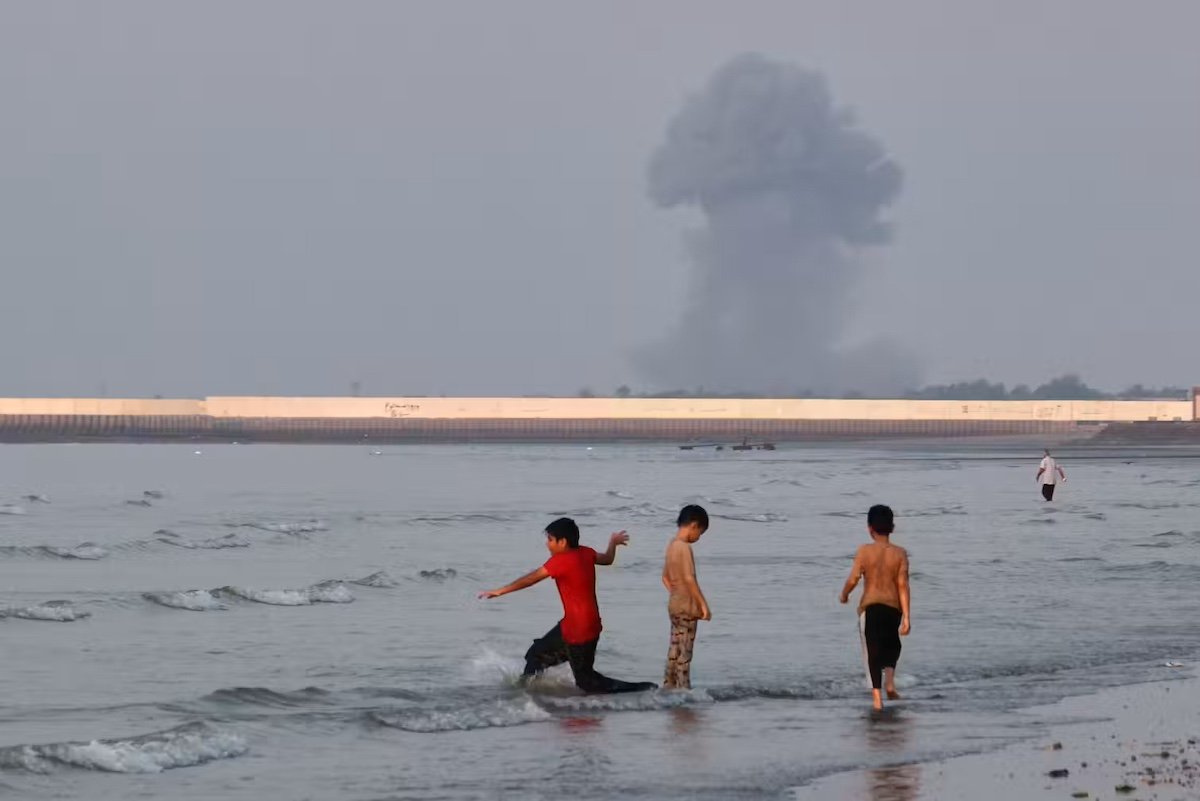
Iran's leverage stems from its ability to play a spoiling role in the Strait of Hormuz, through which 20% of the world's oil and gas, along with large supplies of sulphur, ammonia, urea, and helium, transit daily. The Islamic Revolutionary Guard Corps (IRGC) can threaten commercial traffic with drones or missile strikes at will. Despite heavy US bombardments since the war began, most of Iran's missile sites along the strait remain operational.
Shipping insurers like Lloyd's of London either refuse to insure transits or charge prohibitive premiums as long as the conflict continues. The IRGC can also strike sites in every Gulf state, as it has done at scale this week, severely damaging many US military bases across the region. The myth that having America as a house guest guaranteed security for Gulf states has been shattered.
Escalation Risks and Constraints
Neither the Iranian regime nor the Trump administration wants a significant escalation of hostilities. Both have much to lose—the military operations may have already cost the US more than $100 billion—and little to gain from a prolonged war. However, hardliners in Tehran, emboldened by national mourning for the martyred Supreme Leader Ali Khamenei, have a larger appetite for conflict. Analysts believe they could withstand a US naval blockade and bombardments for many more months.
Trump, desperate to be seen as a winner, faces weakened checks and balances on his power, raising the risk of reckless escalation. He has long threatened to strike Iranian civilian infrastructure, such as electric and desalination plants, which could trigger similar Iranian strikes on Gulf state energy infrastructure. This happened earlier in the war, and if repeated, could have lasting impacts on the global economy. Strikes on the 400 desalination plants that Gulf states depend on for drinking water would be devastating.
The Iranian regime could also pressure the Houthis in Yemen to escalate attacks on the Bab el-Mandeb Strait, through which 10% of global trade passes. So far, the Houthis have held off, partly due to a detente with Saudi Arabia, but this ceasefire appears shaky after a recent airport attack blamed on Riyadh.
The Impossibility of a Ground Campaign
Military campaigns from the air have never achieved regime change, and the US has failed to win a major war in the past 80 years. Any serious escalation against Iran would require US boots on the ground, similar to the Iraq invasion two decades ago. But Iran is almost four times the size of Iraq, and an international coalition force of hundreds of thousands proved insufficient to stabilize Iraq. It is inconceivable that a vastly larger force could be assembled to take control of even the mountainous southern coast of Iran.
Modern drones have ushered in a new era of warfare, one Iran is better positioned to exploit than the US. Iran possesses a remarkable depth of industrial military capacity, creating a more even match than expected against the world's most powerful military. Any US ground campaign attempting to occupy even a limited part of the Iranian coast or Kharg Island would face formidable opposition.
The risk of a much more serious escalation remains, including the small but not negligible risk of tactical nuclear weapons being deployed by the US, opening a Pandora's box of global consequences. As US wartime buildup races against China's industrial clock, the strategic implications for the Indo-Pacific are profound.
Trump's best option may be to allow Iran to retain a new level of control over the Strait of Hormuz, establishing a terrible precedent but perhaps the least worst outcome. This standoff underscores the limits of American power in a region where asymmetric warfare and regional dynamics defy simple military solutions.