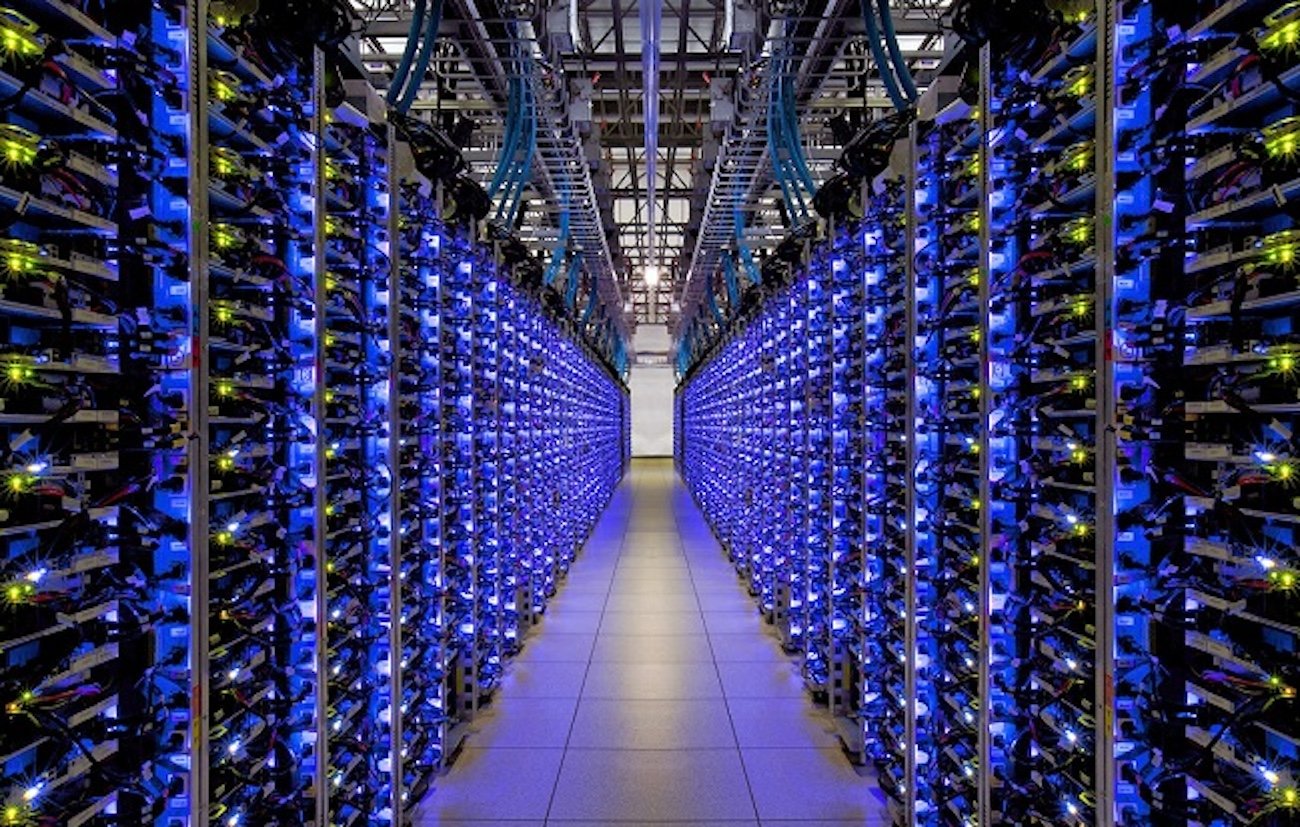
The race to build artificial intelligence infrastructure across Southeast Asia is accelerating, with national governments and private investors pouring billions into data centers. Thailand's Board of Investment (BOI) reported more than 1 trillion baht (US$30.7 billion) in investment applications in the first quarter of 2026, with the digital sector accounting for roughly 874 billion baht. Yet the region's ambitions face fundamental constraints: reliable electricity and water supplies remain scarce, and inter-nation rivalry fragments what could be a unified market.
The original catalyst for this boom was Singapore. The city-state imposed a moratorium on new data center builds in 2019, partially relaxed only in 2022, forcing pent-up demand to relocate. Singapore still hosts over 70 facilities with about 1.4 gigawatts of capacity, but its Energy Market Authority caps data centers at roughly 12% of national grid load. Construction costs there ranked second only to Tokyo globally in 2025, at $14.53 per watt. Singapore's strategy has shifted from competing on volume to competing on governance and efficiency: in December 2025, it opened a second Call for Applications for at least 200 megawatts, requiring half the power from green sources, and is anchoring a 700-megawatt low-carbon park on Jurong Island.
Johor Emerges as a Data Center Hub
The largest beneficiary sits a causeway away in Johor, Malaysia. Once merely Singapore's overflow valve, Johor has become a market in its own right. JLL projects Malaysian capacity will more than double to 2,055 megawatts by end of 2026, a roughly 70% compound annual growth rate, with another 3,500 megawatts in the pipeline. According to Cushman & Wakefield, Thailand and Malaysia together supplied nearly two-thirds of all new Asia-Pacific data center capacity in the first half of 2025.
But Johor also illustrates the model's limits. In February 2026, residents of Gelang Patah protested outside a data center construction site over water consumption—a resource these facilities use in enormous volumes for cooling. The AI boom will likely bring more such backlashes across the region, given precarious water and power resources.
Thailand's bid should be read against that backdrop. Its most telling asset is not the BOI's headline numbers but who is building. Gulf Development, the country's largest privately-held power producer, has pledged up to 140 billion baht over five years to expand from roughly 200 megawatts of data center capacity toward 2,000, in partnership with Google, which is investing $1 billion into a Bangkok cloud region, as well as Microsoft and a Singtel-AIS venture. When reliable power—or "firm power" in industry parlance—is the leading hurdle, whoever already owns the power plants is halfway to the finish line.
Indonesia's Sovereignty Play
Indonesia is the market where scale and sovereignty collide most directly. Microsoft has committed $1.7 billion and Nvidia a smaller sum to a venture in Solo, but the more telling deal is RangeIDC's $5 billion campus in Batam—the first overseas project for a Shenzhen-listed operator, sited on an island that serves as a low-latency annex of Singapore. Jakarta is simultaneously building a sovereign-AI story around GPU Merdeka and the Sahabat-AI local-language models, pitching domestic control of compute as a national project. Chinese capital, American chips, and Indonesian sovereignty rhetoric are being poured into the same concrete. How Jakarta manages that triangle will tell us more about the region's direction than any megawatt tally.
The Philippines is the market most regional analyses leave out, and the omission is a story in itself. The country has a credible pipeline—ABB recently energized VITRO Santa Rosa in Laguna, billed as the country's first AI-ready hyperscale site, with announced builds from ePLDT, STT GDC, and Digital Edge behind it. What holds it back is structural: grid-delivered power costs around $154 per megawatt-hour, the second-highest in ASEAN after Singapore, on a grid that cautious investors consider high risk. Manila has the land, connectivity, and an anglophone workforce, but until it can guarantee firm power, it will remain a secondary player.
Across the region, the AI race is less about algorithms and more about concrete, cables, and cooling towers. As India's AI Future: Deployment Over Discovery Reshapes Global Tech shows, the global trend is toward practical deployment rather than theoretical breakthroughs. For ASEAN, the challenge is whether its fragmented grids and separate aquifers can support the infrastructure required. The answer will determine not just which nation wins the data center crown, but whether the region can become a serious AI player at all.