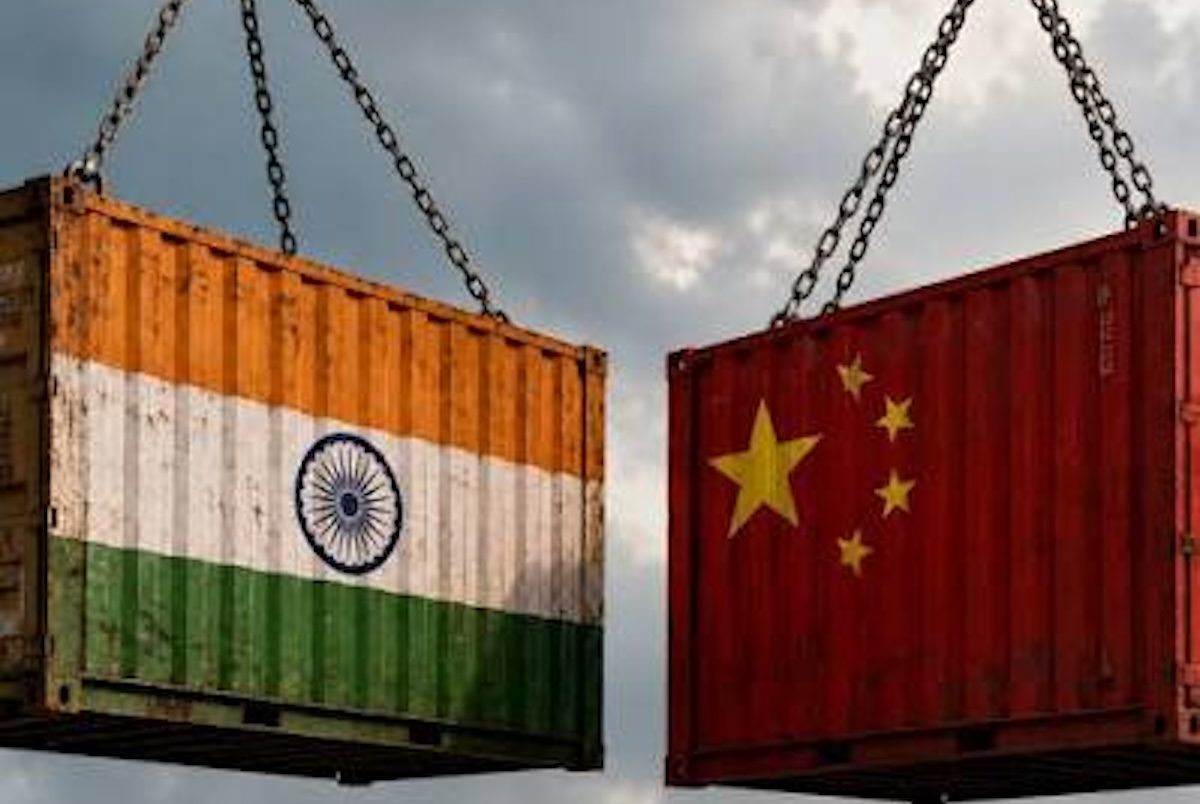
For three decades, India served as the world's back office—a vast pool of skilled engineers working at a fraction of Western costs. Now, as artificial intelligence reshapes global technology, the country stands at a crossroads. The same forces that threaten its $280 billion IT services industry may also unlock its next chapter: becoming the world's AI workshop.
The debate in New Delhi and Bangalore has largely centered on job losses. Large language models can now write code, generate reports, and handle customer queries—tasks that once required armies of Indian engineers. If machines replace routine programming, what becomes of the outsourcing capital? It is a legitimate worry, but perhaps the wrong framing. The AI revolution is not simply eliminating roles; it is redistributing them across nations. The United States, China, and India are carving out distinct positions in a new global division of labor.
The End of Labor Arbitrage?
India's rise as an IT powerhouse rested on a simple economic proposition: highly skilled engineers at costs far below those in Europe or the United States. Companies like TCS, Infosys, Wipro, and HCLTech became indispensable for global corporations needing software development, enterprise management, and IT infrastructure support. Generative AI upends that equation. Software that once took weeks can now be produced in hours. AI assistants accelerate coding, automate testing, and troubleshoot problems—tasks that justified large offshore teams are becoming automated.
For firms built on labor-intensive services, this is disruptive. If productivity doubles while demand stays constant, fewer engineers are needed for routine work. India's IT sector has acknowledged this reality, investing heavily in AI training and reshaping business models around automation. Yet every major advance in software development—from high-level languages to cloud computing—has shifted engineers toward higher-value work rather than eliminating them. AI is likely to continue that pattern.
From Code to Integration
The real opportunity lies beyond writing code. As AI becomes more capable, the bottleneck shifts from programming to implementation. Businesses still need people who understand workflows, regulations, languages, and industries. Someone must adapt AI systems to hospitals in Germany, banks in Singapore, manufacturers in Japan, retailers in Europe, and government agencies in Africa. Integration has long been India's comparative advantage. Indian engineers excel at deploying technology at scale, adapting global software to local requirements, and integrating complex systems across organizations. AI may therefore increase—not reduce—demand for these capabilities. Instead of supplying cheap programming labor, India's IT industry could provide something more valuable: AI implementation expertise.
This shift aligns with a quieter transformation: India's manufacturing sector has become deeply intertwined with Chinese technology over the past decade. Smartphones, industrial machinery, batteries, and renewable-energy equipment increasingly originate in Chinese supply chains, despite geopolitical tensions. AI may follow a similar trajectory. While American companies dominate proprietary frontier models, Chinese firms have released increasingly capable open-weight models that anyone can download, modify, and deploy on their own infrastructure. Former Google Brain co-founder and Baidu chief scientist Andrew Ng has argued that this strategy expands China's influence because it allows developers worldwide to build on Chinese AI without relying on commercial APIs or recurring fees.
This distinction matters. A proprietary model remains under its creator's control—access can be restricted, prices changed, or export controls applied. An open-weight model, once downloaded, becomes part of a country's own technological infrastructure. It can be customized, fine-tuned, and deployed independently. For India, the decision is less a geopolitical choice than an economic one.
Why Open Weights Matter
Open-weight models complement India's comparative advantage remarkably well. India does not need to build the world's most powerful foundation model to create enormous economic value. The software industry excels at adapting technology to specific industries and customers. Banks require different AI systems from hospitals; manufacturers have different needs than insurers; governments differ from retailers. India's decades of experience in customizing enterprise software naturally translate to customizing AI. The economics are compelling: rather than paying recurring fees for proprietary AI services, Indian companies can deploy open models on local infrastructure, train them on industry-specific data, and tailor them to local languages and regulations. Value shifts away from invention and toward integration.
This approach also strengthens India's strategic autonomy. By building on open-weight models, New Delhi can reduce dependence on both American and Chinese proprietary systems, a goal that resonates with its broader push for technological self-reliance. The India-Japan strategic convergence in the Indo-Pacific underscores how such autonomy can complement regional partnerships. Meanwhile, the nuclear buildup sharpening deterrence against Pakistan and China highlights the security dimensions of technological independence.
The path ahead is not without risks. Open-weight models may pose security and ethical challenges, and the transition from labor arbitrage to AI integration will require massive reskilling. But India's IT sector has reinvented itself before—from Y2K remediation to cloud computing. The AI era may be its most consequential reinvention yet.