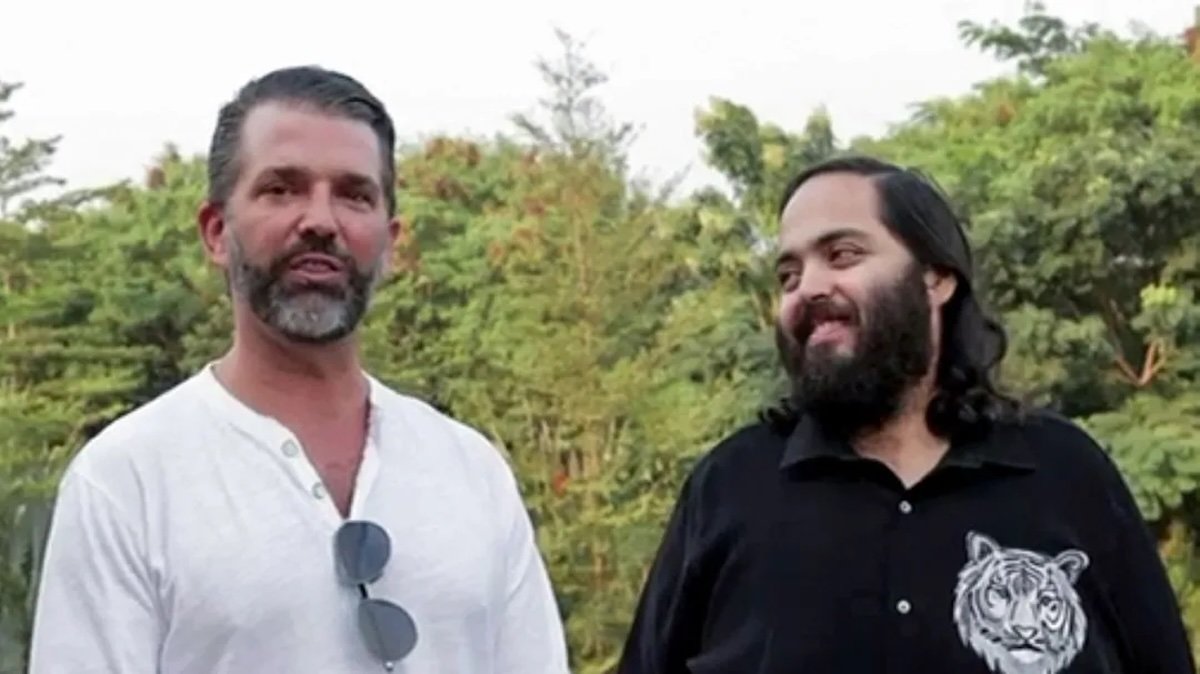
In late November, in the Indian city of Jamnagar, two heirs of powerful global families met: Anant Ambani, the 30-year-old son of Asia's richest man Mukesh Ambani, and Donald Trump Jr., son of the US president. They toured the Ambanis' private zoo and performed a Gujarati folk dance together. Four months later, an obscure Texas startup called America First Refining announced a nine-figure investment from Reliance Industries, the Ambani family's conglomerate.
The deal puzzled energy investors familiar with the project, which aims to build the first major new oil refinery in the US in about 50 years. The company is run by a serial entrepreneur with a history of bankruptcy and lawsuits alleging fraud. After more than a decade of failed attempts to raise money, blown deadlines, and rebrands, it had been floundering.
Trump Jr.'s Stake and the Ambani Connection
America First Refining's breakthrough came after it forged a previously unreported relationship with Trump Jr., who secretly acquired a stake in the startup, according to records and seven people familiar with the company. The size of his stake and what he paid remain unclear. Top executives at the startup have said they speak regularly with Trump Jr., according to a person close to the company. After the Ambani investment was announced, Trump Jr.'s personal lawyer took credit on social media for playing a part in the deal.
The new details reveal the role the president's son has played in a theme of Trump's second term: overseas investors with interests before the administration putting money into the Trump family's business interests. Over the past year and a half, Trump Jr. has amassed a fortune from stakes in companies ranging from crypto startups to a drone business to a firearms retailer. Forbes estimated his net worth rocketed from roughly $50 million to $300 million since the election, but those figures were based on publicly disclosed investments. The America First Refining episode suggests much about the family business remains secret.
America First Refining has flexed its Trump Jr. connections during pitch meetings with foreign officials. Early last year, Trump Jr. joined the company's leadership for a meeting in South Florida with potential investors from Saudi Arabia, according to two people familiar with the matter. Another foreign government official pitched on the project told ProPublica that the company's team emphasized it had backing from the Trump family and suggested that an investment would help with White House access.
A Trump Jr. spokesperson said he "has no operational involvement in AFR and is simply a passive minority investor in an American company that aligns with his worldview." The spokesperson added, "Don does not interface with the Federal Government on behalf of any company that he invests in or advises." ProPublica did not find evidence Trump Jr. was aware of refinery executives' suggesting that an investment would help with White House access. In response to detailed questions, a spokesperson for America First Refining said, "The claims in this story are false," but declined to specify what this charge referred to.
From Tariff Foe to Policy Friend
The Ambanis' investment coincided with the family's securing major US policy wins that Reliance had been lobbying for. "Reliance Goes From Trump Foe to Friend With Refinery Pledge," ran the Bloomberg headline after the deal was announced. Reliance's intent with the deal was to "smooth out" tensions between the US and India, the outlet reported. The Ambani family had long been cultivating its relationship with the Trumps. Reliance paid $10 million to the Trump Organization in 2024 as a "development fee" for a project in Mumbai, according to the president's financial disclosure. Ivanka Trump attended Anant Ambani's wedding party in India that year, where guests were treated to a Rihanna concert.
But by the summer of 2025, the family was under attack from the White House. Since Russia invaded Ukraine in 2022, Reliance had reportedly made billions in profits by purchasing vast quantities of Russian oil at a discount. In August, as Trump grew frustrated with his administration's struggles to bring the war to an end, the president doubled his tariffs on India to 50%. The move was explicitly designed to force companies like Reliance to stop buying Russian oil. The deal with America First Refining, announced shortly after, appeared to signal a shift in Reliance's strategy.
This story highlights the intertwining of business and diplomacy in the Trump era, particularly for Asian conglomerates like Reliance. As Trump's new tariffs hit Asia at a moment of maximum economic strain, the Ambani family's investment in a Trump Jr.-backed venture suggests a calculated move to navigate US trade policy. The episode also underscores the broader pattern of Trump family business interests intersecting with foreign policy, as seen in other regions like the Middle East, where Trump's leaked fury at Netanyahu signaled a shift in US-Israel ties.
The deal raises questions about the transparency of such investments and their potential influence on US policy toward India and the wider Indo-Pacific. For now, the Ambani family appears to have secured a foothold in the US energy market, while Trump Jr. adds another layer to his growing business empire.