On the night of May 31, near Sadipur in Jashore's Sharsha upazila, Border Guard Bangladesh (BGB) personnel discovered a section of the border fence had been cut open. On the Indian side stood more than a dozen people, including women and children, who had been driven to the spot by India's Border Security Force (BSF) and told to walk across. The BGB turned them back. A flag meeting between the two forces resolved nothing, and the group spent the night stranded in the strip of mud and wire that officials call no man's land.
That image — families caught between two nations that each refuse to claim them — encapsulates the deteriorating state of India-Bangladesh relations more starkly than any joint communiqué. And it is no longer an isolated incident. Bangladeshi border guards reported foiling ten separate push-in attempts within a single 24-hour span in early June. Rights monitors in Dhaka, including Ain o Salish Kendra and the Manabadhikar Shongskriti Foundation, have documented at least four Bangladeshis killed by BSF fire in the first four months of this year, and four more in May alone — three by gunfire and one in custody.
Kolkata's Toxic Politics Spill Across the Border
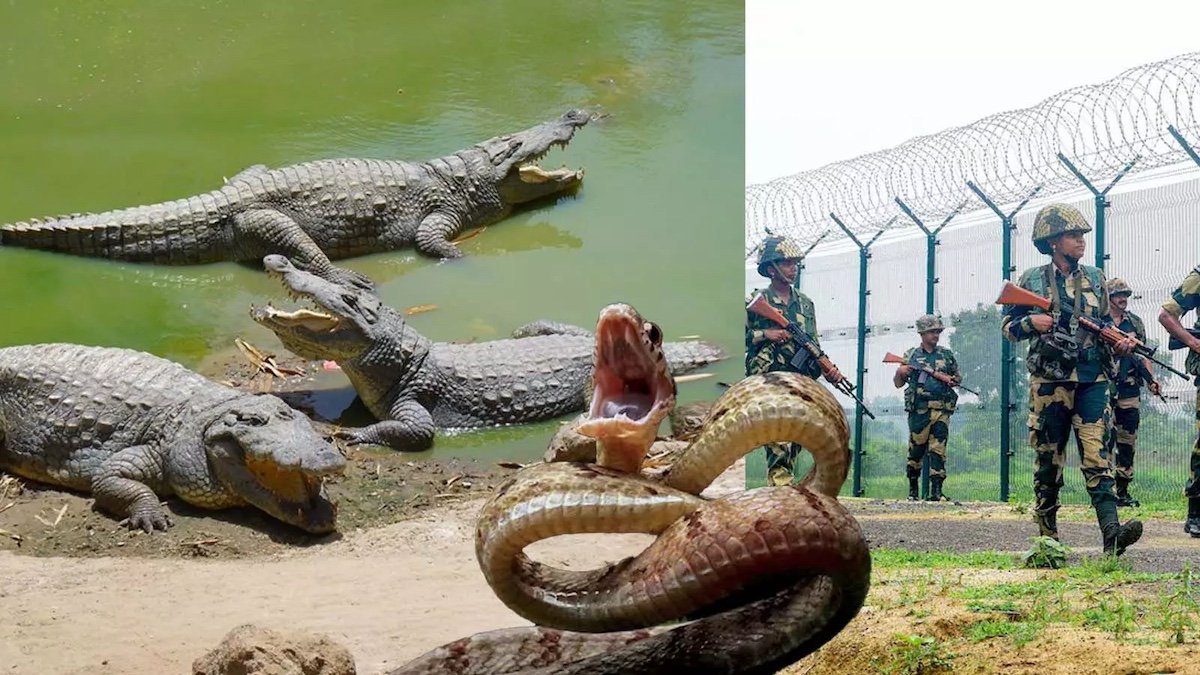
Much of this violence has little to do with Bangladesh itself. In May, West Bengal elected its first BJP government, an administration that campaigned on identifying and removing undocumented residents — a formula that does not cleanly distinguish between Indian citizens lacking paperwork and Bangladeshi migrants. Land along the border is being handed to the BSF on a tight deadline to erect fencing. The force has even floated releasing crocodiles and venomous snakes into riverine gaps that wire fencing cannot close.
The citizenship witch hunts, the "infiltrator" rhetoric, and the reptile-release proposal all carry the signature of New Delhi and Home Minister Amit Shah. What the Bengal election result added is a fresh local engine for the state government to keep generating headlines about expulsion. Kolkata's toxic domestic politics are now being exported across a frontier that runs through some of the most densely populated, waterlogged terrain on Earth.
Dhaka's New Assertiveness
Bangladesh's own politics have shifted as well. Dhaka is now governed by an elected administration under Prime Minister Tarique Rahman, not the interim government that ran the country for 18 months after Sheikh Hasina's fall and flight to India. A government elected in that politically charged aftermath carries a different kind of authority when it tells New Delhi that forced, unverified, nighttime push-ins are unacceptable. Hasina's administration was widely seen as deferential to India on these issues, and the quiet humiliations it absorbed at the border made the relationship increasingly corrosive at home. A government that owes part of its mandate to public memory of her deference, and that has branded its own foreign policy "Bangladesh First," cannot afford to look passive now.
The legal architecture for handling border management already exists. Bilateral arrangements dating back decades, including the 2011 Coordinated Border Management Plan, require both sides to exchange verified lists of names, confirm nationality through agreed channels, and return people only through designated crossing points. What is happening instead is closer to expulsion by ambush. People are moved at night, often by force, with no list exchanged and no chance to contest a mistaken identity. Some of those pushed across are likely Bangladeshi. Others, by credible accounts, are Indian citizens or long-settled Rohingya with no claim to Bangladeshi nationality at all. Treating a legal process as a logistics problem to be solved after midnight is how people end up dead in the water or stranded for days in the harsh open.
Talks Without Accountability
This month's director-general-level talks in New Delhi deserve to be taken seriously, but not mistaken for a solution. The 57th BGB-BSF conference produced commitments to coordinated patrols, real-time intelligence sharing, and a joint pledge to investigate killings on both sides and act against those responsible. Better coordination among border forces can reduce confusion at the operational level and cut down on chaotic crossings that get people killed. But a pledge to investigate is not the same as a published finding, and promises of exactly this kind have been made and shelved in the past. Nor does any of it deal with the political incentive on the Indian side to keep generating chest-thumping headlines about deportations, because that incentive sits in Kolkata's electoral calendar, not in any border-security manual.
Bangladesh's demands on India should be specific, not symbolic. Every return should pass through a named, verifiable channel, with a list exchanged in advance, and movement only through a recognized crossing point rather than a gap in the fence, and never in the darkness of night. Every killing should trigger a joint, time-bound inquiry with public results, not a routine note of regret. And Dhaka should connect conduct at the border to the things India actually wants from this relationship, such as transit access, water-sharing, and trade, rather than treating border security as a sealed compartment. As Bangladesh's Rahman uses China to pressure India on the Teesta River project, the border killings underscore how unresolved disputes poison broader cooperation.
The killings deserve to be named plainly, rather than folded into a general complaint about migration management. The death of 15-year-old Felani Khatun on the fence wire in 2011 became a symbol precisely because it exposed a pattern rather than an aberration — one that has outlasted every government in Dhaka since. An agreement on patrols and intelligence sharing, however welcome, will do nothing for accountability unless it is matched by a commitment to investigate each death and publish what is found, rather than quietly closing the file without follow-up. South Asia's petty border walls stifle regional integration, and the human cost of these walls is mounting.