The recent demotion of Haji Jumma Khan Fateh from deputy governor of Zabul province might appear as a routine administrative adjustment. But for analysts tracking the Taliban's internal dynamics, it signals a deeper and more troubling pattern: non-Pashtun commanders are valued for their battlefield utility but discarded once their independent power bases threaten the movement's Pashtun-dominated hierarchy.
Fateh, a Tajik commander with a robust network in Badakhshan province, had already been transferred south amid disputes over local authority and gold-mining revenue. His sidelining is not an isolated event. Regional reporting indicates that the Taliban systematically recruits Tajik and Uzbek commanders during territorial expansion, only to marginalize them after consolidating control.
Leadership Mapping Reveals Stark Imbalance
The Middle East Institute's Taliban Leadership Tracker, updated in May 2026, maps 1,215 senior and mid-level figures. It finds that 90% are Pashtun, compared with 5.2% Tajik and roughly 3% Uzbek. About 80% have military backgrounds, and only about 30 appointees come from outside the Taliban movement. Afghanistan lacks a reliable modern ethnic census, but widely used estimates place Pashtuns at roughly 40% to 45% of the population. Even allowing for uncertainty, the gap between population diversity and governing power is enormous.
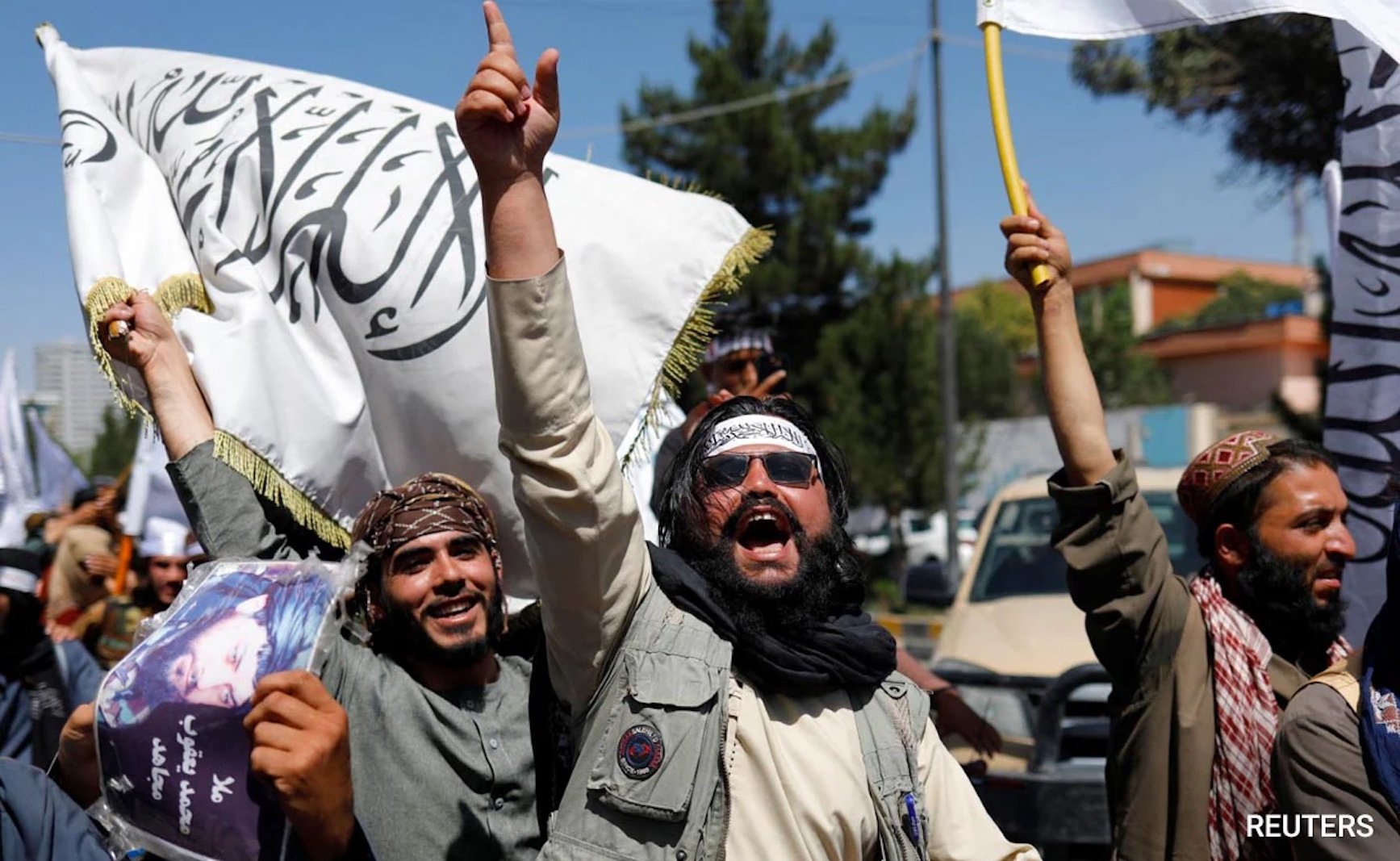
Taliban rule increasingly resembles a closed circulation of loyalists rather than a representative state. The Institute for the Study of War describes Supreme Leader Hibatullah Akhundzada as governing from Kandahar through a small inner circle while centralizing security authority. Early analysis by the Afghanistan Analysts Network found the cabinet overwhelmingly Pashtun, with only token representation for Tajiks and Uzbeks, no meaningful Hazara or Shiite representation, and no women. Later appointments have not altered that architecture: minority officials may retain titles, but strategic decision-making remains concentrated elsewhere.
This distinction between office and authority matters. Qari Fasihuddin Fitrat remains army chief and the most prominent Tajik in the military establishment, yet reported removals have disproportionately affected networks linked to northern commanders. The United Nations, including during its June 2026 Security Council briefing, continues to identify the absence of inclusive governance as an obstacle to Afghanistan's international reintegration. In a multiethnic state, representation determines whether citizens experience government as a national institution or as an external patronage network.
Northern Commanders Under Pressure
The Taliban expanded into northern Afghanistan partly by recruiting Tajik and Uzbek commanders who could mobilize locally. After the 2021 takeover, several were arrested, demoted, disarmed, or driven out. A detailed Hasht-e Subh investigation documented the arrest of Tajik commander Ghulam Hussain and the disarmament of about 350 of his fighters. Other cases include the arrest of Uzbek commander Makhdoom Alam Rabbani, the marginalization of Salahuddin Ayubi, and the departure of Abdul Hamid Khorasani after allegations of ethnic discrimination. Action against one commander frequently dismantles an entire subordinate network.
The fate of Mawlawi Mahdi Mujahid remains the starkest example. According to his Middle East Institute profile, the Taliban's most visible Hazara commander broke with the leadership amid disputes over exclusion and control of local economic resources. The Taliban later reported that he was killed near the Iranian border. His death removed the only prominent Hazara military figure capable of bargaining from within the movement and signaled that minority commanders would be tolerated only while politically dependent.
Mining Revenue Fuels Fiscal Ethnocracy
The most important new angle is that ethnic centralization is merging with fiscal centralization. Documents reported by Afghanistan International indicated that 4,403 Defense Ministry officers and staff were removed in 2025, including 1,000 in Badakhshan. The Taliban called the wider process budgetary streamlining, and a decree reportedly placed 20% of personnel in key security institutions on reserve status. Yet the geographic concentration of removals makes the process politically consequential regardless of its stated rationale.
Badakhshan's mining conflict sharpens the point. May 2026 reporting described the deployment of a roughly 1,000-member unit, the detention of at least 15 people linked to influential Tajik commanders, and the closure of about 2,000 allegedly illegal mining sites. An Afghanistan Analysts Network mining study shows that mining has become increasingly important to Taliban revenue, while opaque licensing, unsafe extraction, raw exports, and limited local benefit persist. Afghanistan's minerals are often valued at over $1 trillion, but the immediate question is who controls contracts, fees, and armed protection. A system in which loyalty decides who governs and factional proximity decides who benefits is becoming a fiscal ethnocracy.
This model may produce short-term obedience, but it weakens long-term cohesion. Dismissed fighters retain weapons knowledge, local relationships, and grievances. Communities that see their commanders removed and resources transferred elsewhere become more vulnerable to recruitment by resistance groups, criminal networks, or extremists. The danger is not that every excluded Tajik, Uzbek, or Hazara will rebel; it is that the regime is destroying the incentives that once kept northern networks inside its coalition. This is an analytical risk increasingly visible in assessments of Taliban factionalism and domestic opposition.
International actors should stop treating inclusion as a ceremonial demand. Diplomatic engagement, sanctions relief, mining partnerships, and eventual recognition should be tied to measurable reforms. As Afghanistan's economy remains crippled under Taliban mismanagement, the regime's ethnic chauvinism only deepens the country's isolation. Meanwhile, the EU-Taliban talks in Brussels undermine claims of principled policy, and the Taliban's new English-language propaganda machine attempts to whitewash these realities. Without a genuine shift toward inclusive governance, Afghanistan risks further fragmentation and a new cycle of conflict.