For much of the last two decades, the Taliban waged its war with rifles, roadside bombs, and guerrilla ambushes. Today, one of its most important battlefields lies not in the mountains of Afghanistan but in the information domain. The Islamic Emirate of Afghanistan (IEA) increasingly recognizes that modern conflicts are shaped not only by military power but also by narratives, legitimacy, and perception management.
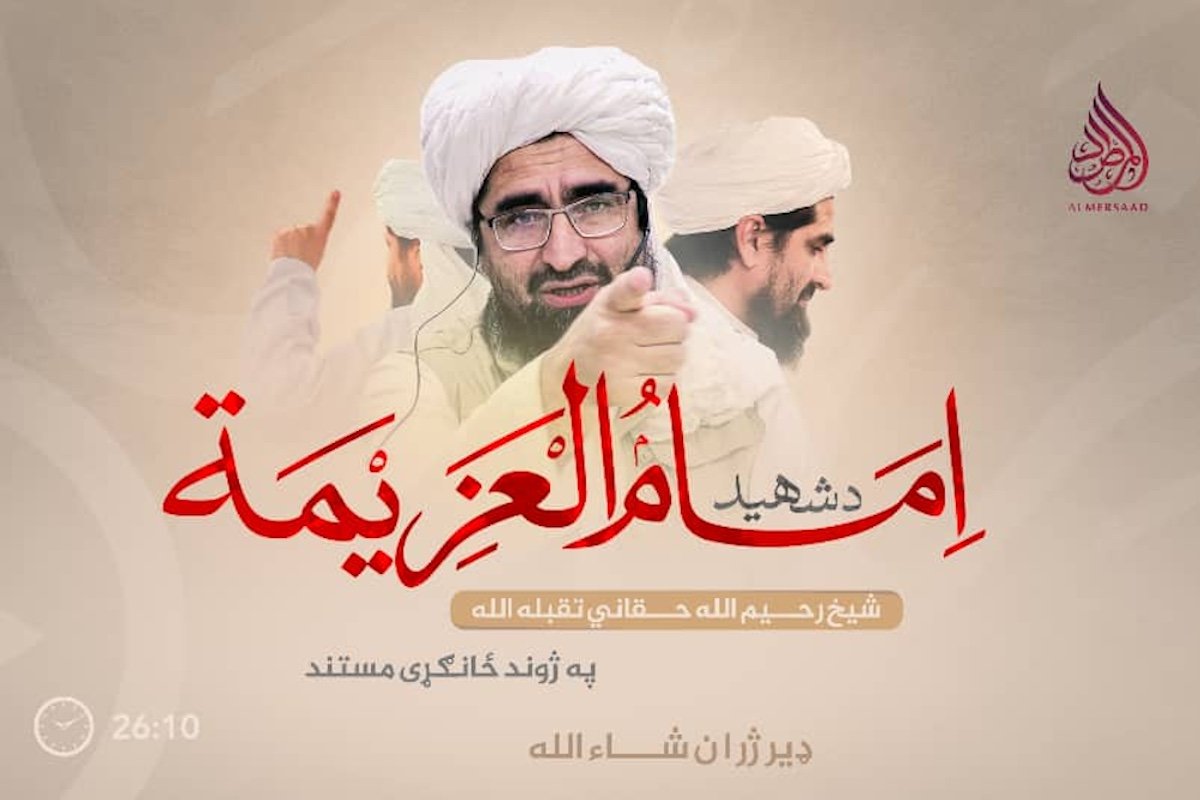
The emergence of English-language platforms such as Al-Mirsad—Arabic for “watchtower” or “observatory”—illustrates how the Taliban’s communication apparatus has evolved from insurgent propaganda into a sophisticated strategic communications system aimed at influencing international audiences and defending the movement’s political legitimacy. This outlet’s evolution has attracted growing attention among regional analysts. In May 2026, The Durand Dispatch – Strategic Messaging published a 17-page study by Joey Moran examining Al-Mirsad, which is sometimes transliterated as Al-Mersaad.
Delegitimizing ISKP
Based on an analysis of 137 articles published between January 2025 and March 2026, the study argues that Al-Mirsad functions less as an independent media outlet and more as an instrument of statecraft. Its messaging revolves around three objectives: delegitimizing Islamic State Khorasan Province (ISKP), repositioning Pakistan as Afghanistan’s principal external adversary, and projecting the Islamic Emirate as a sovereign state operating within an emerging multipolar order.
Al-Mirsad’s most consistent narrative focus is the delegitimization of ISKP. References to ISIS, Daesh, Khawarij, and Fitnah appear throughout its English-language output, reflecting a sustained effort to challenge the group’s religious and political legitimacy. By repeatedly labeling ISKP as “Khawarij,” Al-Mirsad seeks to place the organization outside accepted Islamic authority. Similar terminology has also appeared in narratives concerning Tehreek-e-Taliban Pakistan (TTP), suggesting that such labels function as political instruments as much as religious classifications.
Alongside this religious framing is the portrayal of ISKP as a foreign project. Al-Mirsad frequently depicts the group as the product of external intelligence manipulation, financed and supported by actors seeking to destabilize Afghanistan. Pakistan’s intelligence services are often presented as facilitators of this agenda. Whether such claims convince international audiences is less important than their strategic function: they reinforce the Taliban’s image as both the defender of Afghanistan and the principal force confronting extremism, while undermining attempts to justify military pressure on Afghanistan under a counterterrorism pretext.
Notably, many of these narratives appeared before major Pakistan-Afghanistan tensions escalated in 2026, suggesting prior narrative preparation rather than reactive messaging. What also distinguishes Al-Mirsad from traditional jihadist media is its audience. ISKP media products primarily target recruitment and ideological mobilization; Al-Mirsad increasingly addresses diplomats, analysts, and policymakers. Its objective is not recruitment but legitimacy.
Pakistan as the New Adversary
One of the most significant shifts in Taliban communications is the gradual replacement of the United States by Pakistan as the principal external antagonist. For years, Taliban narratives revolved around resistance to foreign occupation. Following the US withdrawal, Pakistan increasingly assumed the role of external adversary. Growing tensions over cross-border militancy, border management, and security incidents have provided fertile ground for this transition.
Within Al-Mirsad’s messaging, Pakistan is portrayed through several overlapping lenses: a sponsor of instability, a state seeking to conceal domestic failures through external confrontation, and a declining regional power struggling to retain influence over Afghanistan. In some narratives, Pakistan is depicted as facilitating ISKP and exporting its internal contradictions across the border. During military escalations in October 2025 and February 2026, Al-Mirsad consistently framed Pakistani strikes as violations of Afghan sovereignty, emphasizing civilian casualties and the suffering of women, children, and refugees to reinforce a narrative of Afghan victimhood and sovereign self-defense.
Equally revealing is what Al-Mirsad chooses not to discuss. Despite remaining central to Afghanistan-Pakistan tensions, Fitna al Khawarij (FAK)—an official state designation used by Pakistan to describe the TTP and its affiliates—appeared in only four of the 137 articles examined. When discussion became unavoidable, it was often reframed as Pakistan’s domestic problem or presented in ways that minimized Afghan responsibility. This suggests that strategic omission has become as important as strategic messaging.
The contrast with Pakistan’s communications approach is also notable. Islamabad generally advances its position through official statements and diplomatic engagement. Al-Mirsad operates through a broader narrative framework that blends religion, sovereignty, history, and geopolitics to shape how international audiences interpret Afghanistan-Pakistan tensions. This mirrors broader trends in regional propaganda, such as Tehran's Billboard Propaganda: From Persian Myth to Epstein References, where states use modern media to craft narratives that resonate beyond their borders.
Manufacturing Legitimacy
The third pillar of Al-Mirsad’s messaging strategy is legitimacy. Although the Islamic Emirate remains without broad international recognition, its communications increasingly portray Afghanistan as a normal and accepted member of the international community. Russian engagement, economic ties with China, and diplomatic overtures from Central Asian states are highlighted to suggest that the Taliban’s rule is becoming normalized. This narrative is carefully calibrated to appeal to a multipolar world order, where Afghanistan positions itself as a sovereign player rather than a pariah state.
Taken together, these themes suggest that the Taliban have modernized their communications strategy without fundamentally altering their ideological foundations. What has changed is not the movement’s worldview but the sophistication with which it is communicated. Al-Mirsad represents a new face of Taliban propaganda—one that speaks in English, targets global elites, and seeks to shape the information environment as effectively as any military campaign. For analysts and policymakers across the Indo-Pacific, understanding this evolution is critical to navigating the region’s shifting security landscape.