For more than four decades, Israeli strategy has rested on an assumption so fundamental it rarely needed stating: the United States would remain the Middle East's organizing power, ready to guarantee Israel's military edge, absorb diplomatic costs, and police the regional balance on Washington's terms. That assumption is now visibly eroding, and Israeli policymakers have been slower than they should be to confront the change.
American hegemony in the region was never absolute, but it was real—a web of bases, arms sales, security guarantees, and diplomatic cover that let Washington act as final arbiter from the Levant to the Gulf. That architecture has been fraying for two decades, accelerated by the Iraq war's failure, the exhaustion of the "war on terror," and a US public weary of open-ended Middle Eastern commitments. Washington's strategic reorientation toward the Indo-Pacific, pursued in fits and starts since the Obama-era "pivot," has only deepened the shift.
Meanwhile, China has become the Gulf's leading trading partner, and Russia has carved out durable footholds in Syria and Libya. Regional actors have noticed the vacancy and are hedging accordingly. Saudi Arabia's rapprochement with Iran, brokered by Beijing rather than Washington, was the clearest signal that Gulf capitals no longer see American mediation as the only game in town. The UAE, Qatar, and even Egypt now run genuinely multi-vector foreign policies—buying Chinese infrastructure, Russian grain, and American weapons simultaneously, and calibrating their rhetoric on Gaza, Iran, and Israel for audiences in Beijing and Moscow as much as in Washington.
What this means for Israel
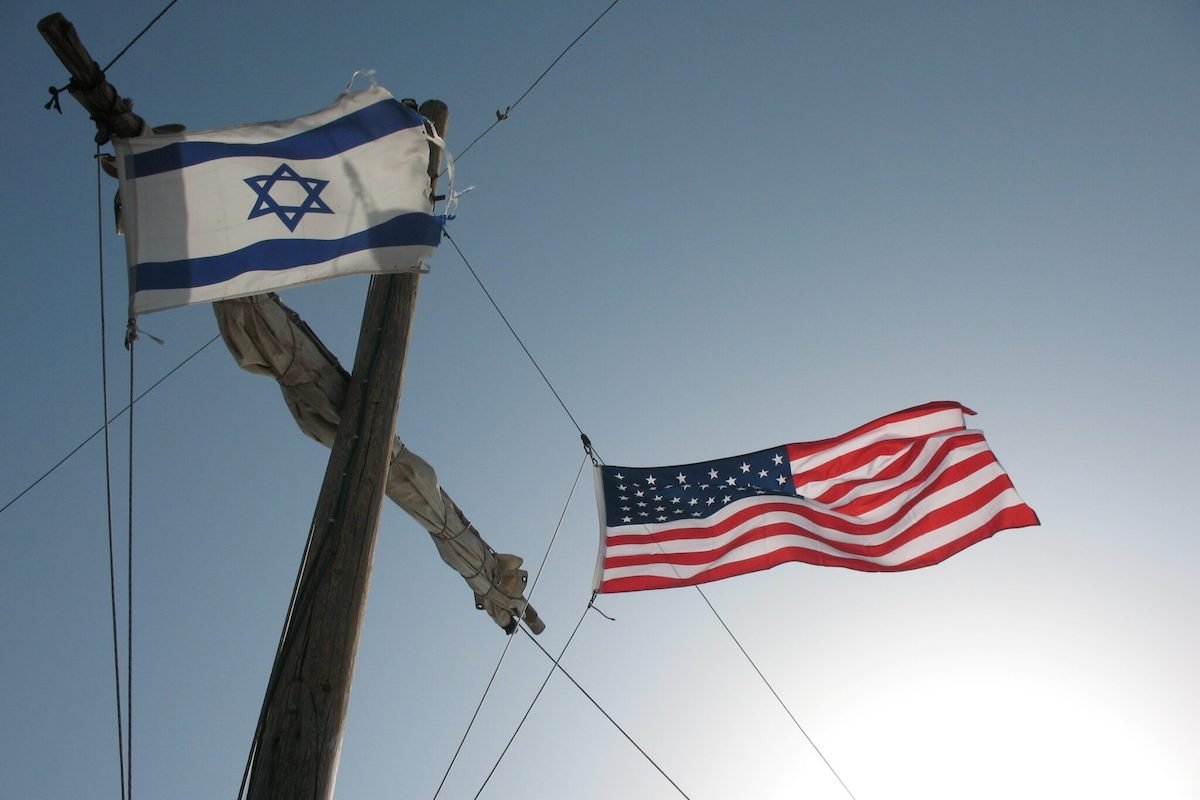
Israel has thrived strategically inside American hegemony. Its qualitative military edge is written into US law. Its diplomatic protection at the UN Security Council has been near-automatic. Its economy has been cushioned by preferential trade and, historically, by substantial military aid. But all of this was purchased not merely by the merits of the US-Israel relationship but by the fact that a hegemonic Washington could afford to bear the costs—diplomatic, reputational, and sometimes strategic—of unconditional backing, because no rival power was positioned to exploit the resulting friction with the Arab and Muslim world.
That permissive environment is disappearing. In a multipolar Middle East, the costs of the US-Israel relationship become more visible and more exploitable. Every veto Washington casts on Israel's behalf now has an audience in Beijing and Moscow eager to argue, particularly to Global South governments, that American-led institutions apply their principles selectively. Every war in Gaza or Lebanon becomes an opportunity for competitors to position themselves as more attentive to Arab and Muslim opinion than Washington is willing to be—witness Chinese and Russian diplomacy toward the Gulf and the Islamic world during recent conflicts.
Israel's own regional diplomacy, the Abraham Accords chief among them, was built on the premise that Gulf normalization could proceed on a track separate from the Palestinian question, under an American security umbrella that made such compartmentalization politically survivable for Arab governments. The war in Gaza has strained that premise badly. Publics across the Arab world remain far more exercised about Palestinian statehood than their governments' normalization agreements assumed. In a world where those governments have alternative patrons and markets, they have less need to absorb domestic political cost purely to stay in Washington's good graces.
The case for rethinking, not panic
None of this means American commitment to Israel is disappearing—or that Israel's military superiority is in jeopardy; it is not. But it does mean the strategic environment in which Israeli policy has operated since 1967 is changing in ways that reward foresight over inertia. A realist reading suggests several implications: Israel's long-term security depends more on stable, negotiated arrangements with its neighbors, including a credible resolution to the Palestinian question, than on any assumption of permanent American primacy; overreliance on unconditional US backing is a wasting asset as Washington's own regional weight declines and its domestic politics grow more contested on this issue; and a Middle East with multiple external patrons is one in which Israel's regional legitimacy, not just its military deterrence, becomes the more durable currency.
This is, admittedly, one reading of the trend lines, and it is contested. Advocates of a more traditional view argue that American commitment to Israel rests on durable public and congressional support that shows no sign of fundamental weakening, that China and Russia have shown little appetite or capacity to replace the security guarantees the US provides, and that reports of American decline in the region are, as they have been before, overstated. Others would argue that Israel's qualitative military edge and its own deterrent capability, not its relationship with any external patron, remain the true foundation of its security, and that normalization with Gulf states reflects genuine shared threat perception regarding Iran rather than a fragile arrangement dependent on US mediation.
Both views deserve a hearing as the region's balance of power continues to shift. For Israel, the challenge is not to choose between them but to prepare for a future in which its security rests less on a single patron and more on its own diplomatic agility. As the Middle East's new multipolar order takes shape, the ability to navigate multiple power centers will be as important as military deterrence. The era of automatic American cover is ending; what replaces it will depend on choices made in Jerusalem, Washington, and the region's capitals.