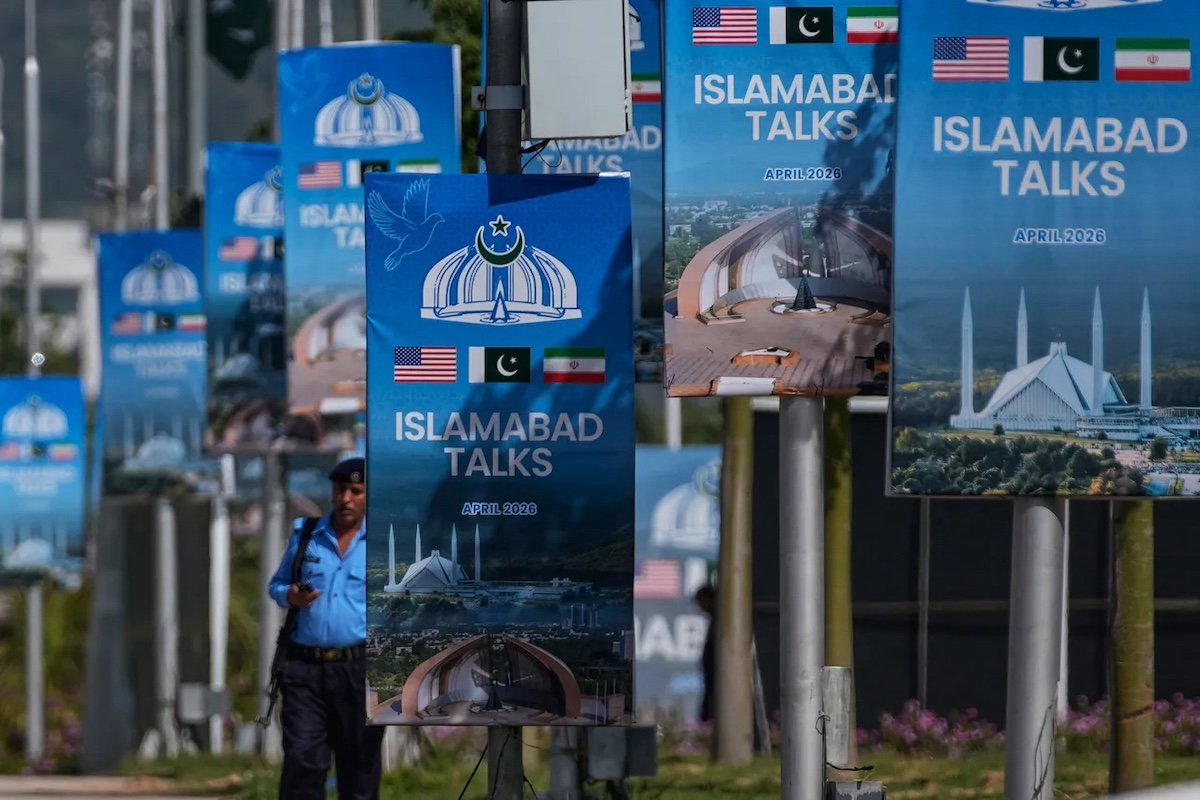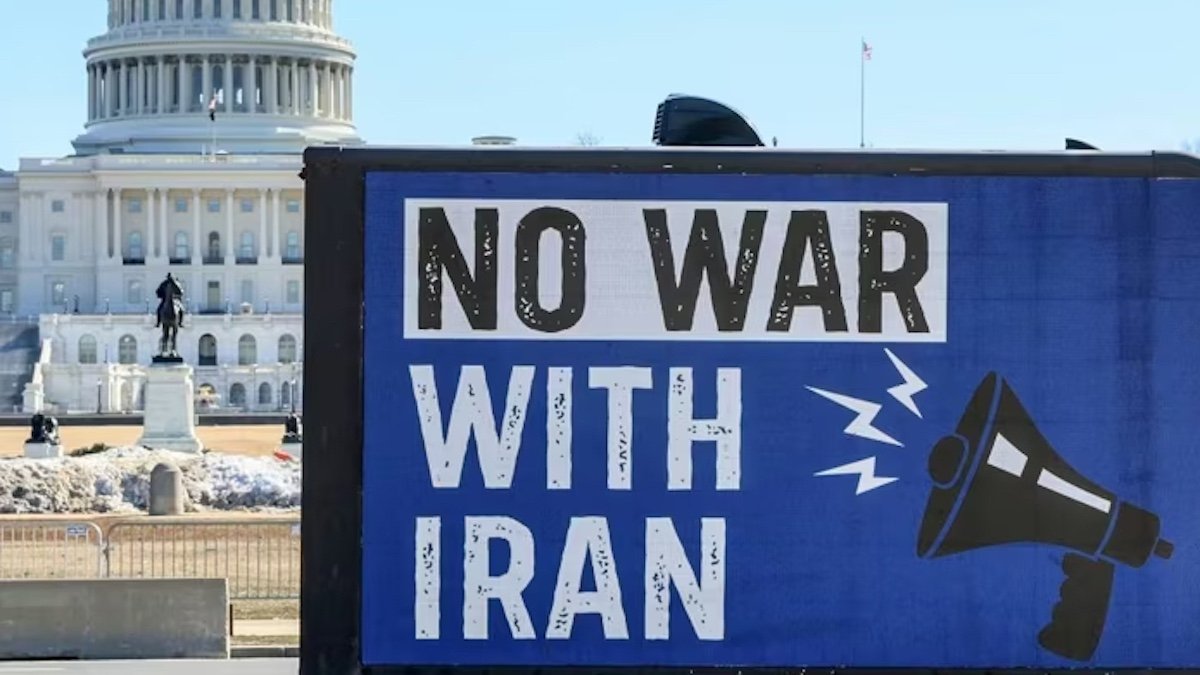
On July 23, the US House of Representatives passed a resolution 214-208 directing President Donald Trump to remove American forces from hostilities with Iran unless Congress grants explicit authorization. Hours later, the Senate rejected a motion to advance a separate war powers resolution out of committee, 47-49. The Senate did not authorize the war; it did not even vote on the resolution itself. It blocked the measure before senators had to answer the central question: Should the United States continue fighting a war Congress has never approved?
The war continued anyway. That is the dangerous precedent now taking shape in Washington. The president can begin or expand military operations, and Congress is left trying to stop them after the bombs have fallen and retaliation has begun. If opponents cannot clear committees, procedural votes, narrow majorities, and a likely presidential veto, inertia does the work of authorization. No lawmaker has to cast a clear vote for the war, but troops and civilians must still live with the consequences.
An unauthorized conflict with no end in sight
The conflict began on February 28, when the United States and Israel attacked Iran. Trump has since expanded direct US involvement without obtaining a congressional mandate. By July 22, the war had killed 18 US service members and injured hundreds more. The Pentagon put its cost at US$37.5 billion, a figure that includes some anticipated expenses through September 30. A July Reuters/Ipsos poll found that 79% of Americans expected the conflict to drag on, while only 37% approved of the US strikes.
Iranian civilians have paid a far heavier price. The US-based Human Rights reported that by April 10, 1,701 civilians, including at least 254 children, had been killed since the war began. Iran’s Health Ministry said another 50 civilians were killed and 500 wounded during the renewed US strikes in July. An anti-war politics worthy of the name cannot ask Americans to care about their own soldiers while treating Iranian deaths as background noise.
For working-class American families, the war is not an argument about executive theory. It arrives as an extended deployment, a flag-draped coffin, a long recovery from injury, higher fuel prices, and another demand that public money be redirected toward a conflict with no visible conclusion. The officials who refuse to define the mission do not bear those costs equally.
Rep. Pramila Jayapal (D-Wash.), who introduced the House resolution, said the war has “no clear mission, no strategy, no end goal.” The administration has moved among overlapping justifications: preventing a nuclear-armed Iran, retaliating for attacks, protecting US forces, and keeping commercial shipping open, as well as degrading Tehran’s regional military capabilities. Each objective can be used to justify another strike. None provides a measurable definition of victory or a credible route out.
Republican leaders argue that limiting Trump during active hostilities would weaken the United States and endanger deployed forces. The White House says the president needs flexibility to repel Iranian attacks and protect American personnel. It also argues that the House’s concurrent resolution lacks the force of law and warns that the measure could create “operational paralysis.”
A president must be able to protect troops from an immediate attack. That narrow defensive authority cannot become a blank check to define and prolong an entire war without Congress. Otherwise, each deployment creates the danger later invoked to expand it: US forces enter the conflict, Iran attacks them, and protecting them becomes the rationale for another round of strikes. Sending troops into an open-ended conflict without a public mandate is not support. It is political abandonment.
Veterans have made that point more clearly than many lawmakers. After an earlier House war powers vote, Common Defense, a grassroots organization of veterans and military families, said that “veterans understand the costs of war better than most Americans” and called congressional action essential to giving the public a voice. Supporting troops requires more than praising their sacrifice after they die. It requires telling them what the mission is, what limits govern it, what success looks like, and when it ends.
The House vote showed that opposition to unauthorized war is not entirely partisan. All 210 Democrats present joined Republicans Thomas Massie (Ky.), Warren Davidson (Ohio), Brian Fitzpatrick (Pa.), and Tom Barrett (Mich.). In the Senate, Republican Susan Collins (Maine) supported bringing the resolution forward, while Democratic Sen. John Fetterman (Pa.) voted with Republicans to block it. But the larger story is institutional, not personal. Senators avoided a direct vote on whether to authorize or end the war. Procedural language cannot erase political responsibility. A senator who prevents Congress from considering restraint helps preserve the conditions under which the war continues.
The House resolution alone cannot stop the fighting. That makes Congress’ power over military funding the next real test. The White House has requested an $87.6 billion supplemental package, saying most of it would address urgent needs related to Operation Epic Fury. The request includes $67.1 billion for the Pentagon, with $21 billion of that amount designated for munitions. The Center for Strategic and International Studies estimates that about one-third of the entire package is driven by Iran war costs; the rest funds other administration priorities.
Lawmakers cannot credibly call a war unauthorized while financing its continuation without meaningful limits. Any new funding should prohibit offensive operations against Iran after a brief period for immediate force protection unless Congress passes a specific authorization. That authorization should define the enemy, mission, geographic scope, reporting requirements, and expiration date. Renewal should require another affirmative vote. The burden must fall on those who want to continue the war, not on those who want to end it.
This conflict has broader implications for the Indo-Pacific. The US military's focus on Iran diverts resources and attention from strategic competition with China, as Trump prepares to host Xi Jinping amid fears of losing the AI race. Meanwhile, the war's economic toll, including higher fuel prices, compounds the damage from Trump's tariffs on 60 countries, which cost Americans $100 billion annually. The conflict also risks destabilizing the Strait of Hormuz, a critical chokepoint for energy supplies to Japan, South Korea, and India, as escalation options narrow. Congress must reclaim its constitutional role before this unauthorized war becomes a permanent fixture of American foreign policy.