Japan has committed up to US$550 billion to support investment in the United States, but the chairman of the Japan Bank for International Cooperation (JBIC) is pushing for a stronger voice in deciding which projects receive funding. Tadashi Maeda told Reuters on November 19 that Tokyo should be involved in originating investments, not merely reviewing proposals handed over by Washington.
The pledge emerged from the 2025 trade negotiations that cut US tariffs on Japanese imports to 15%. It is not a lump-sum transfer but a financing envelope, with loans, guarantees, and other instruments to be allocated on a project-by-project basis. So far, seven projects worth more than $100 billion have been announced under the initiative.
According to an analysis by the Federal Reserve Bank of St. Louis, the United States selects and manages the projects. Japan can decline to fund a particular project, but Washington could retaliate by raising tariffs. That leaves Tokyo with a formal choice, albeit under considerable commercial pressure.
Cash-flow terms raise red flags
The financial structure deserves close scrutiny. Proceeds from each project are initially split equally between the two governments until Japan recovers an amount covering the financing principal and applicable interest. After that, the United States receives 90% of distributable cash flow, with Japan getting the remaining 10%.
This is not a guaranteed repayment. In an illustrative 30-year model assuming a 10% annual project return, the St. Louis Fed calculated that Japan's discounted receipts could be worth only 65.2 to 76.9 cents for each dollar committed. Those figures are scenarios, not forecasts, but they illustrate how a project can generate cash without producing an attractive return for its principal financier.
Japan may still benefit from tariff relief, improved supply-chain security, and US contracts for Japanese suppliers. But those gains do not necessarily accrue to the same institutions that bear the financing risk. A Japanese public lender could earn an inadequate return while private equipment makers secure profitable orders. That distinction makes Maeda's demand for a say in project selection a matter of financial accountability, not diplomatic etiquette.
Semiconductor and energy projects take shape
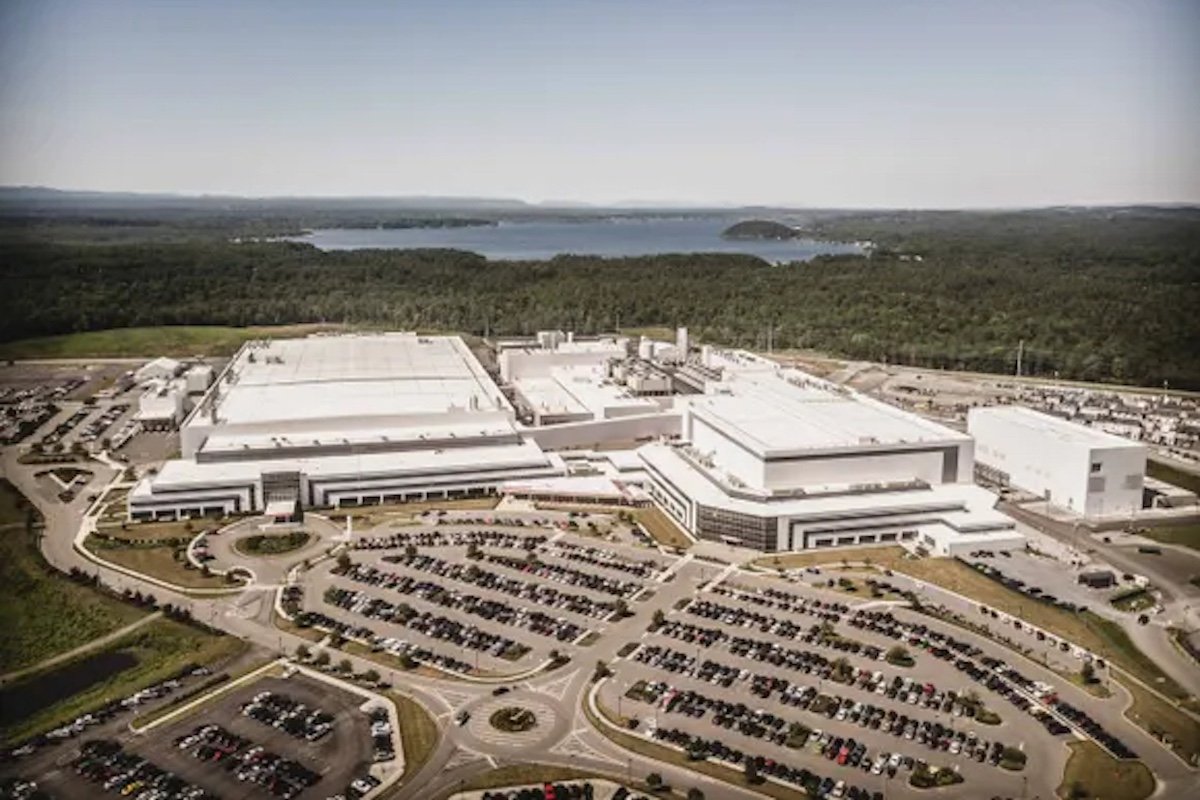
On November 13, GlobalFoundries broke ground on a semiconductor factory in Malta, New York, the first phase of a US-Japan initiative providing up to $21 billion for two fabs. Approximately $10 billion is planned for the first facility, with $570 million in New York State incentives. Operations are targeted for 2029.
Japan is providing financing, while GlobalFoundries supplies manufacturing technology and operates the plant. In a separate arrangement, the US Commerce Department is to receive approximately 4% of GlobalFoundries equity. But a state interest in the company should not be confused with state ownership of the new factories.
The industrial logic is clear: the United States gains domestic production capacity, GlobalFoundries avoids financing the entire development itself, and Japanese materials and equipment firms stand to win business. Yet that distribution of roles does not guarantee that the new facilities will earn an adequate return on invested capital, or that public financing institutions will share proportionately in any industrial gains.
A plant can improve supply security and still disappoint financially. Utilization, pricing, construction costs, and the duration of customer commitments will determine the difference. These questions matter especially when national governments are involved in allocating capital.
South Korea is pursuing a separate financing arrangement. Its first selected project, Project Star, is a planned $22.3 billion gas-fired complex in Texas intended to supply approximately 6.47 gigawatts of power to AI data centers. On October 6, Yonhap reported that Seoul's finance minister confirmed a $2.4 billion transfer for the project. Korean companies may benefit from equipment and engineering orders, but prospective supplier revenue is not a guaranteed return on public financing, and the Japanese cash-flow formula should not be assumed to apply to Korea's separate agreement.
What Tokyo wants
Ultimately, Japan is being asked to arrange substantial public-backed financing for projects selected primarily in Washington, under terms that can leave its financing institutions with a negative present value even if the projects produce positive cash flows. Tariff relief and contracts for private Japanese suppliers may still create broader benefits, but neither automatically offsets losses borne by the financiers.
Maeda's request for a greater role in originating projects follows from the risks of that arrangement. If Tokyo must assess repayment risk, construction overruns, and the opportunity cost of capital, it has cause to seek influence before projects reach the funding stage—not merely the right to reject them afterward under the shadow of possible tariff penalties.
The Trump administration has shown that trade negotiations can mobilize allied capital for reviving American industry. The harder test is whether those providing the financing will have enough say over the choices that determine its profits or losses. Japan has agreed to invest in the US; it is now asking who gets to decide what exactly it is financing.