For much of the past three decades, Japanese society retained a remarkably unified media environment. Major newspapers boasted enormous circulations, NHK and a handful of commercial networks dominated television, and popular culture flowed through a relatively narrow set of channels. Hit shows, blockbuster films, and best-selling books were shared experiences, discussed at office desks and dinner tables alike.
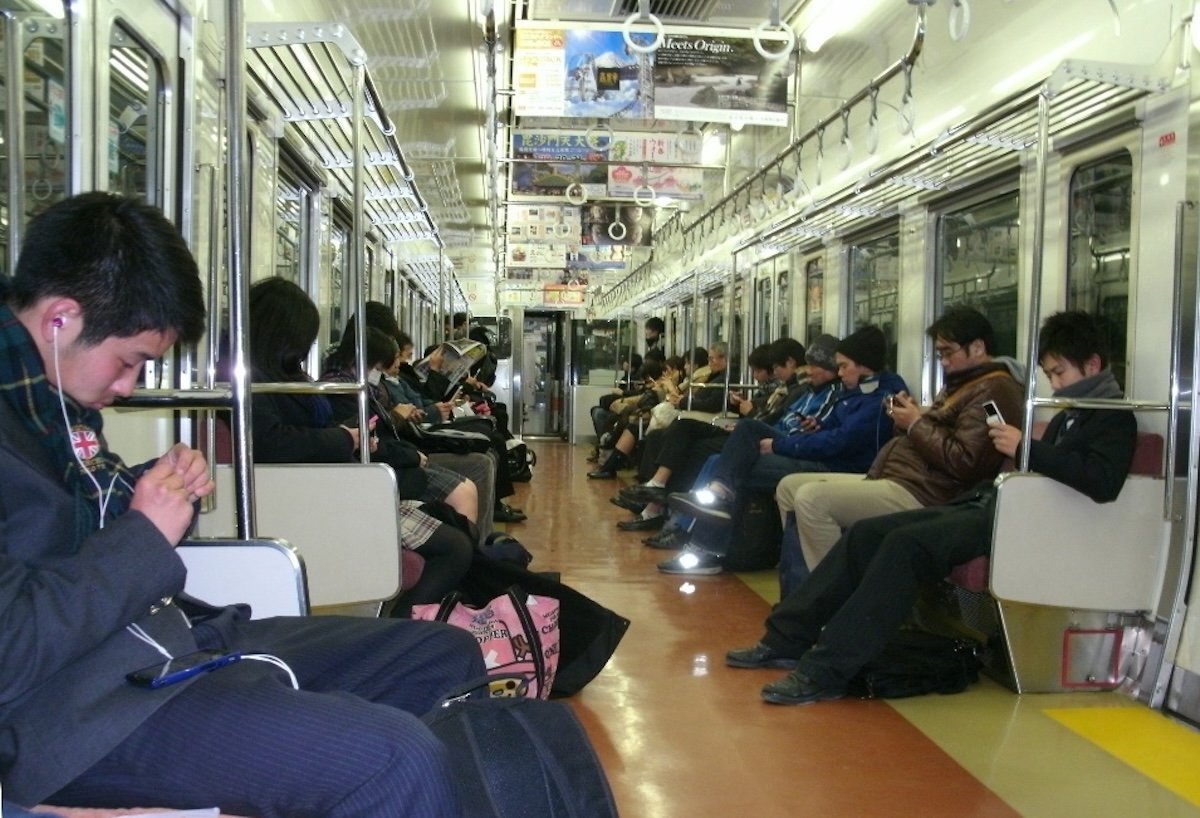
That era has ended with surprising speed, and the consequences now reach into the staid corridors of the Bank of Japan. Newspaper subscriptions have fallen steadily. Streaming services have replaced collective viewing with individualized habits. Younger Japanese increasingly get their news from social platforms, video clips, and messaging apps rather than from a morning paper or an evening bulletin.
The algorithmic internet does not simply deliver information; it curates a personalized narrative, tailored to existing preferences and often sharpened by outrage. The shift is measurable. Japan's subscription video-on-demand market grew from roughly 505.4 billion yen in 2023 to an estimated 526.2 billion yen in 2024. Netflix surpassed 10 million subscribers in Japan by mid-2024, driven partly by Japanese-language originals, while U-Next passed 5 million paying subscribers by late 2025. In 2025, the internet overtook commercial television as the primary source of daily news in Japan for the first time.
A fragmented public sphere
This fragmentation has profound implications for how Japanese society processes information and builds consensus. Different segments of the public increasingly lack common reference points for interpreting events. The old media order did not eliminate bias or disagreement, but it provided a narrower range of shared assumptions. The new order is wider, faster, more democratic, and more chaotic.
Nowhere is this more consequential than in economic perception. For years, economic news reached the public through a relatively small set of authoritative institutions: the Nikkei, NHK, government briefings, major business groups, and a few influential commentators. These voices did not always agree, but they usually disagreed within a common framework. Inflation, wages, exchange rates, and central-bank policy were debated in language that at least pretended to be coherent.
Today, economic commentary is filtered through influencers, partisan feeds, culture-war performance, and algorithmic repetition. Social media reward certainty, grievance, and theatrical simplification. Nuance dies first. Economic data are no longer merely interpreted; they are sorted into identity bundles and emotional narratives. To one online constituency, inflation is proof of elite incompetence. To another, it is evidence of corporate greed. To another, it is a reason to cheer normalization. The same figure arrives in different worlds and emerges with different meanings.
Paradoxically, this technological transformation also makes it easier to track what people actually consume. The broadcast era gave us bigger cultural moments but blurrier evidence—we knew what was widely available, not necessarily what people most wanted. The new landscape offers fewer mass phenomena but better granular data. We know more precisely what people stream, search, skip, share, replay, comment on, and obsess over.
Central bank communication in a noisy era
That creates a new challenge for the Bank of Japan. The institution still relies on the old tools: formal speeches, policy statements, press conferences, carefully hedged language, and the hope that serious intermediaries will translate all that into public understanding. But these tools were built for an information order in which authoritative voices shaped the broad narrative. In today's media environment, the Bank of Japan speaks in paragraphs, and the internet replies in clipped certainties, ideological memes, and weaponized misunderstanding.
This does not mean monetary policy has become impossible. It means the transmission mechanism is messier than economists often admit. Public understanding of inflation, wages, and monetary policy now depends not just on the content of the Bank of Japan's message, but on the structure of the information ecosystem into which that message is released. In a fragmented media order, consensus arrives later, if it arrives at all.
The implications extend beyond the central bank. Japan's broader policy debates—from defense spending to regional diplomacy—now unfold in a public square where shared facts are scarce. The Bank of Japan's struggle is a symptom of a deeper shift in how Japan governs itself in an age of algorithmic attention.