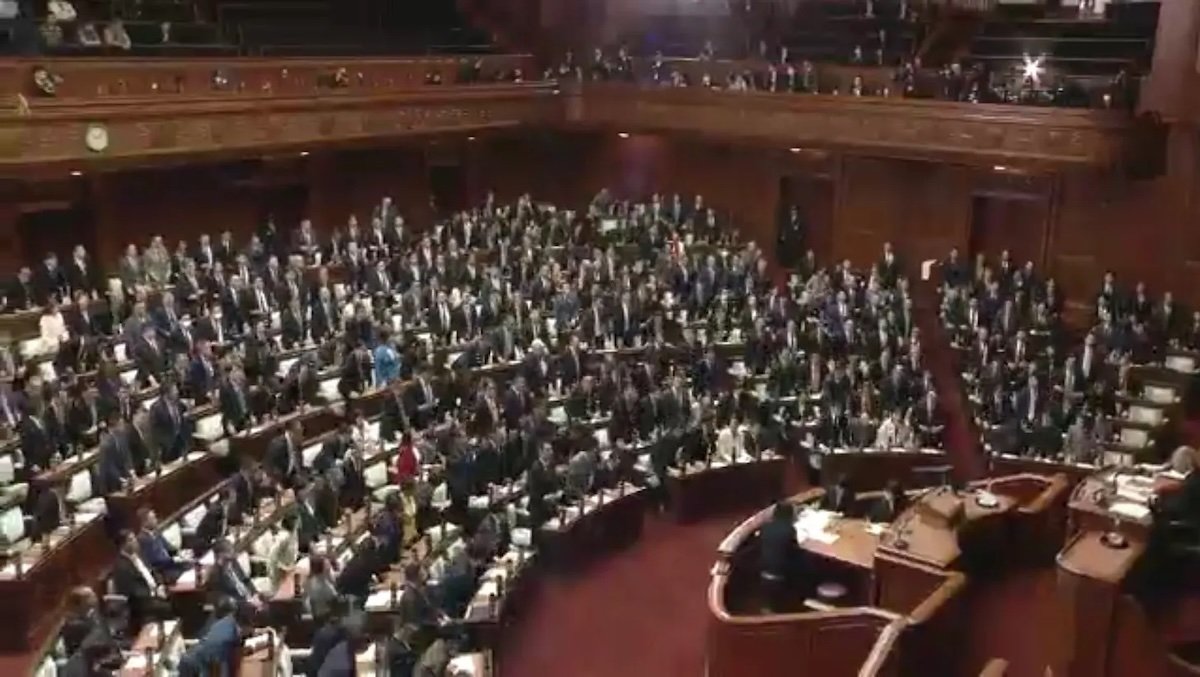
Japan's House of Representatives approved the consumption tax cut on Friday, November 6, but the government's victory was overshadowed by a rare public rebellion from within the ruling Liberal Democratic Party (LDP). Four senior lawmakers, most notably former prime minister Shigeru Ishiba, refused to participate in the vote, signaling deep unease over the fiscal implications of Prime Minister Sanae Takaichi's flagship policy.
The bill now moves to the upper house, where the opposition has secured the creation of an ad hoc committee to examine the tax cut, citing insufficient debate in the lower chamber. The committee, though advisory in nature, will provide a platform for more extensive scrutiny of a measure that has divided even the ruling party.
Rebels with a cause
The four abstainers—Ishiba, Yuko Obuchi, Yoshihisa Furukawa, and Hajime Funada—are all fiscal hawks who have voiced consistent opposition to the tax cut. Obuchi had already resigned as head of the LDP's tax commission in protest. Ishiba was blunt about his reasons: "I cannot agree to something like this. The source of funding is unclear. It will damage public finances. The currency will depreciate. Interest rates will rise. Prices will increase… I cannot dispel these concerns."
Their public defiance is a stark reminder that Takaichi, despite her success in steering the bill through the LDP's internal processes and the lower house, still faces significant resistance within her own party. Other LDP members who share their concerns may have chosen to stay quiet, but the rebels' actions have brought the discord into the open.
LDP leaders were quick to condemn the move. Policy chief Takayuki Kobayashi warned that the four could face disciplinary action for defying party instructions, and some colleagues went further, calling for them to resign their seats. Takaichi herself declined to comment on the protest.
The rebels, for their part, reiterated their worries after the vote: the impact on government finances, the risk to the social security system, and the fact that the tax cut is set to expire in two years, which could mean an effective tax increase for most taxpayers.
Upper house hurdles
The rebellion adds to the challenges Takaichi faces as the bill enters the upper house, where the ruling coalition lacks a majority. The government failed to win over any opposition party in the lower house and has already conceded to the creation of the ad hoc committee, in which opposition parties outnumber the ruling parties twenty to nineteen. The committee cannot block the legislation, but it will hold a more extensive debate that could amplify the rebels' grievances.
Opposition parties have also flagged other concerns: the lack of details on how additional subsidies will be distributed, how the tax cut will be financed, and how businesses will be supported in managing the costs of implementation. Takaichi's suggestion during Friday's questioning that additional payments could go to roughly 30% of workers is unlikely to sway her opponents.
The upper house deliberations are set to begin on November 11. Despite the obstacles, Takaichi is still likely to get her "cherished" tax cut, possibly without a second vote in the lower house if the government can secure support from a few independents. But the rebels have made it less likely that any major opposition party will compromise, and they have drawn public attention to the government's rush to pass the legislation while avoiding fundamental questions about its plan.
As was clear from the outset, Takaichi had the votes thanks to the government's supermajority in the lower house. But the political cost of the process may already be mounting, and the upper house debate could prove to be a more difficult test than the prime minister anticipated.