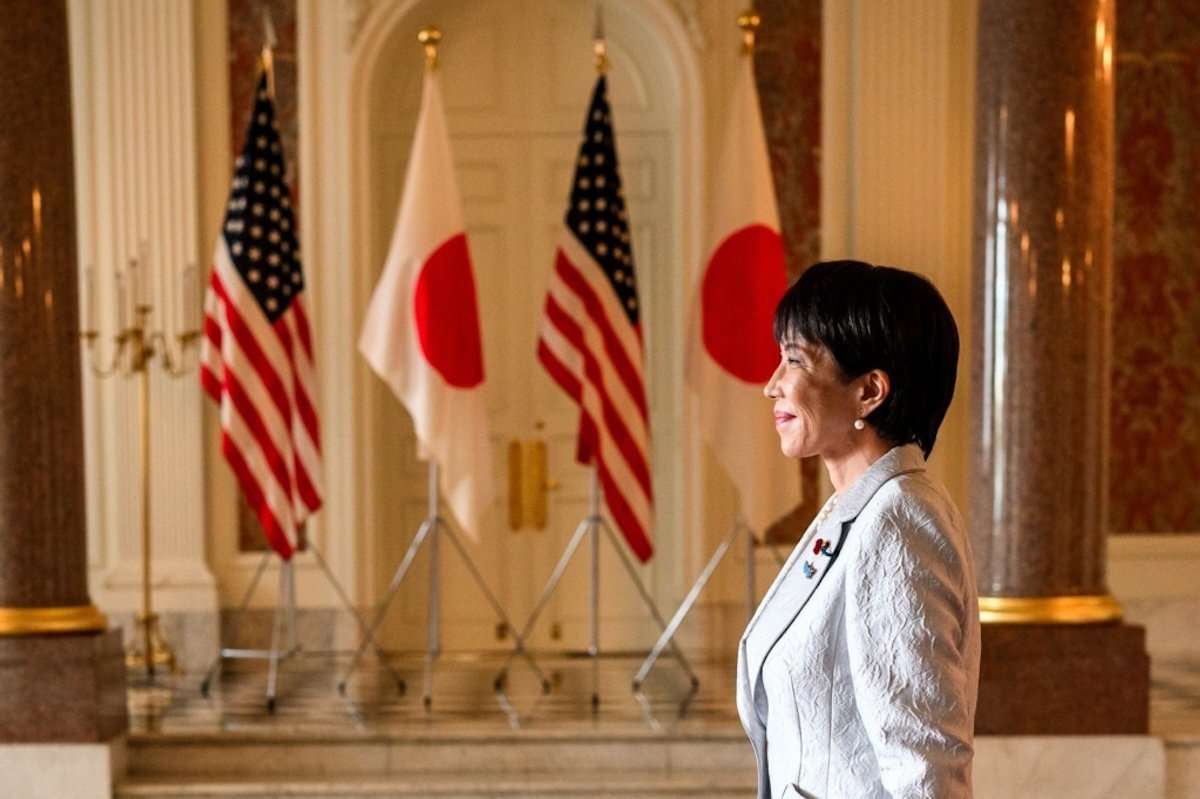
When Sanae Takaichi won the Liberal Democratic Party (LDP) leadership race last year, many observers—myself included—were skeptical. Her limited experience, her unabashed conservative nationalism, and her self-styled role as heir to Shinzo Abe's legacy seemed ill-suited to the scale of Japan's challenges. Some even whispered that she had been handed the prize to discredit women in politics.
I was wrong. Takaichi's first year as prime minister has been a resounding success by most measures. She has maintained approval ratings that would be the envy of most Japanese leaders, avoided major scandals, and navigated a series of crises with steady hands. But the easy part is over. The second year demands hard choices she has so far managed to defer.
A new coalition, a decisive win
One of her first moves was to forge a new ruling coalition after Komeito, the LDP's junior partner for 26 years, walked away over irreconcilable differences. Takaichi turned to the Japan Innovation Party (JIP), led by Hirofumi Yoshimura. The partnership has deepened since, with JIP members taking cabinet and senior posts in last month's reshuffle.
Yoshimura credits the alliance with delivering on key promises: free high school tuition, free school lunches for elementary students, and significant strides in national security—including better treatment for Self-Defense Forces personnel, stronger economic security, and the establishment of a National Intelligence Bureau.
The government also pushed through immigration reform, co-opting an issue that had boosted the Sanseito Party, and legislation reinforcing male-only succession to the imperial throne—a controversial move that has dented her popularity.
Her biggest triumph came in the snap election she called in February. The LDP secured a supermajority in the Lower House, the largest majority for any Japanese government in 70 years. That victory restored her approval to its initial high, and though it has slipped since, recent polls still show support above 50%.
That resilience was tested by the first major scandal of her administration. Agriculture Minister Kazuo Yana was accused of withholding road funding from municipalities whose leaders did not support him electorally and of providing free transport to supporters. After initially denying the charges, Yana resigned—a blow to Takaichi, who had just appointed him. Yet polls showed no significant drop in support.
Trump, China, and the yen
Takaichi has also managed the unpredictable Donald Trump with skill. The US president has been a vocal supporter, even calling her “one of the great prime ministers” at their September meeting. This is notable given Trump's warm rapport with Chinese President Xi Jinping, which unnerves Tokyo. Takaichi has cleverly used the specter of US pressure to advance her military modernization agenda, pleasing both the Pentagon and her conservative base.
But the second year will test that relationship. Beijing is escalating efforts to isolate Japan in response to Takaichi's Diet statement that a Taiwan crisis would be a “survival-threatening situation” for Japan, potentially triggering collective self-defense. Trump's readiness to accept the Chinese narrative that the US and China were allies in World War II—implying continued cooperation at Japan's expense—has only deepened anxiety in Tokyo.
The yen's persistent weakness is another flashpoint. It distorts trade with the US, a perennial Trump concern, and complicates the $550 billion investment pledge Japan made in 2025. While reportedly insulated from exchange-rate swings, the deal remains fragile.
The fiscal reckoning
The most pressing issue is Japan's deteriorating fiscal position. National debt is among the highest in the developed world, and the FY 2026 budget has ballooned to 122 trillion yen ($783 billion), with debt servicing costs exceeding 30 trillion yen for the first time.
Yet Takaichi wants to cut the food consumption tax from 8% to 1% for two years to ease the pain of rising prices, while raising defense spending to 2% of GDP—and possibly 3.5% under US pressure—investing in strategic industries, and boosting social security and childcare support.
The single hardest decision—how to pay for all this—was postponed in year one. That grace period is over. Takaichi's political acumen has served her well, but the coming months will reveal whether she can translate popularity into sustainable governance. The region will be watching closely.