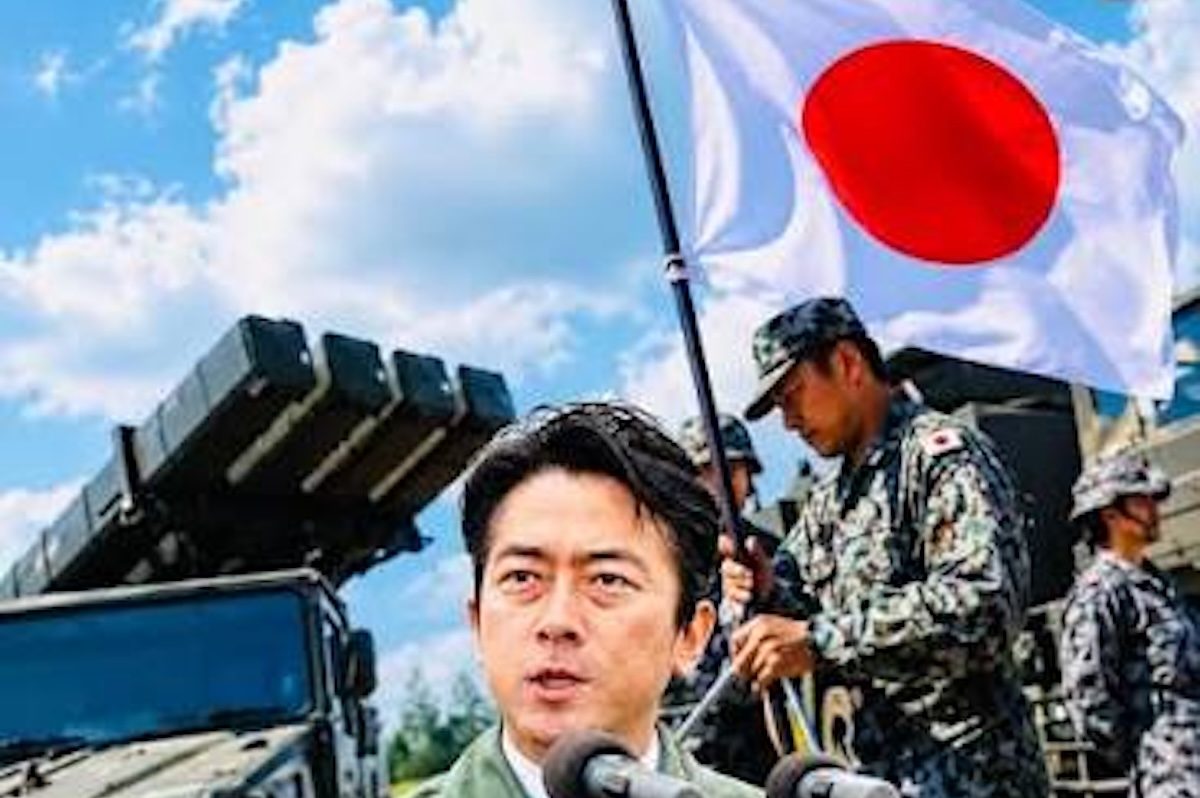
Tokyo is confronting a defining moment in its post-war security posture as the government of Prime Minister Sanae Takaichi signals reluctance to exceed ¥60 trillion (US$377 billion) in defense spending over the next five years. The stance has ignited fierce debate among policymakers, military planners, and industry leaders, exposing deep fissures over how Japan should balance fiscal discipline with an increasingly volatile regional environment.
Defense Minister Shinjiro Koizumi acknowledged on Friday that financial resources are not unlimited, but stressed that no final decision has been made. He insisted he would fight for sufficient funding to support Self-Defense Forces personnel and meet the challenges posed by Japan's security environment. His remarks came amid reports that the Ministry of Defense has already informed manufacturers that budgetary requests for major equipment could be halved from initial projections, prompting companies to reconsider planned investments.
Fiscal hawks push back
The same day, the Finance Ministry's Fiscal System Council, an advisory body to the minister, submitted a recommendation to Finance Minister Satsuki Katayama arguing that higher defense budgets must be backed by secure funding sources, avoiding reliance on bond issuance. The council's paper contends that the Takaichi government's pursuit of "responsible fiscal expansion" makes maintaining market confidence imperative, and warns against unfunded commitments that could undermine investor trust.
Prime Minister Takaichi herself has suggested she is not fixated on reaching a specific defense spending level, citing fiscal constraints. This pragmatic stance, however, has drawn criticism from security hawks who argue that Japan's defense needs have outpaced its budgetary planning.
Tetsuo Kotani, a scholar at the Japan Institute for International Affairs, articulated the concerns of many in the national security establishment in an interview with the Yomiuri Shimbun. He argued that spending between ¥50 trillion and ¥60 trillion would be inadequate for the challenges Japan faces, and could invite criticism from the Trump administration, which has repeatedly pressed allies to shoulder more of their defense burden.
Yuichi Hosoya, a member of the government's advisory council on the three basic national security documents, echoed these sentiments. He characterized the challenge as one of strengthening Japan's autonomous defense capabilities in the face of new security threats, the "normalization" of war, and a growing reluctance among allies to support partners who are not doing their part.
The debate comes as Japan revises its three foundational security documents, a process that will shape its defense posture for years. Among the unresolved issues is whether these documents will formally reference the so-called "Okada exception," which would permit the introduction of US nuclear weapons into Japan in an emergency. While the option remains on the table, no decision has been made.
Japan's defense buildup is also hitting industrial limits. The reported halving of procurement requests has left manufacturers uncertain about future orders, complicating long-term investment decisions. This industrial dimension adds another layer of complexity to the fiscal debate, as a robust defense industry is seen as essential to maintaining autonomous capabilities.
The standoff reflects broader tensions in Japanese politics between fiscal conservatism and strategic ambition. As Japan's defense buildup hits fiscal and industrial limits, the government must navigate a path that satisfies both domestic hawks and international allies, while ensuring that any spending increase is sustainable.
Regional dynamics further complicate the picture. With China's arms exports reshaping Indo-Pacific defense choices, Japan's decisions carry implications beyond its own borders. Similarly, Seoul's missile defense challenges highlight the broader regional security environment in which Tokyo is operating.
As the Takaichi government weighs its options, the outcome of this debate will signal not only Japan's defense priorities but also its willingness to shoulder greater responsibility in the Indo-Pacific. The coming months will be critical in determining whether Japan can reconcile its fiscal constraints with its strategic aspirations.