As Beijing's military modernization accelerates, its role as an arms exporter has drawn less attention than the risk of a US-China conflict. Yet China's growing share of the global weapons market is reshaping procurement decisions across the Indo-Pacific, with implications for regional security and technological dependencies.
Over the past three decades, China has transformed from a largely import-dependent military into the world's second-most capable fighting force. This shift was not linear. For much of the 1990s and early 2000s, the People's Liberation Army relied heavily on Russian designs, from the Type 56 rifle (a derivative of the AK-47) to the J-11 and J-16 fighters, which evolved from the Su-27 and Su-30 families.
From the mid-2000s, Beijing accelerated its indigenous defense programs while Moscow grew reluctant to transfer its most advanced technologies. The J-20 stealth fighter, the Type 055 destroyer, and a new generation of long-range missiles are the most visible results. This shift is not only evident in China's own arsenal but also in how its defense industry is influencing procurement choices across the region.
Commercial appeal and strategic hedging
China's expanding defense-industrial base has enabled it to offer competitive systems internationally. Between 2021 and 2025, it ranked as the world's fifth-largest arms exporter. Its commercial approach—competitive pricing, flexible financing, and willingness to share technology through co-production—has appealed to governments in Africa and Asia seeking to modernize without the political strings often attached to Western suppliers.
For many Indo-Pacific buyers, these terms align with broader political calculations. Chinese offers can be framed domestically as “non-aligned” or “balanced” procurement choices, potentially allowing governments to extract better terms from Western suppliers while avoiding overdependence on any single source.
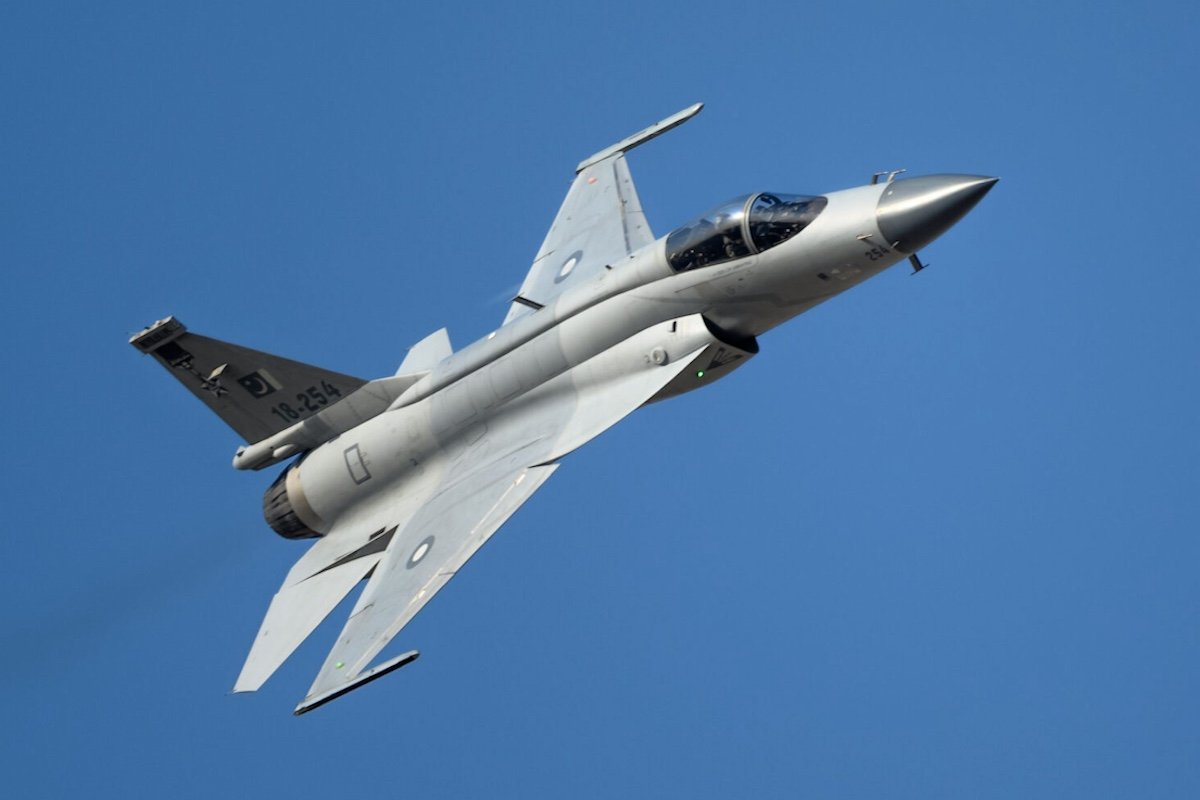
Asia and Oceania have absorbed the bulk of Chinese arms deliveries—77% between 2021 and 2025. Pakistan remains the largest recipient, but Indonesia, Thailand, Myanmar, and Bangladesh have all engaged Chinese suppliers to varying degrees. China's export portfolio spans combat aircraft, naval systems, air defense, and unmanned platforms, often including training, maintenance, and local assembly agreements.
These arrangements carry political weight. Local assembly and licensed production can create pro-China constituencies within recipient states' defense industries and militaries, entrenching dependencies for long-term maintenance and upgrades that are harder to unwind than one-off purchases.
Limits of China's reach
Yet the volume of Chinese arms sales should not be overstated. Beijing is far from the primary supplier for most Asian states. For some, Chinese systems are a budget alternative; for others, a hedge against Western political conditions or slow procurement timelines. But most states still favor established Western or Russian equipment due to concerns over interoperability, operational familiarity, reliability, after-sales support, political alignment, and the lack of a long combat-proven track record for Chinese gear.
While China is the world's second-largest arms manufacturer, its global export share is only 5.6%, and it slipped to fifth place after being overtaken by Germany in March. This “second-tier centrality” limits Beijing's leverage but allows it to experiment with new systems and financing models without bearing full responsibility for partners' core deterrent capabilities.
As of 2026, the platforms involved remain largely conventional. However, advances in unmanned systems, sensors, and data processing developed for the People's Liberation Army are creating the technical foundation for future arms offerings that will eventually incorporate greater autonomy and artificial intelligence. The escalation math in the Indo-Pacific is already shifting as these capabilities spread.
For Washington and its allies, the risk lies not only in the spread of advanced capabilities but also in the possibility that recipient states could develop long-term technological dependencies on Beijing. As China's defense industry matures, its arms exports are likely to become a more significant factor in regional security dynamics, even if they remain secondary to Western and Russian systems for most buyers.