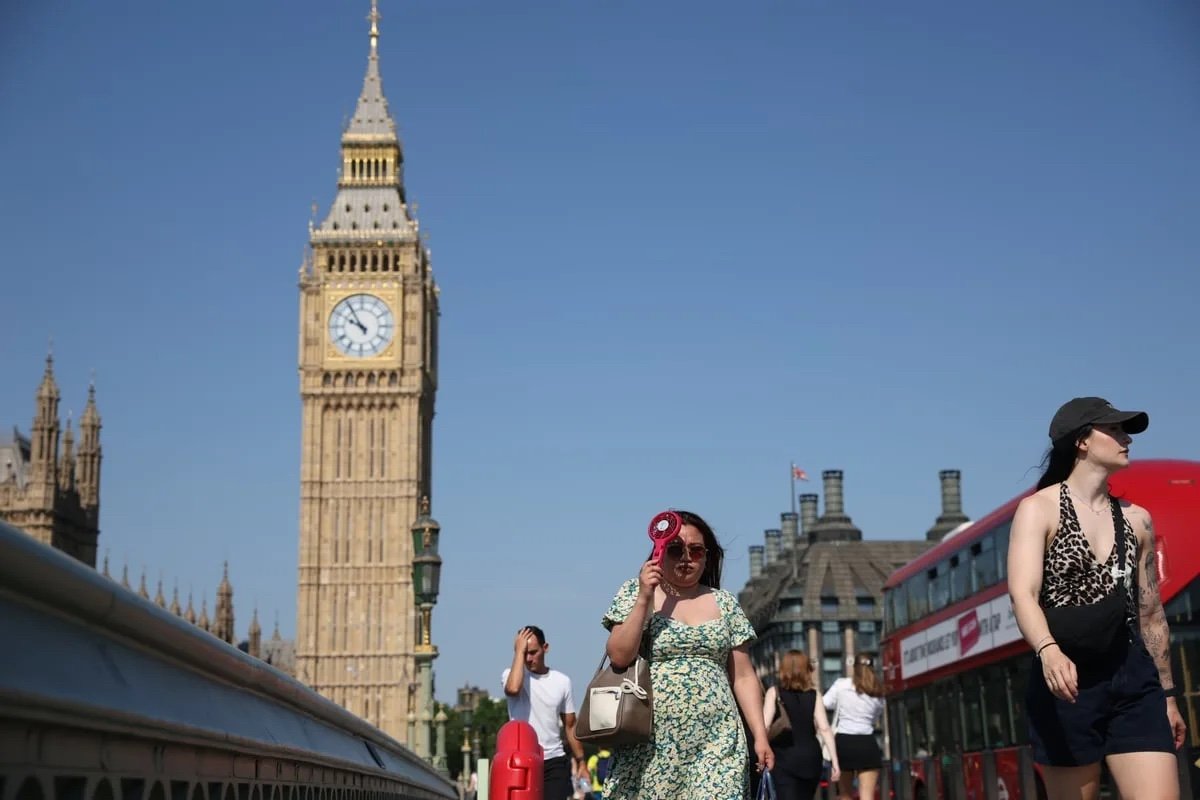
From Singapore, the haze is back. Smoke from fires hundreds of kilometres away drifts over the island, turning the skyline the colour of weak tea and sending residents to their air-quality apps with the devotion usually reserved for share prices. Nothing here is on fire; it just smells as if it were.
Markets have their own haze season, and we are in one. The smoke this time is blowing in from Washington and Europe, yet above Seoul and Taipei the skies have rarely been bluer.
Western fiscal fog
In the big capitals, the trouble is fiscal. Washington is running a deficit of 7–8% of GDP, according to the IMF. Paris is hunting for about US$60bn in savings while its debt heads toward 120% of output. Beijing, ever the innovator, uses a tax app to remind citizens that it would like 20% of whatever they earn offshore.
Seoul and Taipei have the opposite problem: what to do with all the money. South Korea's tax take this year is running about US$47bn above budget, and next year's corporate-tax line is more than twice the old record. Taiwan's tax receipts rose 25% in the first eight months, to about US$96bn, and nearly half of the increase came from the levy on share trading. Taipei has proposed sending every citizen about US$310 in cash, with effectively no net new borrowing. In most capitals, “cash handout” and “no borrowing” do not appear in the same sentence.
Yet the market prices both as if they shared everyone else's troubles. They don't. The lazy reading puts the whole thing under “AI,” as if Korea and Taiwan were a queue of data centers waiting for the next hyperscaler check. There is little credit for the fact that the chip boom is broader than that.
It has given both a record run of exports and, behind them, two things no other large economy has this year: a household pay cycle that is only just starting and governments with cash to spare. This is the opening stretch of a multi-year wealth cycle, like China's after the global financial crisis, with one important difference. China borrowed its way into its boom. South Korea and Taiwan are being paid into theirs.
In our earlier analysis of the chip economies, we argued that the windfall's second-round effects were not yet priced in. Five months on, those effects are turning up in pay slips, property registers and tax ledgers. Share prices have yet to get the memo.
The debt drag elsewhere
America grew at an annualised 2% in the second quarter – and close to half of that, on ING's reckoning, came from computers, software and the buildings that house them. Private data-center construction ran at an annualised US$85bn in August, up 73% in a year. America has one engine running, and it plugs into the wall.
Beyond that one engine, the sky is grayer. Employers added 29,000 jobs in September, the kind of hiring that used to come with an apology, and pay growth has slowed to 3%. The saving rate fell to 4% in August, its lowest since November 2022, so more of the shopping is coming out of the cushion. Washington's own books are in the same mood, with more zeros: the fiscal year that ended in September ran a federal deficit of US$2tn. The ten-year Treasury yielded 5% on 13 October. Lenders have noticed, and are charging accordingly.
The local boom
Now look east. Momentum money trades Seoul and Taipei as a US rate bet in an inconvenient time zone: both get sold within the hour by models that have never read a shipyard's bonus notice. In July, a 30 basis point rise in the US 10-year Treasury was blamed for knocking 22% off the KOSPI in a month. On July 15, a softer American inflation print for June added 6% to the KOSPI in a single day.
Meanwhile, the domestic engines have started firing, with little being noticed. Taiwan's households spent 6% more in real terms in the second quarter, and total wages rose 8% in July. The pay calendar, from Lunar New Year bonuses to employee share plans, is written in Seoul and Taipei and runs to 2029. No CPI print in Washington moves a February bonus in Icheon or Taipei. And if a storm does blow in from abroad, both governments have the cash to be a safe port.
South Korea's nominal GDP rose 26% in the year to the second quarter. The cleanest measure is real national income (GNI), which counts what a country's output can actually buy. It rose 16% while real output rose 4%. Korea is not making that much more stuff; it is being paid a great deal more for it. September exports hit a record US$121bn, up 84%, and the current-account surplus for January to August was US$279bn, four times last year's.
Taiwan's real GDP rose 15% in the first quarter and 13% in the second, the strongest first half in fifty years. The statistics office expects 11% for 2026, a 39-year high. September exports hit a record US$87bn, up 61%. On the IMF's latest numbers, the two governments' debt ratios fall this year, Taiwan's to 21% of GDP and Korea's to 47%.
Confessions of a non-economist
I am not an economist. I have spent my career in Asian equities sitting next to some very good ones. An economist's job is to tell you, carefully and with revisions, what has happened, and the profession is right to wait for the data. Rear-view mirrors are essential equipment.
Managing a fund is a different trade. We are paid to squint through the windscreen, guess where the road bends and, now and then, notice when a price has wandered a long way from what it is worth. From my seat, Korea and Taiwan are being priced for somebody else's storm. MSCI Korea trades on five times forward earnings, three standard deviations below its own history. That is not a discount; it is a gift.