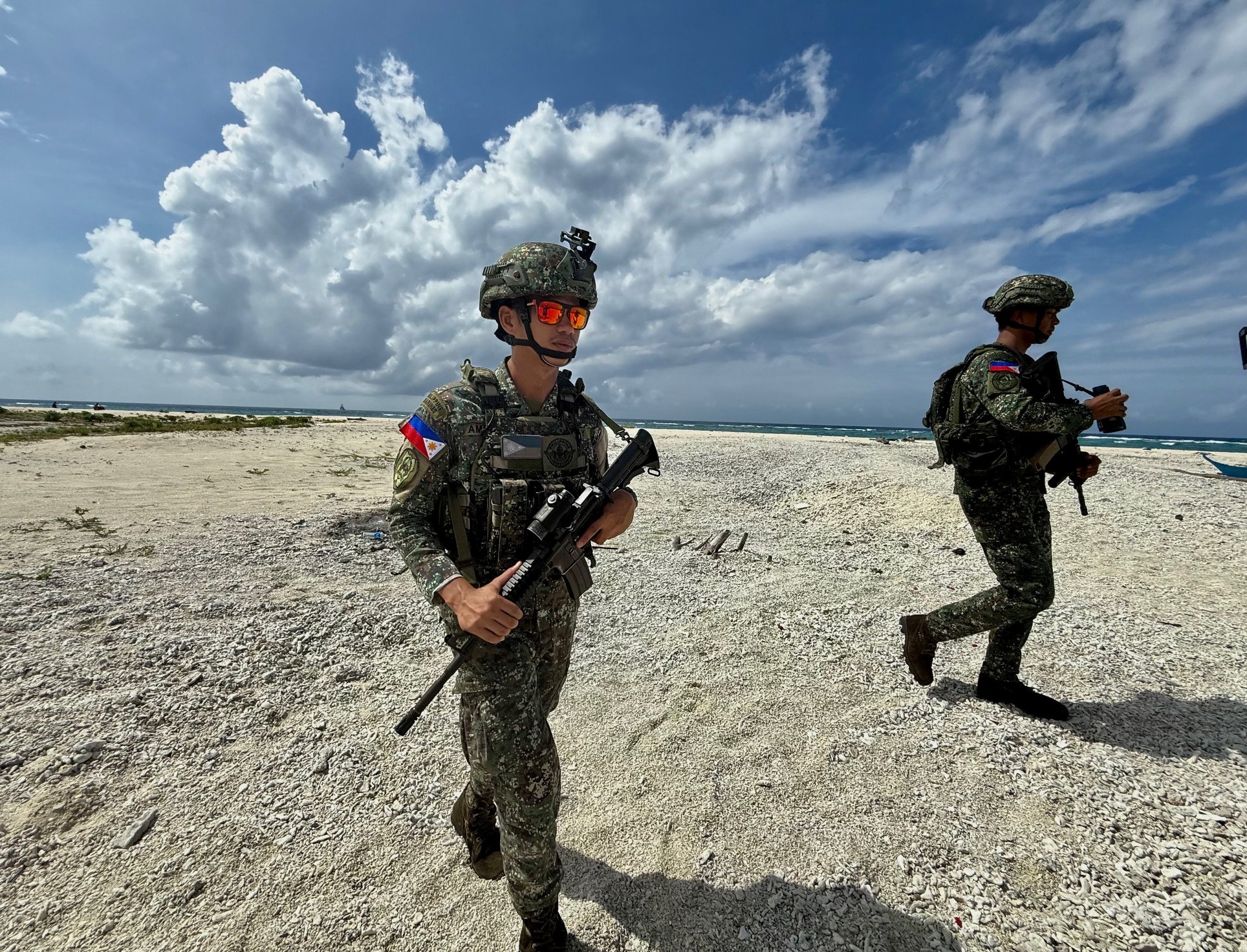
Ten years have passed since the International Arbitral Tribunal ruled in favor of the Philippines in its maritime case against China. The July 2016 award was hailed at the time as a landmark in international law, affirming Manila’s rights under the United Nations Convention on the Law of the Sea (UNCLOS). Yet a decade later, the ruling has not resolved the maritime jurisdictional conflict. Beijing continues to reject its validity, insisting on “indisputable sovereignty” over most of the South China Sea, including various features and areas claimed by Manila.
On the ruling’s tenth anniversary, Philippine President Ferdinand Marcos Jr.’s recent call to reset ties with China underscores the enduring tension between law and power. It reflects a recognition that while the arbitral award remains a cornerstone of Philippine policy, diplomacy requires balancing legal principle with pragmatic engagement. It is timely, therefore, to assess what a decade of law has achieved against ten years of power — and how the Philippines can move forward through pragmatic nationalism.
Law meets geopolitical reality
For Manila, the arbitral award has shaped foreign policy into a contest between legal principle and geopolitical reality. It has defined the trajectory of Philippines–China relations, oscillating between accommodation and assertiveness depending on who occupies Malacañang.
From 2016 to 2022, President Rodrigo Duterte pursued a pragmatic course, setting aside the award in favor of preventive diplomacy. He calculated that easing confrontation with Beijing could unlock financing and reduce tensions. The results were uneven. Some infrastructure projects materialized, but many stalled. China pressed ahead with reclamation of land features, coastguard patrols and maritime militia operations. Filipino fishermen near Scarborough Shoal continued to face difficulties despite informal arrangements. Still, Duterte’s approach lowered tensions by pursuing dialogue through the Bilateral Consultative Mechanism.
President Marcos Jr, in office since 2022, reversed course. He elevated the arbitral award as the cornerstone of Philippine policy. Marcos Jr. deepened security ties with the United States, Japan, and Australia and expanded the Enhanced Defense Cooperation Agreement. Manila reasserted itself as a champion of a rules-based maritime order. Yet assertiveness has brought costs: confrontations at sea grew more frequent, and relations with Beijing sank to their lowest point in years. His recent call for a reset of ties with China reflects an attempt to recalibrate — not by abandoning principle, but by embedding it within a pragmatic framework that safeguards sovereignty while keeping dialogue open.
Limits of regional unity
Manila has also sought to internationalize the dispute and rally diplomatic support from members of the Association of Southeast Asian Nations (ASEAN). But ASEAN’s consensus-driven approach has often proved too cautious, leaving the Philippines to shoulder much of the burden alone. The Philippines has learned that ASEAN unity is valuable but insufficient when national interests diverge.
This trajectory underscores a strategic dilemma. Setting aside the ruling weakens Manila’s legal position, but invoking it consistently provokes friction with a more powerful and permanent neighbor. The challenge is not to choose between law and pragmatism, but to harmonize them through pragmatic nationalism — asserting legal rights while keeping channels open for trade, investment, and dialogue with China.
Pragmatic nationalism means defending sovereignty without succumbing to either blind confrontation or passive accommodation.
Three lessons for the next decade
A decade after the arbitral award yields three lessons for the next.
- Law without power is aspiration, not policy. Legitimacy alone does not stop the deployment of China’s coast guard vessels in the West Philippine Sea, nor can it deter the use of water cannons. Only sustained modernization of the Philippine Navy and Coast Guard can turn law into power. Legal victories must be backed by a credible defense force.
- Power without law is coercion without principle. Alliances matter, but overreliance risks eroding Manila’s strategic autonomy. Power must therefore be balanced with principle and openness to dialogue with China and other parties in the South China Sea. Pragmatic nationalism requires avoiding the trap of becoming a pawn in worsening great power rivalry.
- Ocean governance is indispensable. The South China Sea is not only a battleground but also an ecosystem and economic artery. Joint resource management, environmental protection and maritime monitoring can build trust among claimants and stakeholders.
Constructive engagement with China on these fronts may stabilize the region more effectively than endless legal sparring. Cooperation on fisheries, pollution control and disaster response can soften geopolitical edges.
Pragmatic nationalism as strategy
The arbitral award remains an important moral and legal reference for the Philippines. But its true value lies in integrating it into a broader strategy of pragmatic nationalism—one that combines law, power and governance. Neither unilateral accommodation nor outright confrontation has ensured lasting stability.
Pragmatic nationalism requires confidence in safeguarding rights, caution in reducing risks and foresight in building durable partnerships. It is not about abandoning principle, but about embedding principle within a flexible strategy that protects sovereignty while advancing national development.
The next decade must therefore be about integrating law, power and governance into a coherent strategy. Only then can the Philippines transform the arbitral award from a symbol of victory into a foundation for a rules-based regional order.