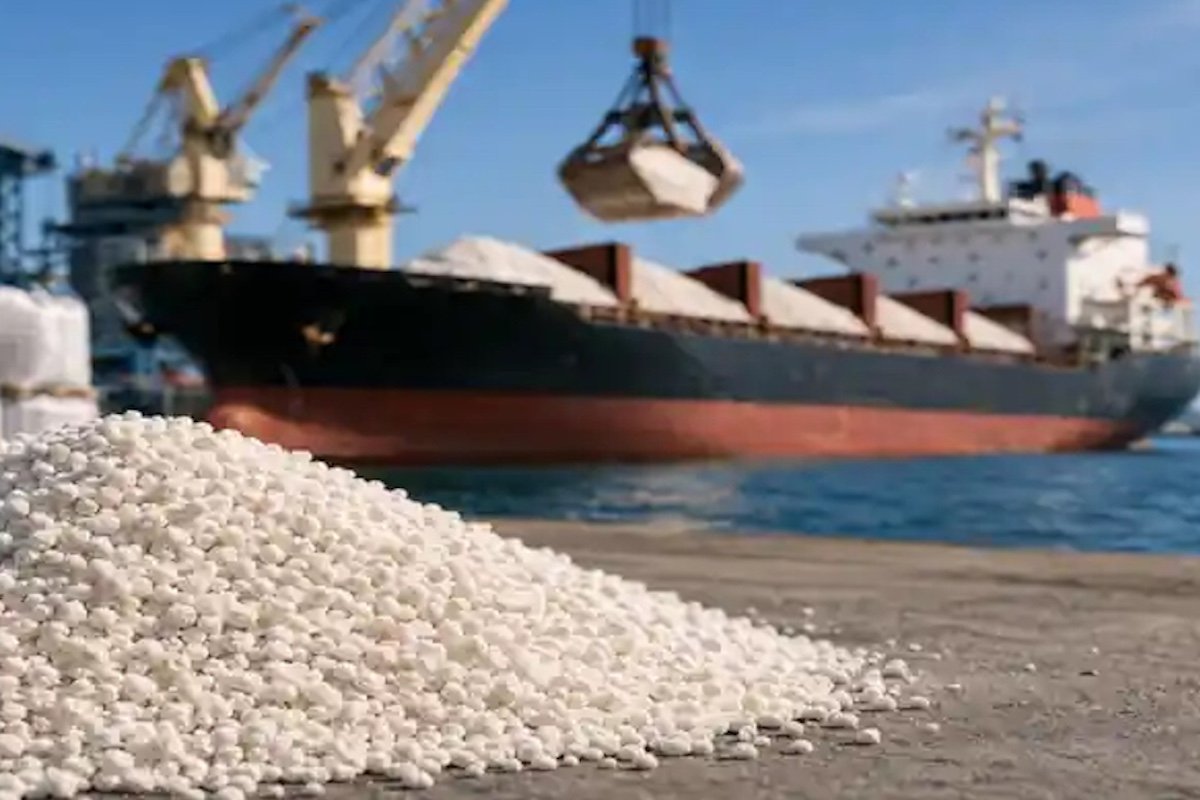
Shipping disruptions in the Middle East, particularly the ongoing blockades at the Strait of Hormuz, are beginning to squeeze the supply of critical fertilizer inputs like sulfur and sulfuric acid. For Asian economies that depend heavily on imported fertilizers, this upstream stress is raising the risk of delayed deliveries, higher costs, and eventual food price increases.
The Strait of Hormuz, a narrow waterway through which roughly 20% of the world's oil and a significant share of chemical cargoes pass, has seen a sharp drop in traffic. Industry trackers report that only a handful of vessels have crossed the corridor in recent days, as heightened geopolitical tensions and insurance constraints deter shipping. This has forced chemical tankers to take longer routes via the Red Sea or around the Cape of Good Hope, driving up freight rates and transit times.
Fertilizer Markets Under Pressure
Nitrogen-based fertilizer producers have shown relative strength in recent weeks, supported by lower natural gas prices that have improved margins. However, the real vulnerability lies in phosphate markets, where sulfuric acid is a key processing input. Disruptions in sulfuric acid availability can slow production schedules and reduce output efficiency, creating timing mismatches that ripple through the value chain.
These effects are not yet fully visible in final product markets, but they are building. As inventories are drawn down and procurement strategies shift, the lag between upstream constraints and downstream price adjustments could produce a period of apparent stability followed by more pronounced inflation. This pattern is familiar to agricultural economists: input shocks rarely translate immediately into food prices, but they tend to accumulate before breaking through.
Asian buyers are already adapting. Higher maritime insurance premia, dollar-denominated freight costs, and tighter compliance requirements are encouraging some importers to explore alternative settlement channels and diversified routing options. This shift toward what some analysts call multipolar logistics reflects a broader effort to reduce exposure to single-corridor risks and concentrated insurance markets.
Selective Transmission Across Crops
Price action in agricultural commodities suggests that the transmission of these upstream pressures is selective. Wheat and other food grains are showing steady gains, supported by tighter input conditions and stable demand. Corn is holding a firmer profile, though downstream signals remain mixed. Soybean meal and parts of the feed complex are not confirming the move, indicating that the adjustment is progressing at different speeds across segments.
Soft commodities illustrate this divergence clearly. Cotton is strengthening on the back of firmer input conditions and stable demand expectations, while coffee is trading under pressure due to regional supply dynamics. These movements show how the same upstream environment can produce varied outcomes depending on crop structure and exposure.
For Asia, the stakes are particularly high. The region's agricultural system relies heavily on imported inputs, especially sulfur, ammonia, and processed fertilizers from the Middle East and other suppliers. Countries like India, Indonesia, Vietnam, and the Philippines are among the world's largest fertilizer importers, and any disruption in global flows can quickly affect domestic production cycles.
Policy implications are beginning to emerge. Several Asian economies maintain fertilizer subsidy frameworks to stabilize farm costs and protect household budgets. Rising input prices and tighter supply conditions could place pressure on these systems. Countries with large agricultural sectors and significant subsidy exposure may face difficult policy choices if procurement costs rise or delivery schedules slip.
The broader implication is that the next phase of food-system adjustment in Asia will be shaped by logistics, routing, and processing capacity as much as by traditional supply-demand fundamentals. As shipping conditions remain constrained and input flows continue to face friction, the effects are likely to build progressively within the agricultural system, influencing pricing and policy with a delay.
For now, the system is entering a phase where upstream constraints are becoming more visible, while downstream effects remain in the early stages of transmission. The coming months will test how well Asian economies can absorb these shocks, and whether the region's fertilizer subsidy frameworks can withstand the pressure.