The United Arab Emirates' decision to withdraw from the Organization of the Petroleum Exporting Countries (OPEC) after 59 years marks more than a symbolic break. It underscores a deepening rift among major oil producers over how to navigate a shifting energy landscape and will diminish the cartel's ability to coordinate global supply.
In the near term, the impact on markets will be modest. The UAE accounts for roughly 3 to 4 percent of global oil output, and demand remains robust enough to absorb additional barrels. But the forces behind the exit are far more consequential than the move itself. They are both economic and political—and the war in Iran helped align them.
Economic Divergence: Why Abu Dhabi Chose to Go It Alone
For years, the UAE has invested heavily to expand its production capacity, spending around US$150 billion to push potential daily output close to 5 million barrels. Yet OPEC quotas, largely shaped by de facto leader Saudi Arabia, have kept actual production at about 3.5 million barrels per day. This has created a fundamental tension: why invest to produce more oil if you are not allowed to sell it?
Abu Dhabi's answer reflects a different economic calculus. The UAE can balance its budget at oil prices just below $50 per barrel, far lower than Saudi Arabia's estimated breakeven of $90 or more. This gives the UAE less incentive to restrict output and more reason to maximize exports. The strategy is also shaped by expectations about future demand. As countries like China accelerate the electrification of transport, oil demand growth is slowing and may soon plateau. The UAE is also ahead of Saudi Arabia in the energy transition, maintaining a net-zero target of 2050 compared to Riyadh's 2060. From Abu Dhabi's perspective, the bigger risk is not falling prices but leaving oil in the ground that may never be sold.
Geopolitical Strains and a More Independent Foreign Policy
The timing of the exit is not purely economic. It also reflects shifting political and security calculations, particularly after the UAE came under sustained attack during the war in Iran. In Abu Dhabi, there is a growing sense that regional institutions offered limited support. Anwar Gargash, a senior presidential adviser, told reporters: “The GCC’s stance was the weakest historically, considering the nature of the attack and the threat it posed to everyone,” adding that he “expected such a weak stance from the Arab League … But I don’t expect it from the GCC, and I am surprised by it.”
That experience has reinforced a more independent foreign policy. The UAE has strengthened ties with the United States and Israel, building on the 2020 Abraham Accords. The relationship with Israel is seen not just as an economic and security partnership but as a channel for influence inside the White House. At the same time, relations with Saudi Arabia have become more strained, with differences over regional conflicts in Somalia and Yemen and economic strategy increasingly visible. Leaving OPEC is both an economic decision and a geopolitical signal.
What This Means for OPEC and Asian Importers
The UAE's departure raises questions about the future of OPEC itself. The group once controlled more than half of global oil production. Today, its share is no more than 35 percent, and internal divisions over production quotas are more pronounced. Quotas, long the core of its strategy, are increasingly seen as uneven constraints rather than shared commitments. Saudi Arabia remains the only member with significant spare capacity, giving it outsized influence. The result is an organization that still matters but is less cohesive than it once was.
For Asian economies that rely heavily on oil imports—including Japan, South Korea, India, and China—the fragmentation of OPEC introduces new uncertainties. A weaker cartel could lead to higher output and lower prices in the short term, which would benefit importers. But sustained low prices could also pressure higher-cost producers, including the U.S. oil patch, which has been one of OPEC's main competitors. Moreover, the loss of a coordinated supply management system could increase price volatility, making it harder for Asian governments to plan energy budgets and secure stable supplies. As we have noted, the UAE's exit signals a fracturing Gulf that poses new risks for Asian energy importers.
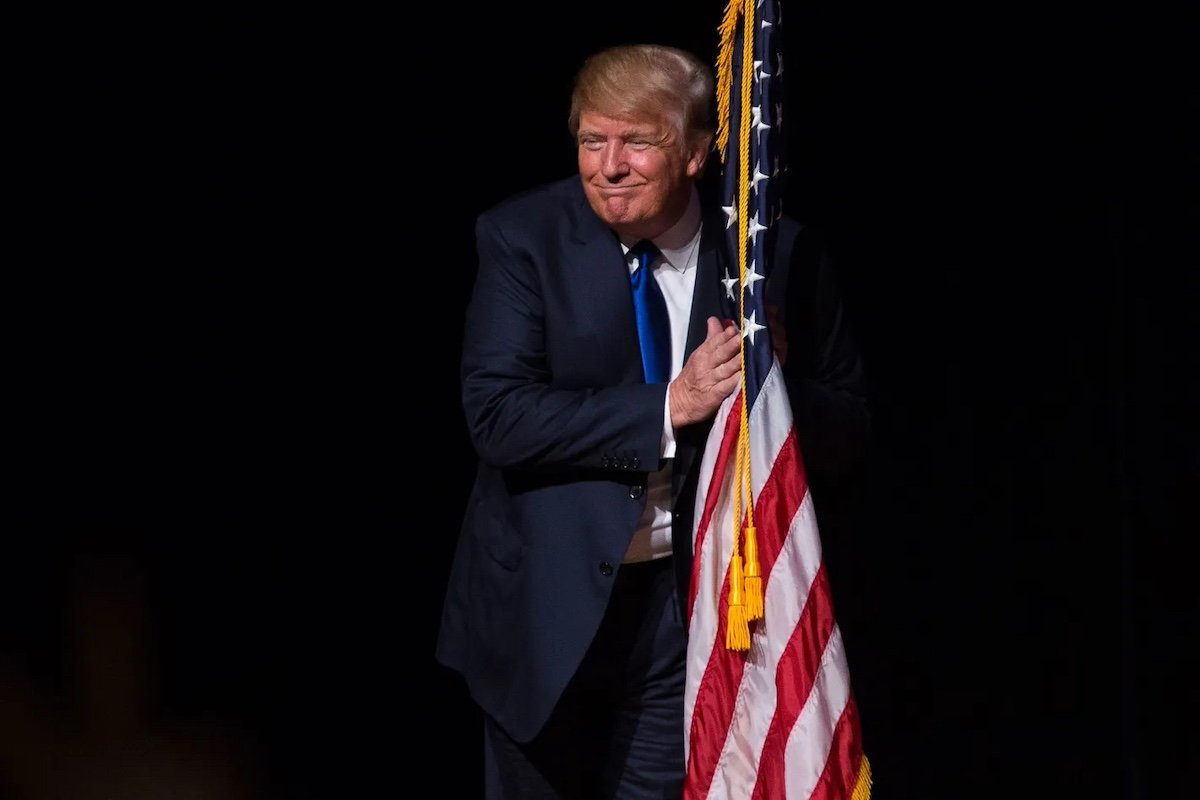
Some have hailed the UAE's exit as a victory for Donald Trump, who has repeatedly criticized OPEC for keeping oil prices high. But sustained lower prices would also put pressure on higher-cost producers, including the U.S. oil patch, which has benefited from the cartel's restraint. So what now looks like a geopolitical win could, over time, become an economic challenge.
For now, the UAE's exit will not dramatically reshape oil markets. Demand remains strong enough to absorb additional supply, particularly as countries rebuild inventories when Iran reopens the Strait of Hormuz. But the deeper significance lies in what the decision reveals. Oil producers are no longer aligned around a single strategy. Some are trying to manage scarcity and keep prices high. Others are racing to monetize their resources before demand peaks and they end up with stranded assets. That divergence is likely to grow—and may ultimately prove more consequential than any single country leaving the cartel. We may be entering a new age where oil is going to play a much lesser role in our lives.