KYIV – The abrupt dismissal of Ukraine's Defense Minister Mykhailo Fedorov on July 15 has plunged the country into a political crisis, with thousands taking to the streets in Kyiv, Lviv, Dnipro, and Odesa. Fedorov, a 35-year-old reformer who previously served as minister of digital transformation, was removed after just six months in office, following reported clashes with Commander-in-Chief Oleksandr Syrskyi.
Fedorov had championed the use of drones and unmanned systems to address Ukraine's severe manpower shortages on the front line, a strategy that contrasted with Syrskyi's emphasis on traditional troop recruitment. The former minister also spearheaded a campaign to disrupt Russian supply lines, which he called a "logistics lockdown," and worked closely with Silicon Valley executives, including SpaceX CEO Elon Musk, to counter Russian electronic warfare. His efforts to make defense procurement more transparent—including allowing soldiers to purchase weapons directly through the Brave1 platform, dubbed the "Amazon of Weapons"—angered traditional defense contractors.
Protests Erupt Across Ukraine
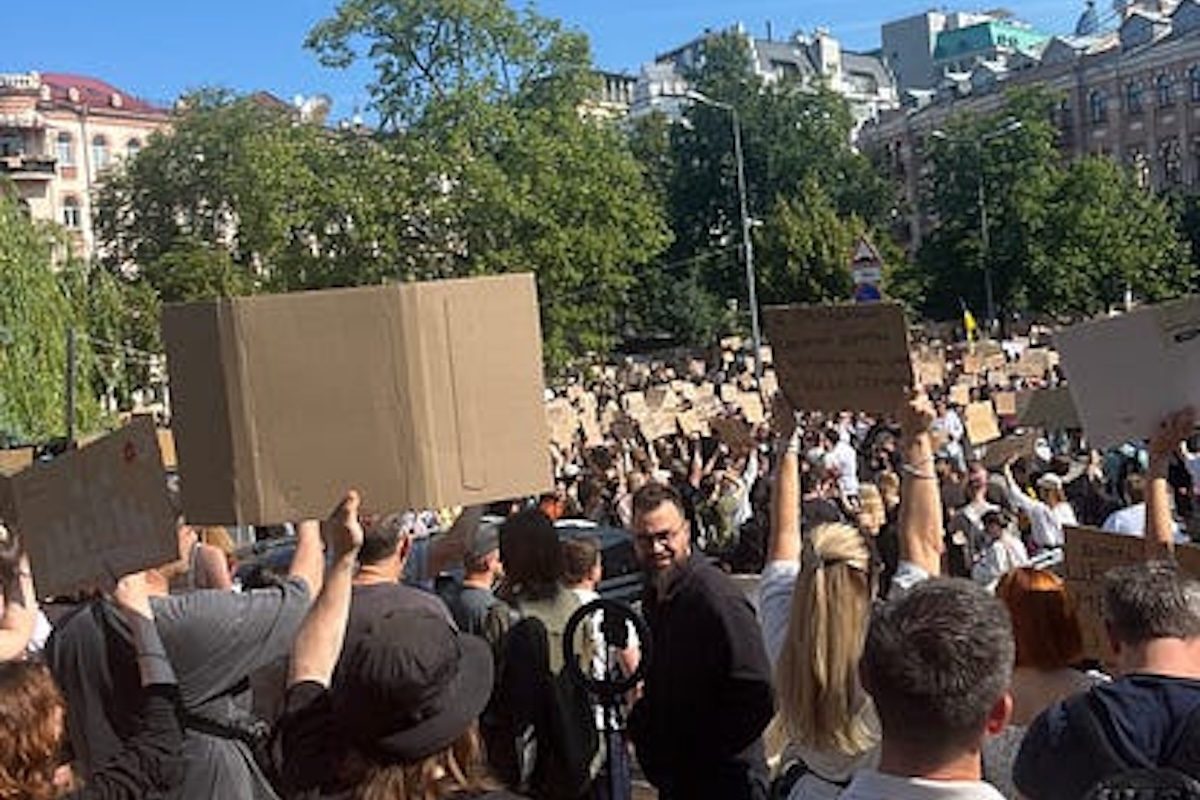
News of Fedorov's dismissal spread rapidly on social media, with veteran and former combat medic Dmytro Koziatynskyi calling for protests the following morning. In Kyiv, demonstrators gathered outside the Ivan Franko Theater, near President Volodymyr Zelenskyy's office, chanting "Shame!" and "FE-DOR-OV!" and "No personal interests!" The protests began at 9:01 a.m., one minute after the daily moment of silence for Ukrainians killed in Russia's invasion.
Despite the short notice, at least 1,000 people turned out during the workday. The crowd was largely composed of younger Ukrainians in their 30s and 40s, many from the IT sector. Andrei Rusan, 42, an IT professional, said, "We're fighting a stronger country and we need to fight with new technologies. When Fedorov came, we felt hope. After yesterday, I am disappointed."
Maria Vynogradova, 40, also in IT, told reporters she was protesting for soldiers who could not be there. "What are we doing? Why are we taking away this person?" she asked. "I want to have my country; I don't want to leave Kyiv; I don't want to leave Ukraine."
Political Fallout Deepens
Opposition lawmaker Inna Sovsun, from the Holos party, described the dismissal as "very wrong," adding that "at this point, there at least has to be a clear communication from the president about what the hell is happening." She noted that Ukrainians rarely protest a minister's dismissal—there were no demonstrations when Zelenskyy dismissed Prime Minister Yulia Svyrydenko on July 12—but in this case, "the personality and the issue" coincided.
The crisis escalated on July 16 when Deputy Commander of Ukraine's Air Force, Pavlo Yelizarov, resigned, citing Fedorov's dismissal. In a Facebook post, Yelizarov warned that the move would lead to more casualties and destruction from Russian missile and drone attacks, calling it a "great evil for the country's defense capability."
Zelenskyy has yet to comment publicly on the dismissal, but on July 16 he named Yevhen Khmara as acting defense minister, pending parliamentary approval. The move comes as Ukraine has been gaining momentum in the war, particularly through strikes on Russia's energy infrastructure. The dismissal has raised concerns among allies about the stability of Ukraine's leadership, especially as the country continues to rely on Western support for its defense.
The protests reflect a broader anxiety about the war's trajectory. Many Ukrainians see Fedorov as a symbol of innovation and reform, and his removal has fueled fears that the government may be shifting away from the modern, tech-driven approach that has helped Ukraine counter Russia's larger military. The situation remains fluid, with protesters hoping Zelenskyy will reverse course, as he did in July 2025 following mass protests over an anti-corruption law.