The architecture of global trade is undergoing a fundamental transformation. The new rules are being written not in tariff schedules alone, but in the geology of nickel deposits, the logistics of battery supply chains, and the strategic calculus of resource diplomacy. The recently concluded trade and critical minerals agreement between the United States and Indonesia serves as a definitive marker of this shift, revealing the anxieties and ambitions of a mineral-hungry world.
Finalized for a formal signing in early 2026, the framework settles Indonesia's US tariff exposure at approximately 19%, a significant reduction from the previously threatened 32%. In exchange, Washington secures enhanced access to Indonesia's critical minerals, with nickel as the centerpiece. The deal also encompasses digital trade, technology cooperation, and the reduction of select non-tariff barriers. While transactional on paper, its implications reshape strategic leverage across the Indo-Pacific.
Nickel at the Nexus of Strategy and Development
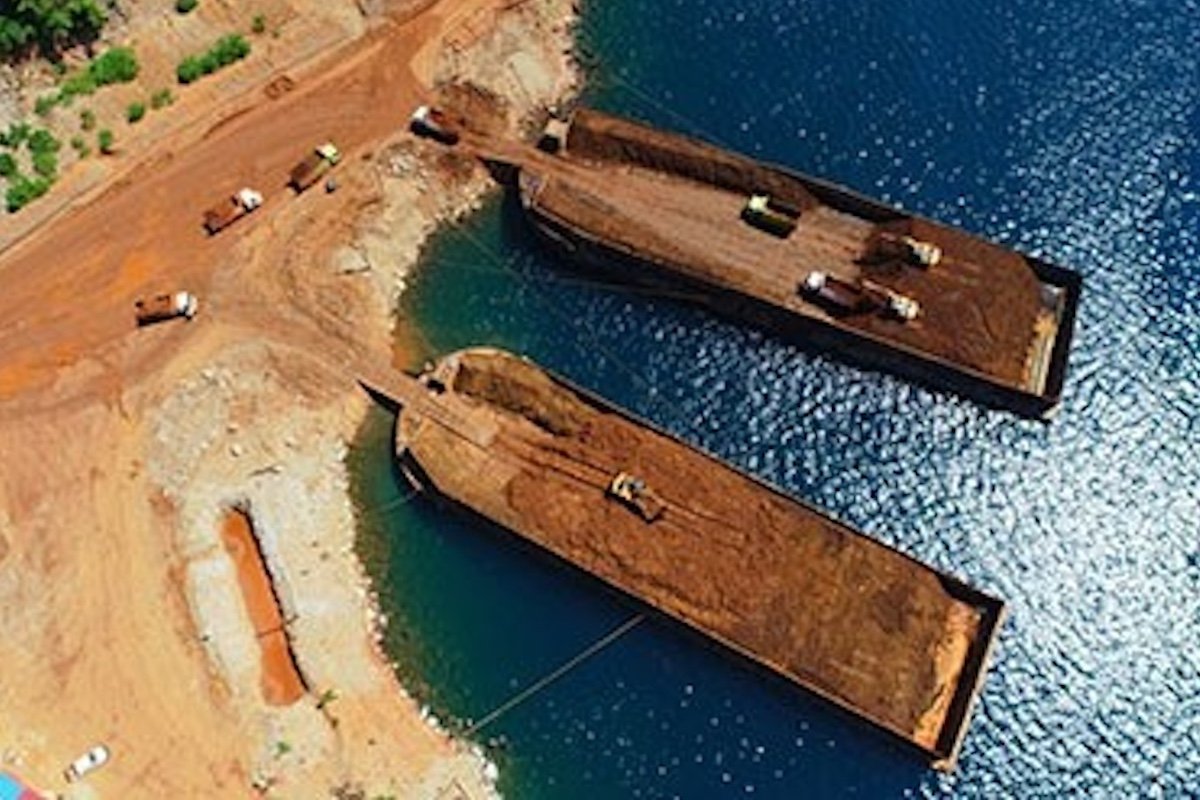
Indonesia's role is pivotal. The archipelago nation produces over half of the world's nickel, a metal whose demand for electric vehicle batteries is projected by the International Energy Agency to nearly double by 2030 under net-zero scenarios. For the US, engaged in strategic competition with China and reliant on foreign mineral supplies, Indonesia transforms from merely Southeast Asia's largest economy into a pillar of future industrial security.
This explains why the Indonesia pact differs from parallel US arrangements with Malaysia, Thailand, or Vietnam. It cuts to the core of Indonesia's national development strategy. For years, Jakarta has employed export bans and local-content rules to force downstream processing, building domestic smelters and battery plants. These policies spurred investment but also drew legal challenges and diplomatic pressure. The new framework represents a calculated trade-off, loosening some of that control for guaranteed market access and geopolitical favor.
The asymmetry in motivations is stark. Washington views critical minerals through the lens of vulnerability management, seeking to diversify supply away from China, which dominates roughly 90% of rare-earth processing. Jakarta, conversely, sees its mineral wealth as a ladder for economic transformation—a chance to escape the historical "pit-to-port" model that left resource-rich nations at the bottom of global value chains. One side seeks resilience; the other seeks a fundamental upgrade.
This dynamic echoes a longer history where resource diplomacy has rarely been neutral. From Middle Eastern oil to Latin American copper, strategic materials have long shaped alliances and sown resentments. The 1962 UN Declaration on Permanent Sovereignty over Natural Resources, born from such experiences, asserted nations' rights to control their wealth for their people's benefit. Six decades later, that principle faces a new test under the banner of decarbonization.
Calculated Gains and Long-Term Risks
For Indonesia, the immediate benefits are tangible. Reduced tariff volatility protects exporters, while carve-outs for sensitive products like palm oil and coffee preserve crucial market access. Greater regulatory clarity may attract US capital and technology into downstream processing, offering short-term dividends. However, the long-term risks are profound. Rolling back export controls and local-content rules narrows Jakarta's industrial policy toolkit just as global competition for high-value manufacturing intensifies. Without binding guarantees on technology transfer or domestic employment, mineral exports risk reverting to raw material flows with limited local benefit.
Environmental and social pressures add another layer of complexity. Expanded nickel mining on islands like Sulawesi has already raised alarms over deforestation, water pollution, and community displacement, drawing scrutiny from civil society and international watchdogs. How Jakarta manages these tensions while pursuing development will be closely watched, as its experience offers a preview for other resource-rich nations. Indonesia's foreign policy balancing act is thus tested not just in diplomatic corridors but in its mining heartlands.
For the United States, the deal offers strategic relief for its EV ambitions and reduces exposure to geopolitical choke points. Enhanced access to a major Southeast Asian market benefits US exporters. Yet, reputational risks shadow the agreement. If mineral access is perceived to come at the expense of environmental standards or local welfare, the credibility of Washington's "values-based trade" agenda erodes. Heavy-handed tariff diplomacy could also reinforce perceptions of coercion, potentially nudging ASEAN states to hedge more closely with Beijing. This comes as China's industrial policies continue to reshape global trade, placing pressure on Asian economies.
The global context sharpens the picture. Canada ties critical minerals funding to Indigenous participation and consent. The European Union increasingly embeds labor and environmental clauses into its trade instruments. Australia, a critical-minerals powerhouse itself, debates balancing sovereign capability with global responsibility. Against this backdrop, the Indonesia-US deal is less an exception and more a prototype for a new era.
Minerals are becoming the connective tissue between climate policy, industrial strategy, and foreign relations. The International Energy Agency notes an electric vehicle requires six times the mineral inputs of a conventional car, while offshore wind farms need nearly six times the minerals of gas-fired plants. These material realities translate directly into power—economic and geopolitical. The Indonesia-US agreement is a single chapter in a much larger story, one where the quest for a green future is irrevocably linked to the age-old politics of the earth beneath our feet.