Valar Atomics, a three-year-old microreactor developer based in Torrance, California, has raised $1 billion in a Series B funding round led by venture capital firm Sequoia. The investment signals growing investor confidence that the Trump administration's deregulatory push will enable the first major US nuclear buildout in decades.
The company plans to use the funds to commercialize its five-megawatt Ward 250 reactor, which uses helium as a coolant instead of water. The design has not yet received approval from the US Nuclear Regulatory Commission (NRC).
“So, what does the new Series B financing mean for Valar? It allows us to make the next mission critical evolution: Valar will transition from demonstrating the operability of an integrated reactor system to producing fleets of them en masse,” said Isaiah Taylor, founder and CEO, in a company statement. “This has been Valar’s mission since its inception.”
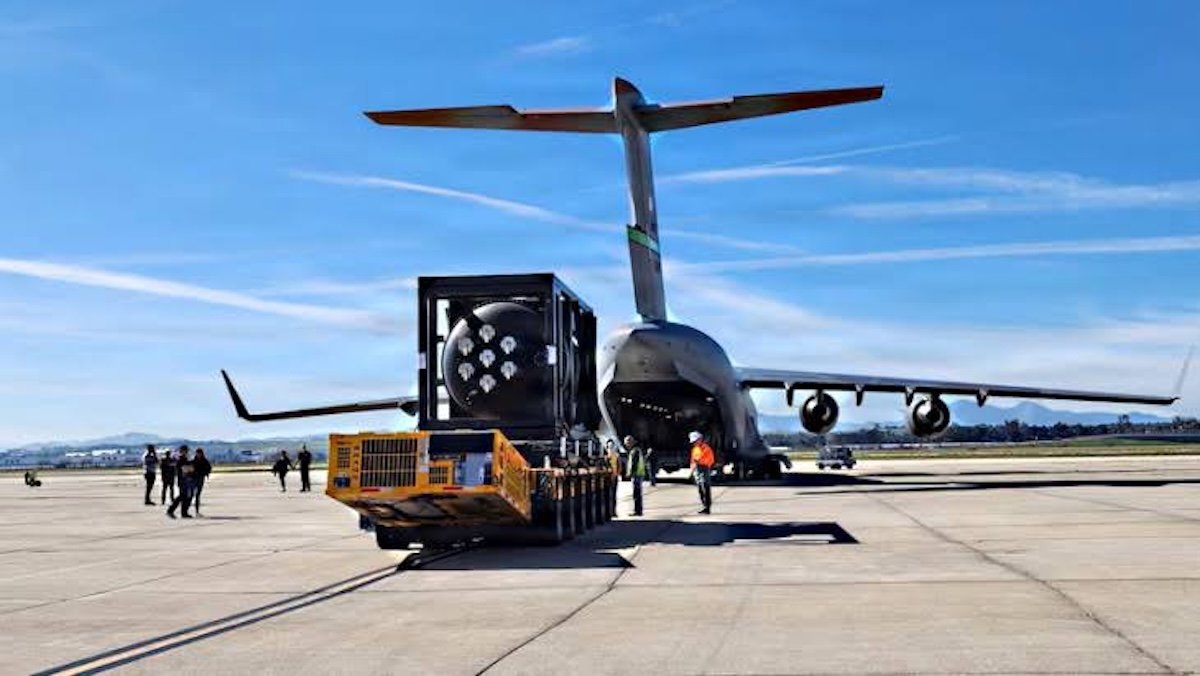
Taylor, 27, has drawn both criticism and attention for his aggressive social media presence and patriotic messaging. The company has become closely tied to the Trump administration, participating in two Department of Energy pilot programs and achieving a historic first by airlifting reactor components on a C-17 Globemaster III to Hill Air Force Base in Utah.
In June, Valar split atoms with its prototype Ward 250, becoming the second company in the pilot program to do so. The new funding will support a “vertically integrated, hardware first approach” covering deployment, operations, and fuel production.
Challenges Ahead
Despite the momentum, Valar faces significant hurdles. The US operated a high-temperature gas-cooled reactor in the 1970s at Fort St. Vrain in Colorado, but it shut down after a decade of costly maintenance issues. Similar reactors worldwide have largely been experimental.
China, however, has moved aggressively to commercialize the technology. In December 2023, China’s first 150-megawatt helium-cooled reactor began selling electricity to the grid. Beijing launched an industrial alliance in 2025 and started construction on a second, larger reactor in January.
High-temperature gas-cooled reactors offer advantages, especially during heat waves when water-cooled plants must reduce output. But developers of small modular reactors (under 300 megawatts) and microreactors (under 20 megawatts) still need to prove economic viability. Historically, nuclear profitability has come from larger, higher-output units, not mass production of smaller ones.
Valar also plans to manufacture its own fuel using TRISO, a complex form with limited domestic suppliers. Even if it overcomes these challenges, it will face competition from well-funded rivals like Kairos Power (backed by Google) and X-energy (with Amazon investment).
Valar’s political ties could become a liability if Democrats regain power. The Sequoia partner who led the round, Shaun Maguire, is a vocal Trump supporter and has faced controversy over remarks widely condemned as bigoted against Muslims. He will join Valar’s board.
As the race to commercialize advanced nuclear technology intensifies, Valar’s success will depend on technical execution, regulatory approval, and market acceptance. The company’s ability to navigate these challenges will determine whether it can truly lead a US nuclear renaissance.