The recent US midterm elections have sharpened the focus on data center expansion constraints, and for Asia's hardware and infrastructure suppliers, the message is clear: efficiency is no longer just a technical metric but a political necessity. An AI server can meet every specification and still sit idle, waiting for electricity or local approval. The political climate has made those constraints harder to ignore, and the response should begin before the next specification is written.
Across the November 4-6 trading sessions, South Korea's KOSPI lost 10.4% and Taiwan's TAIEX 8.3%, calculated cumulatively from their November 3 closes. Japan's Nikkei 225 fell 9.0%, using November 2 as the baseline because Tokyo was closed on November 3. The Nasdaq Composite dropped 5.5% on November 5. Valuation and financing worries were already weighing on AI shares before the results. The selloff sharpened the stakes, but falling prices are not canceled orders.
There is not yet evidence that the election has rewritten customer specifications. But for suppliers, it raises a consequential question: what will customers need next?
Power and cooling as the new design frontier
For the power and cooling a site can provide, how much useful work can an AI system deliver? One test would compare how many inference requests systems complete per megawatt-hour under the same workload, power limit and standards for quality, response time and reliability. The electricity measurement should cover computing, power conversion and cooling, with water use reported separately. Saving power must not come at the cost of electrical safety.
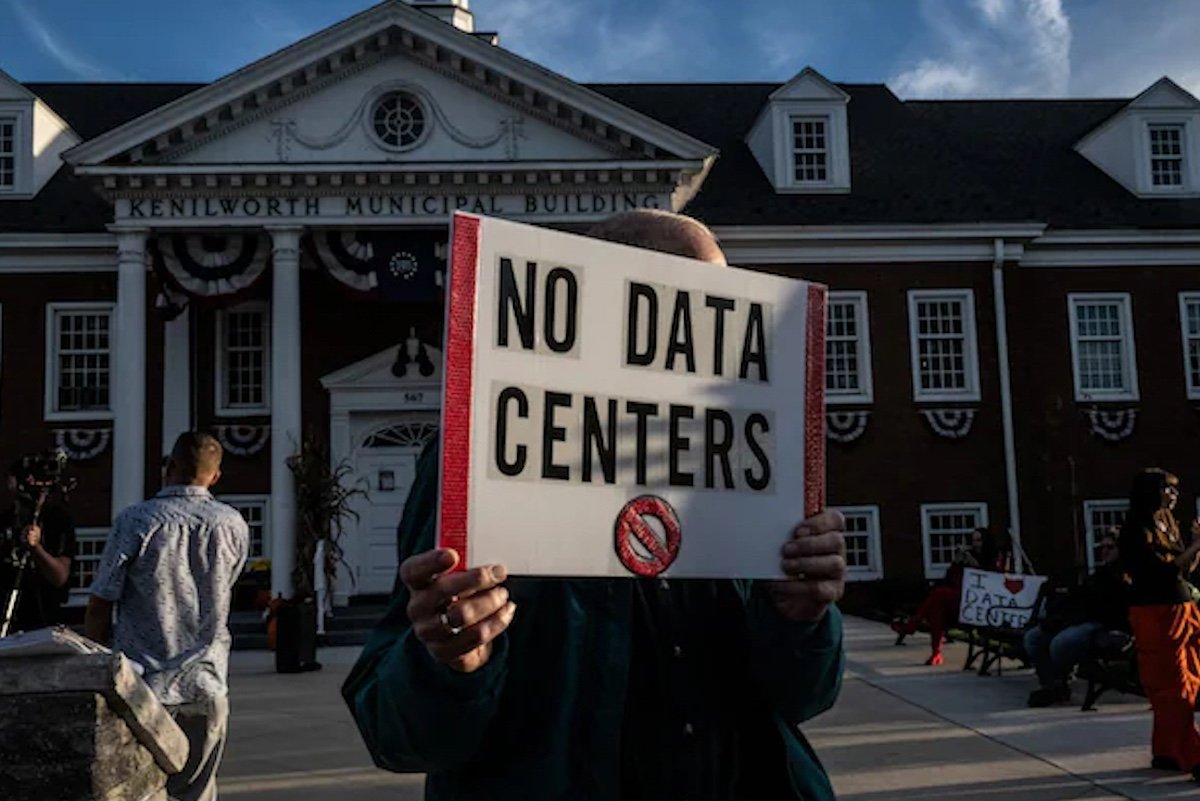
The election gives that question urgency. Using preliminary November 4 results, Data Center Watch examined 393 elected congressional candidates and 34 elected governors while some races remained undecided. Among congressional Democrats, 23% supported data-center bans or moratoriums, compared with 3% of Republicans. Among governors, the report identified restrictive positions among 50% of Democrats and 8% of Republicans. Support for oversight crossed party lines; Democrats more often favored tighter restrictions. Those positions still have to become policy.
Texas hints at what the emerging bargain could look like. The Texas Tribune reported that Governor-elect Gina Hinojosa had called for a moratorium on all data-center approvals until lawmakers established protections for Texans. She has argued that economic development and protection for Texans can go together. More efficient equipment cannot answer every community concern. But it can help developers do more within the power and water constraints that communities and utilities must confront.
The new Democratic-controlled Congress takes office in January, but much of that bargaining will happen closer to the sites themselves. States shape utility rules and incentives, while local authorities often control zoning and siting. Federal energy approvals also matter. Each project's existing approvals, financing and grid access will determine how exposed it is. The pressure predates the Democratic victories. Republican Governor Greg Abbott had already halted new data-center environmental permits and grid connections in Texas.
President Donald Trump's voluntary Ratepayer Protection Pledge, announced in March, sought commitments from technology companies to fund additional electricity supplies and grid upgrades. When developers carry those costs, equipment that needs less power for a given task becomes more valuable.
Singapore offers a preview of how such pressures can reach the drawing board. The application criteria for its second data-center capacity allocation round, DC-CFA2, include Green Mark platinum certification for facilities, IT equipment meeting the SS 715:2025 efficiency standard and at least 50% of power from eligible green-energy pathways. In this allocation round, resource performance is already part of the price of admission.
The capabilities did not begin with the election. But the political climate gives suppliers a reason to put them to work in different ways. For suppliers, the real contest is over who helps write the test.
Taiwan and Japan lead the design push
Taiwan's packaging, server and power-electronics firms should enter joint design with cloud customers while the architecture is still open. They can propose how a rack should distribute power, remove heat and sustain useful output within a site's limits. That gives manufacturing knowledge a place in the specification itself. At Computex in June, Delta Electronics presented a prefabricated AI data-center solution alongside power and cooling technologies. The company says factory assembly and testing can shorten deployment by up to 60% compared with traditional technologies. Factory preparation addresses the part of the timetable that engineering controls; permitting and grid connections remain separate challenges.
AMD's Taiwan partnerships offer another route into design. Its May announcement described work with packaging partners including ASE and SPIL, alongside system manufacturers, aimed at better power efficiency and faster deployment. Such collaborations give suppliers an opportunity to influence how packaging choices affect the power and cooling needs of the whole system.
The opportunity reaches beyond Taiwan and beyond new buildings. Japan's Mitsubishi Heavy Industries has reported cooling optimization at Fujitsu's operating Akashi data center using equipment from multiple vendors. In October, South Korea's LG Electronics signed a long-term chiller agreement to supply high-efficiency cooling systems for a major data center project in the region. These examples show that Asian suppliers are already moving from component providers to system-level innovators.
As the US political landscape evolves, the pressure on data center developers to be good neighbors will only intensify. For Asia's suppliers, the challenge is not just to build faster chips or better cooling units, but to help design the entire system around the constraints of power, water, and community acceptance. Those who succeed will not only survive the political headwinds but will define the next generation of AI infrastructure. The race is on to write the test that others will have to pass.