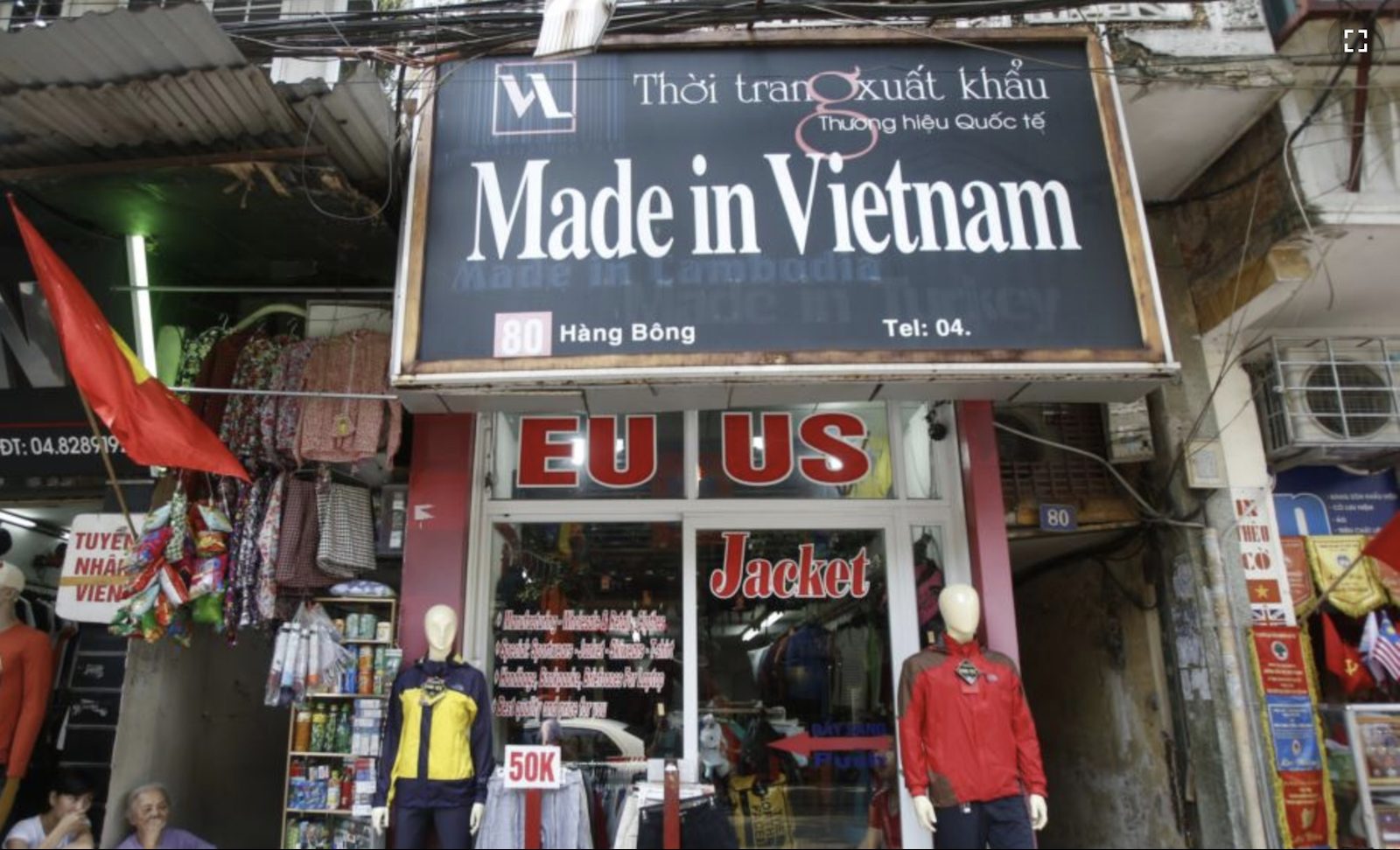
On April 30, the Office of the United States Trade Representative (USTR) designated Vietnam as a Priority Foreign Country for intellectual property protection—the harshest category in its annual Special 301 Report. It is the first such designation in 13 years, placing Vietnam alongside a short list of countries the U.S. considers to have the most serious IP deficiencies.
The USTR cited five grounds: online piracy, counterfeiting, weak border enforcement, unlicensed software use, and the absence of criminal penalties for cable and satellite signal theft. Under the statutory timeline, the USTR must decide within 30 days whether to open a Section 301 investigation, which could lead to tariffs or other trade measures.
The report frames the decision around a “persistent failure to resolve long-standing concerns” dating to 2020. Yet the data tells a more complicated story. In the 2025 report, Vietnam was on the Watch List, the lowest tier. It skipped the Priority Watch List entirely to land at the top—an unusual leap that suggests the methodology may be capturing something other than gradual deterioration.
Legislative Progress Amid Operational Collapse
Vietnam has been active on the legislative front. Decree 341, issued in February 2026, overhauled the copyright enforcement framework. The 2025 Amended IP Law, effective from April 2026, modernized protections and strengthened enforcement mechanisms. Both predate the USTR’s designation. The USTR acknowledged enforcement actions, including the shutdown of major piracy platforms such as Fmovies, Y2Mate, and HiAnime.to. Vietnam’s government reported an increase in criminal prosecutions for IP offenses.
But operational enforcement tells a different story. The Ministry of Industry and Trade reported that the value of detected violations fell by 31.8% in 2025—a year when the transfer of provincial enforcement to local authorities took effect mid-stream. Pending IP cases were canceled or left pending transfer. The introduction of specialized IP courts may be delayed until 2027. The USTR cited these disruptions as evidence of failure.
The picture is split: legislative modernization continued at the top, while operational enforcement capacity collapsed at the bottom. The Special 301 methodology focuses on enforcement outputs, so a framework built that way is unlikely to credit Vietnam for reforming its laws. This may partly explain why the framework produced such a severe result—but not entirely.
Administrative Overhaul, Not Policy Neglect
The administrative reorganization is central to understanding the operational decline. In February 2025, the National Assembly approved a sweeping restructuring of the government, reducing the number of ministries from 22 to 17. The General Department of Market Management, the national agency responsible for anti-counterfeiting enforcement and market surveillance, was downgraded to a regular departmental unit with six divisions and 166 civil servants—a central coordination body for a consumer market of over 100 million people. All 63 provincial Market Surveillance Departments were transferred to local People’s Committees by June 2025.
This was part of a larger overhaul: Vietnam consolidated 63 provinces into 34, abolished the district level of government entirely, and cut roughly 80,000 civil service positions—the most comprehensive administrative reform since reunification. The stated aim was to cut bureaucratic layers and support economic growth, not to shrink the state’s enforcement capacity. International law firms and foreign governments nonetheless anticipated that the transition would cause delays in approvals, licensing, and enforcement.
The old General Department coordinated raids nationally, maintained relationships with rights holders, and accumulated institutional knowledge about counterfeiting networks. When it was downgraded and its 63 provincial offices transferred to local People’s Committees, the vertical command line between the center and the provinces was severed. The coordination networks, case histories, and operational relationships did not follow the organizational chart. The 31.8% decline in detected violation value is consistent with the loss of those networks.
That is a different phenomenon from a government choosing not to enforce. The USTR report notes the restructuring disruptions but treats them as an aggravating factor rather than a mitigating one.
Inconsistent Standards and Trade Context
There is a reasonable alternative reading. Vietnam’s IP enforcement problems predate the restructuring by years, and the USTR could argue that the reorganization compounds longstanding deficiencies rather than addressing them. But comparing Vietnam’s treatment with other countries in the same report complicates that argument.
For example, Indonesia has been on the Priority Watch List for years with similar categories of concern, including weak enforcement and procedural delays. Indonesia also reorganized its IP governance under President Prabowo Subianto, moving the Directorate General of Intellectual Property to a restructured Ministry of Law. But Indonesia retained its central IP administrative body and its enforcement channels—police and government enforcement officers. Vietnam downgraded its central enforcement body and decentralized its operational arms to local authorities, significantly reducing its national enforcement reach. Indonesia was not escalated in the USTR’s designation rating. The difference in outcome may partly reflect this structural difference, but it also raises the question of whether the USTR applied a consistent standard or whether trade considerations shaped the result.
The trade context adds weight to that question. The report insists the designation is “solely based on IP-related concerns.” It then cites Vietnam’s failure to make “meaningful progress” during negotiations for an Agreement on Reciprocal, Fair, and Balanced Trade as evidence. The Vietnam Chamber of Commerce and Industry assessed the designation as a risk that could trigger further tariff measures. With a 20% reciprocal tariff already in place and a 30-day statutory clock ticking toward a possible Section 301 investigation, the designation may serve as leverage in broader trade talks rather than a pure IP assessment.
Vietnam’s experience also highlights a broader challenge for developing Asian economies: administrative reform, however necessary, can temporarily cripple enforcement capacity. The USTR’s methodology, which measures outputs without accounting for transitional disruption, risks penalizing countries for the very reforms the U.S. often encourages. As friendshoring offers developing Asia a lifeline as global trade fractures, such designations could complicate the investment climate for countries undergoing structural change.
For Vietnam, the immediate challenge is to restore enforcement capacity while continuing legislative modernization. The USTR’s 30-day clock is ticking, and the outcome will test whether the Special 301 process can distinguish between transition and failure.