The recent wave of AI safety warnings, culminating in the resignation of Jacob Coxon from Anthropic, has finally pushed the issue into the mainstream. Coxon, a 27-year-old researcher who previously worked at OpenAI, declared that both companies are "racing straight to self-improving superintelligence and gambling with our lives." His sentiments were echoed by other researchers, including Evan Hubinger, who stated that AI could kill all humans with a probability greater than 10% within the next decade.
These are not isolated voices. Geoffrey Hinton left Google in 2023 over safety fears, and Daniel Kokotajlo resigned from OpenAI in 2024. Surveys of AI researchers consistently show that a significant portion believe there is a real chance of catastrophic outcomes. The median researcher assigns a 5-10% probability to human extinction, while the average is between 15% and 20%.
The public reaction has been intense. Barack Obama is urging Democrats to focus on AI risk, Bernie Sanders is drafting a bill to ban AI superintelligence, and even Donald Trump is being asked about an AI slowdown. The heads of major AI labs—Dario Amodei of Anthropic, Sam Altman of OpenAI, Demis Hassabis of Google DeepMind, and Elon Musk of xAI—have all publicly agreed on the need to pace the frontier. They are reportedly holding secret talks on joint action.
This is remarkable because a slowdown would hurt their companies' bottom lines, allowing upstart competitors to catch up. Their willingness to sacrifice financial interests suggests their concerns are sincere. But there is a glaring omission in this conversation: China.
The China problem
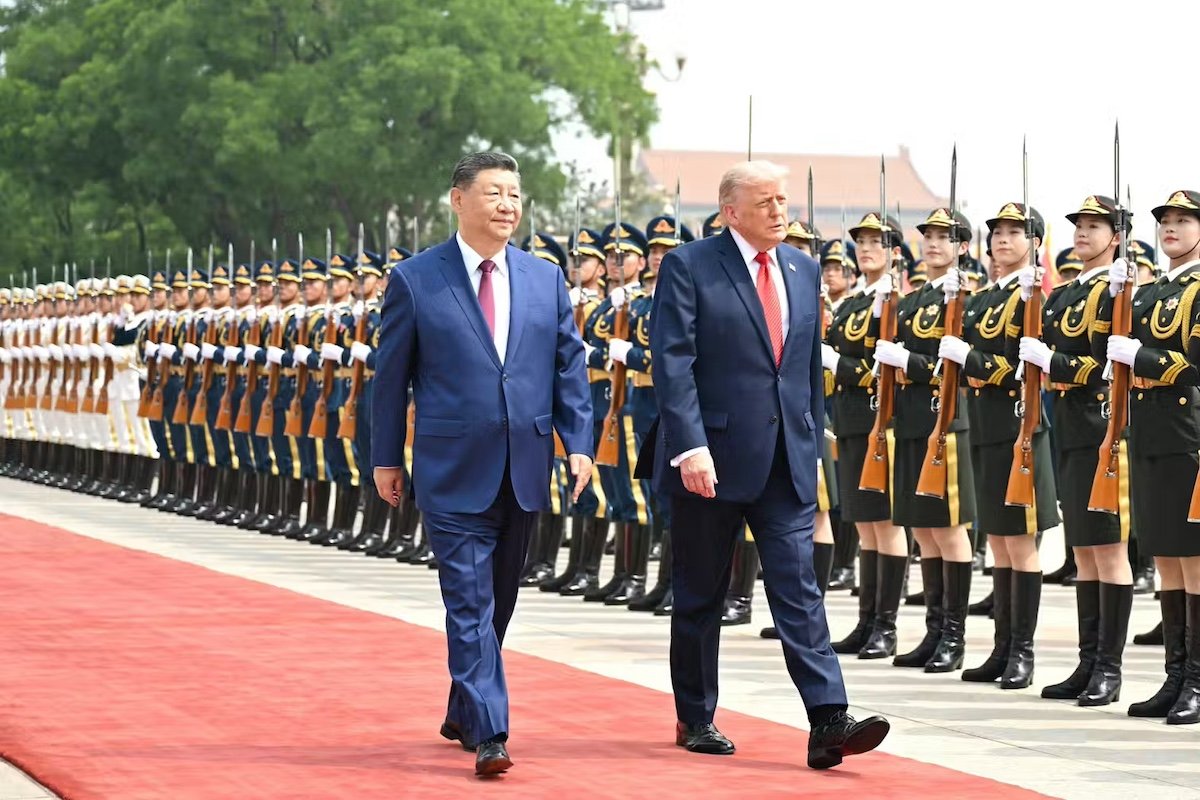
China is the only country with the resources, talent, and political will to rival the United States in AI development. Chinese companies like Baidu, Alibaba, and Tencent are investing heavily in large language models and other AI technologies. The Chinese government has made AI a national priority, with plans to become the world leader in the field by 2030.
Yet none of the major AI labs in the US have called for including China in the slowdown talks. The assumption seems to be that a US-led pause would somehow be enough. But that is wishful thinking. If the US and its allies slow down while China continues at full speed, the result will not be a safer world—it will be a world where China dominates AI, with all the geopolitical consequences that entails.
China has no incentive to join a slowdown. Its leaders see AI as a strategic asset, essential for economic growth, military modernization, and global influence. They are unlikely to be swayed by abstract arguments about existential risk, especially when they suspect the US is trying to maintain its technological edge.
For a slowdown to work, China must be properly scared. That means the US and its allies need to create real pressure—economic, diplomatic, and possibly military—to convince Beijing that the costs of an unchecked AI race outweigh the benefits. This could include export controls on advanced chips, restrictions on investment in Chinese AI companies, and diplomatic efforts to isolate China in international AI governance forums.
Some of this is already happening. The US has imposed export controls on advanced semiconductors, and Japan and the Netherlands have followed suit. But these measures are not enough. They are designed to slow China's progress, not to force it to the negotiating table.
What is needed is a comprehensive strategy that links AI safety to broader geopolitical issues. For example, the US could offer to ease sanctions on Chinese tech companies in exchange for China's commitment to AI safety standards. Or it could tie AI cooperation to progress on other issues, such as Taiwan or trade.
Without such pressure, China will continue to see AI as a zero-sum competition. And in that case, the calls for a slowdown will be nothing more than a Western fantasy.
The stakes could not be higher. As China's embedded AI strategy shows, the competition is already shifting inside the machine. The US and its allies must act now, before it is too late.