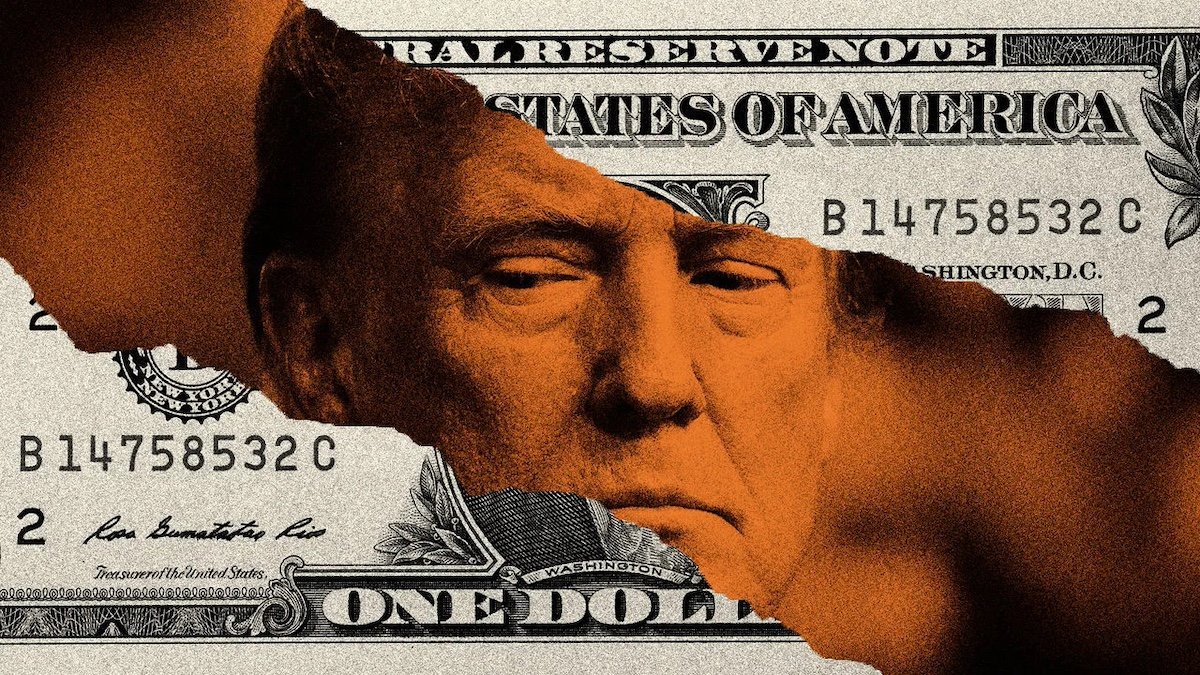
The dollar's recent surge is as much a story about the rest of the world as it is about the United States. At a 17-month high, the greenback is attracting global capital chasing higher yields and the artificial-intelligence-driven growth narrative. That momentum may help it shrug off the political uncertainty surrounding the US midterm elections, including any attempts by the Trump White House to contest the results.
Democrats secured majorities in both the House and Senate on Tuesday, a decisive rebuke to President Donald Trump's party. While the full scale of the victory will take days to tally, the margins were wide enough that Trump, at least initially, appeared to accept the defeat in press interviews.
Markets initially gyrated on the prospect of Democratic policy shifts on fiscal spending, AI regulation, the Iran conflict, and investigations into the White House. Stocks generally looked set to rise, while the dollar dipped slightly against the yen, pound, and euro. But once the political dust settles, many analysts expect another gravity-defying year for the US currency.
MUFG Bank argues that a Democratic sweep would be "likely modestly positive for Asian FX," because fiscal gridlock would curb expectations of further US spending, weighing on yields and the dollar. Nathan Thooft of Manulife agrees that divided government means fewer policy changes and "a degree of stability," but cautions against overstating the long-term impact, since currencies follow relative growth, inflation, rates, and capital flows more than elections.
Trump still holds significant levers, however. Tai Hui of J.P. Morgan Asset Management points to trade, tariffs, foreign policy, and existing regulations, and notes that Democrats would need a two-thirds supermajority to override a presidential veto.
A continued dollar rally would threaten Asian currencies and tighten global credit conditions, just as governments in the region are contending with the Middle East war and the risk of new US tariffs. Asia has been here before. The 1997-98 financial crisis had its roots in the Federal Reserve's 1994-95 tightening, when rates doubled in 12 months under Chairman Alan Greenspan. That tipped Mexico into crisis, and the resulting dollar surge made Asia's currency pegs impossible to hold. Thailand devalued first, then Indonesia and South Korea, which together took $118 billion in IMF-led bailouts. Malaysia and the Philippines were pushed to the brink without seeking help.
Emerging markets have feared Fed hikes ever since, as the 2013 "taper tantrum" showed. Now the Iran war has brought the dollar's wrecking-ball tendencies back. The Indonesian rupiah is down 8.8% this year to record lows, the Philippine peso is down 7.7%, and the Thai baht and Korean won are each down 7%. All of this is happening despite runaway US debt, high inflation, tariffs, tax cuts, and heavy spending.
A hawkish Fed complicates Asia's calculus
A big part of this story is how Chairman Kevin Warsh's arrival at the Fed in May isn't playing out the way Asia hoped. So far, Warsh has run the US central bank notably more hawkish than Trump assumed. He could still be biding his time before doing the president's bidding. But with US inflation running at 3.7% – a big factor in Trump's party's defeat on Tuesday – and the labor market holding up far better than expected, Warsh faces a complicated inheritance.
All of this is making life more challenging for the Bank of Japan. Markets are pricing in Fed tightening by year-end, leaving Tokyo in a whirl. A hawkish Washington will pull capital toward US Treasuries, threatening the Nikkei's bull run – and the weak yen that juiced corporate profits now leaves Japan exposed to surging import costs and even higher inflation. Japan is already grappling with stagflation. Growth is tracking at just 0.7% in 2026, while inflation is running about 2%. Given those headwinds, September's BOJ rate hike to 1%, a 31-year high, may be the last for a long while. A BOJ on hold while the Fed tightens is a near-perfect recipe for renewed yen freefall.
Nobody knows where the Warsh Fed lands six months from now – or how Trump, who tried to fire predecessor Jerome Powell and have him indicted, reacts if his chosen dove fails to deliver rate cuts. But the dollar surging amid a Fed tightening cycle wasn't on Asia's 2027 worry list. It is now.
HSBC economist Frederic Neumann argues that monetary officials will remain "on guard in Asia" because "a bouncy US dollar means that there is little reprieve for now." A surging dollar, he said, makes "everything worse, threatening to suffocate Asian currencies and leaving governments across the region scrambling to sandbag their financial systems."
The case for caution with dollar optimism, though, is long and growing. Here are seven reasons why dollar optimism may be misplaced.
One, politics. The US political system has not recovered from President Donald Trump's 2021 attempt to overturn his loss to Joe Biden, and the chaos around this election is likely to cloud policy direction for months.
Two, oil and the Middle East. "For the US dollar, oil remains the most important near-term driver to watch and any outsized move there will more than likely supersede any midterm impact," said Sarah Ying, head of foreign-exchange strategy at CIBC. "We like positioning for US dollar downside, given that the US administration has taken a more conciliatory tone on Iran in recent days."
Three, the Fed. Policy may be less aggressive than markets expect. Kevin Warsh, Trump's latest pick for Fed chair, could argue that lower rates are needed to stabilize the US economy. That would...