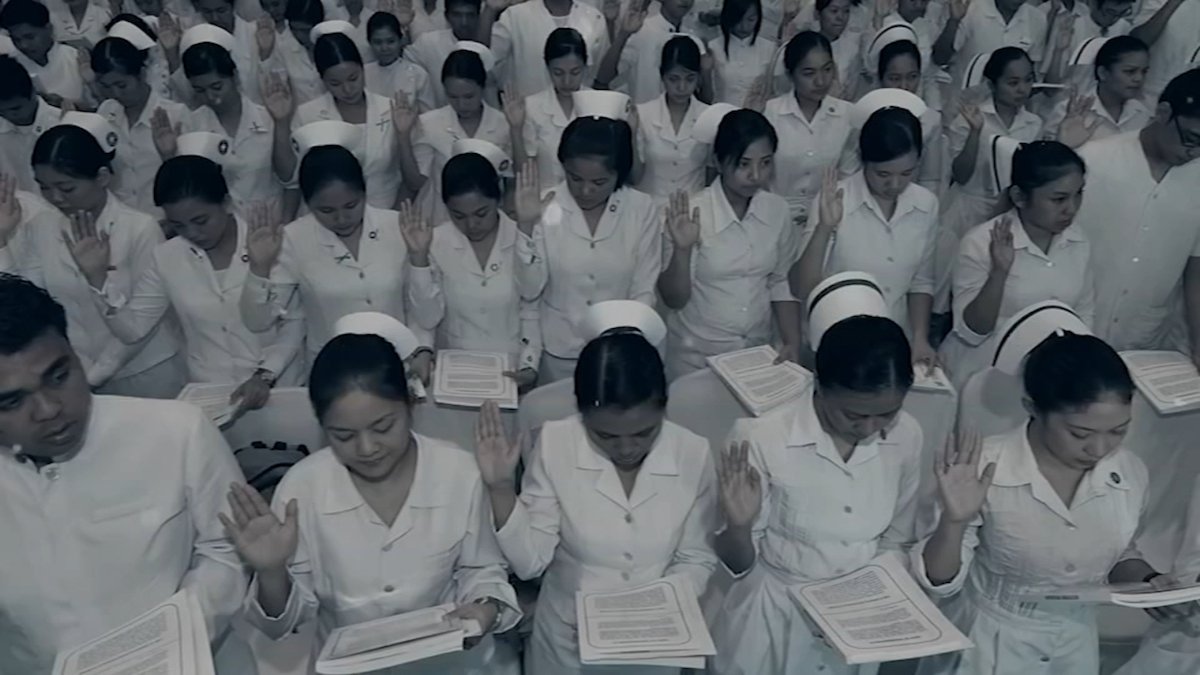
Manila's Ninoy Aquino International Airport, often rated the worst in Southeast Asia and perpetually under renovation, serves as the departure gate for more than two million Filipino workers each year. They are nurses, seafarers, engineers, and domestic helpers, contracted out by the state to foreign employers. Official rhetoric celebrates this exodus as a national achievement, but the figure reflects four decades of governance that has made emigration the most rational choice for many Filipinos. What leaves is the accumulated education, competence, and development potential embedded in that labor.
Vietnam exports electronics, Thailand automobiles, Indonesia products tied to global battery supply chains, Malaysia chips. The Philippines exports people—a workforce that could have built equivalent industrial ecosystems on the archipelago. Remittances approach 10% of GDP, a figure the political class presents as evidence of prestige rather than the measurable cost of a state organized around human exports.
Those financial transfers support household consumption, stabilize the peso, and strengthen the balance of payments—then flow, in substantial part, into the conglomerate-controlled retail chains, real estate portfolios, and utility bills that oligarchic families have spent decades insulating from competition. The diaspora funds the system that produced the diaspora.
A Colonial Legacy of Dependency
The architecture of this arrangement was established by a political class that never fully decolonized the country. Three centuries of Spanish control, followed by half a century of American occupation, preceded a state apparatus designed for dependency rather than production. Security was outsourced to Washington; economic reliance to Beijing. The result is a state that has become the terrain on which two superpowers conduct their rivalry, while its main political clans alternate between patrons: the Dutertes toward China, the Marcoses back toward the US.
The Philippines celebrated Independence Day on June 12, marking the end of the Spanish Empire in 1898. The date when American colonial rule ended—July 4, 1946, following a war of resistance that killed hundreds of thousands—passes every year without ceremony. Washington maintains troops on Philippine soil and, under the Enhanced Defense Cooperation Agreement, still has access to at least nine military bases calibrated to American Indo-Pacific strategy. Beijing's expansion in the South China Sea generates sufficient diplomatic noise to deflect scrutiny that might otherwise fall on the costs of the American presence in foregone industrial investment and deterred foreign capital. Neither relationship has been renegotiated on terms serving Philippine development.
Meanwhile, migration has become so thoroughly embedded in the social fabric that the displacement functions as a recognized institution of the republic, one with a dedicated bureaucratic infrastructure distributed across commercial life as naturally as pharmacies or shops. Families dreaming of a better life begin the process by joining a queue between a cosmetics counter and a burger outlet. The Philippine Overseas Employment Administration maintains satellite branches across shopping malls. Government-accredited recruitment firms, operating on behalf of the state, run the full HR cycle—screening, placement, and deployment.
The Cost of Underemployment
The question this setting raises is seldom, if ever, posed domestically: what happens when a country produces skilled workers and then deploys them in positions that do not require those skills? A significant share of workers abroad is employed below their level of qualification. The human and national resource costs of this downgrading appear nowhere in the remittance statistics that the national central bank releases quarterly.
Business process outsourcing (BPO) has been cited as proof of success. However, BPO is a form of virtual migration, in which workers remain physically on Philippine soil while orbiting economically and psychologically within foreign corporate systems. Several million workers based in Quezon, Cebu, or Dumaguete generate export revenue processing the administrative functions of Western firms, their competitive advantage resting entirely on labor cost differentials. Yet large language models now perform, at industrial scale and negligible marginal cost, the routine tasks of this industry. The impact is going to be devastating in the Philippines, yet the elite has not formulated a response because doing so would require acknowledging that BPO was never a development model—and such discussion is, unsurprisingly, absent as well.
The Oligarchic System That Benefits
An oligarchic de facto alliance of dynastic politicians and entrenched business governs as though sovereignty were a management contract available for subcontracting. A handful of conglomerates control the economy through real estate, banking, telecommunications, utilities, and infrastructure concessions—sectors generating reliable returns without requiring tech innovation or exposure to international competition. Public office functions as a recognized pathway to wealth within this system: the families that dominate these protected sectors need political protection; the politicians who provide it need campaign financing. Almost every senator enters office indebted to the interests he or she is meant to regulate; almost every congressman protects the sectors from which his or her family derives income.
Industrialization would disrupt this arrangement. It creates economic actors outside established networks, redistributes market power, and generates competitors for families that have spent generations extracting reserves from protected positions. The underdevelopment of Philippine manufacturing follows directly from the class interests of those who govern it: groups whose assets depend on manufacturing remaining underdeveloped have no incentive to absorb the risks of building a diversified economy.
The system is perfect—for the people running it. But for the millions who leave, and for the millions more who stay, the cost is a nation that exports its best and brightest, while the oligarchs count their remittances.