There is a Punjabi proverb, roughly remembered: twada kutta Tommy, sadaa kutta kutta. Your dog is named Tommy; my dog is to be treated like a dog. Eight syllables, one civilization's worth of hypocrisy. It captures the asymmetry of regard that now defines how the AI boom is narrated.
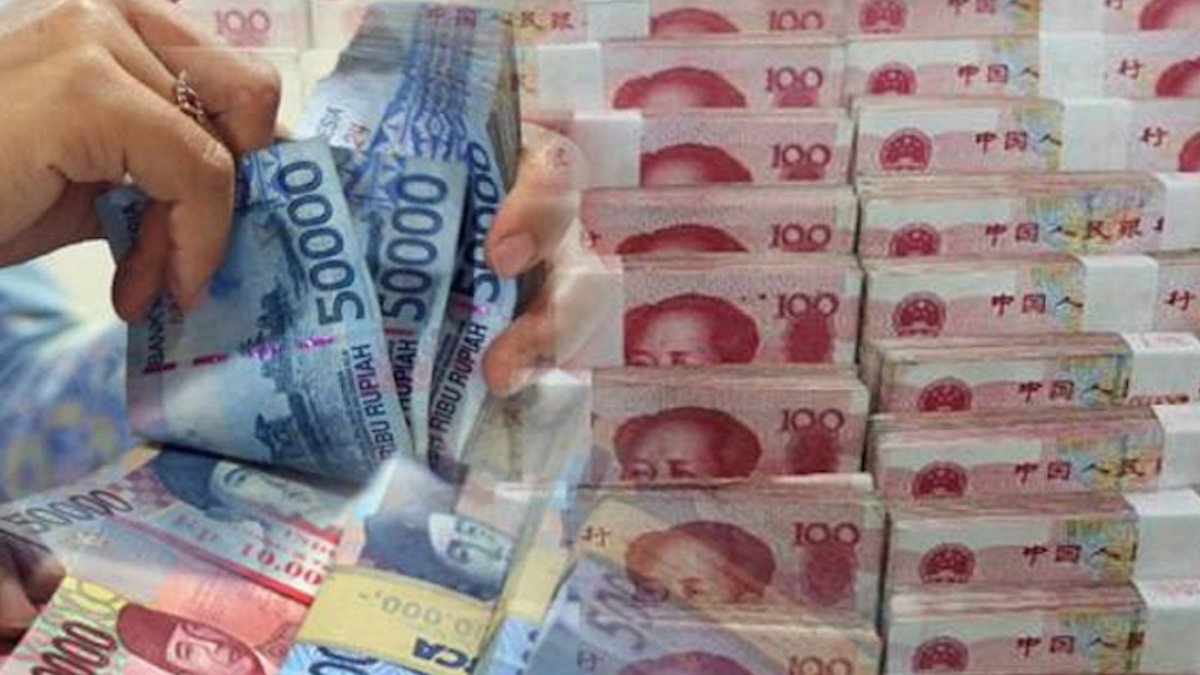
Asian companies are turning AI demand into revenue, revenue into margins, and margins into numbers large enough to embarrass many software dreams. Yet because these profits appear in the supposedly less glamorous layers of the stack, they are dismissed as 'picks and shovels' or 'AI infrastructure' — as if the money becomes less real when earned by the people selling the only thing everyone else needs. One's margin is hailed as platform economics; the others' binned as a cyclical commodity windfall.
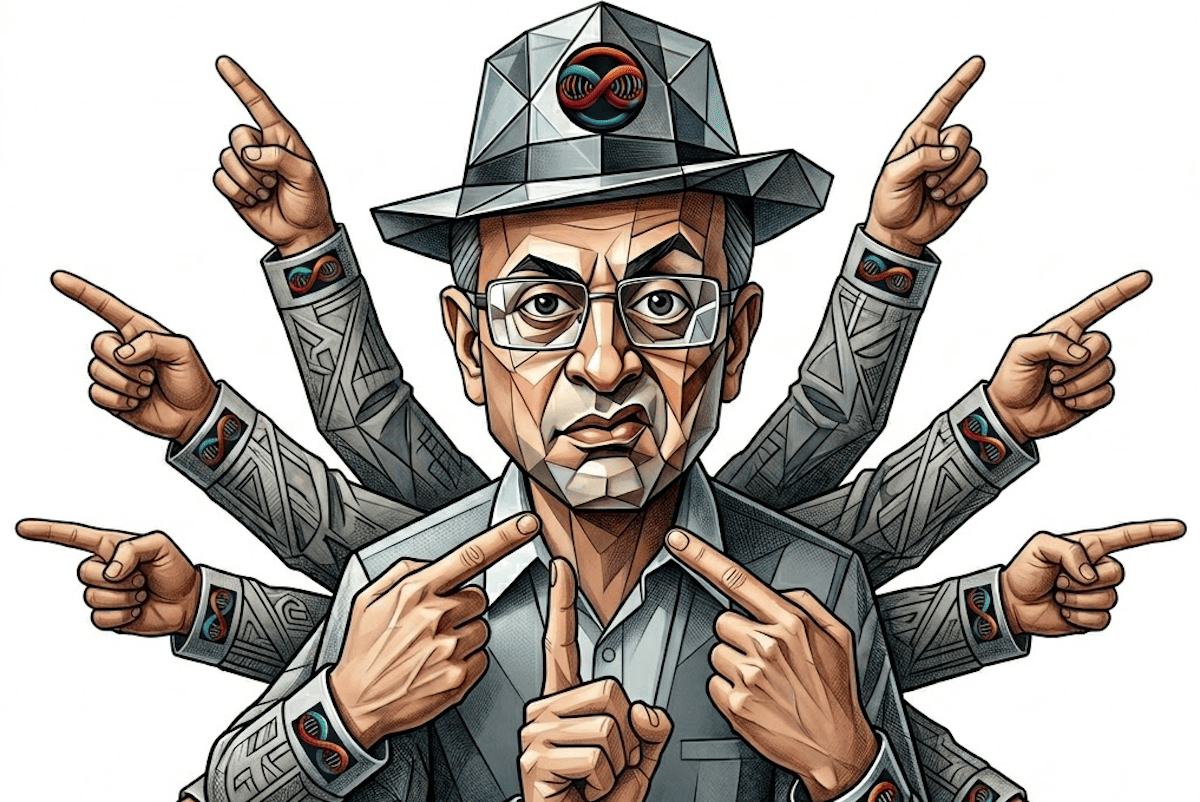
This is what I call pejoration: the systematic downgrading of evidence that does not fit a preferred narrative. It is a habit that afflicts not only Western analysts but also many in Asia who have internalized the Valley's hierarchy of value. The same dynamic plays out in Seoul and Taipei, where semiconductor and memory giants are quietly building the physical backbone of the AI revolution, yet are treated as second-tier players in the story.
The Perjury of Forecasts
The companion offense is perjuration: not merely being wrong, but repeatedly editing the record so that one's wrongness never has to appear in court. The standard hype-screamer arrives with a list of things today's AI 'cannot do,' garnished with inevitable totems of the South Sea Bubble and the dot-com peak. The diligent ones quietly perjure themselves, silently trimming that list every few weeks as models leap forward and share prices climb. The worst offenders shift the chart's starting point, recalibrate the axes, and engage in full-throated perjury to force the historical pattern to declare that the stock market must peak this quarter. They are not forecasting the future; they are quietly rewriting the present for refusing to resemble their favorite historical overlay.
This matters deeply for Asia. The region's AI winners — from TSMC in Taiwan to SK Hynix in Korea to a host of cloud and data-center operators across Southeast Asia — are not merely cyclical beneficiaries. They are structural linchpins. Yet the dominant narrative, crafted in San Francisco and amplified by global media, treats them as interchangeable suppliers. When China's export machine continues to churn out hardware that feeds AI demand, the response is often to frame it as a threat rather than a testament to the region's manufacturing depth.
I recently took perverse pleasure in adopting the joyless, beige syntax of a traditional macro-analyst just to argue that AI could be rapidly turning Seoul and Taipei into what the Valley is to the internet, Detroit is to autos, and Bengaluru is to services. The point was not to flatter those cities but to insist that the geography of value creation is shifting. The infrastructure layer is not a toll road; it is the road itself.
Self-Audit in the Mirror
It is delightful to examine other people's dogs. Today, unfortunately, mine is on the table. I am lucky enough to have no audience I must flatter, no sales team requiring a morning anthem, no investment committee demanding that the previous memo be retroactively sanctified. I need only one thing: positions that make money. That makes the exercise both simpler and more brutal. Where am I calling someone else's Tommy a dog? Where am I moving my own axes, changing my own definitions, and protecting my conclusions with fresh stationery?
This, then, is not the usual 'what could go wrong' pageant. Valuation, geopolitics, momentum, macro, and the other familiar guests arriving in their assigned costumes. It is an attempt to ask what those of us on the right side of the AI trade may now be too well-paid, too vindicated, or too drunk on the price screen to notice. The danger is not that the thesis is wrong; it is that we have stopped testing it against the evidence that does not flatter us.
The language we use matters. When we call Asian AI infrastructure 'picks and shovels,' we are not describing reality; we are constructing a hierarchy that serves our own biases. The same applies to the perjury of forecasts: we protect our egos at the cost of our judgment. The next correction, when it comes, will not announce itself with a headline. It will arrive quietly, in the gap between what we said and what we allowed ourselves to see.