For years, the global conversation about artificial intelligence has centered on one thing: semiconductors. Policymakers from Washington to Tokyo have drafted plans around silicon supremacy, as if the future of AI depended solely on the latest chip. Nvidia became the first chip company to reach a $5 trillion valuation, cementing its status as the industry's gold standard.
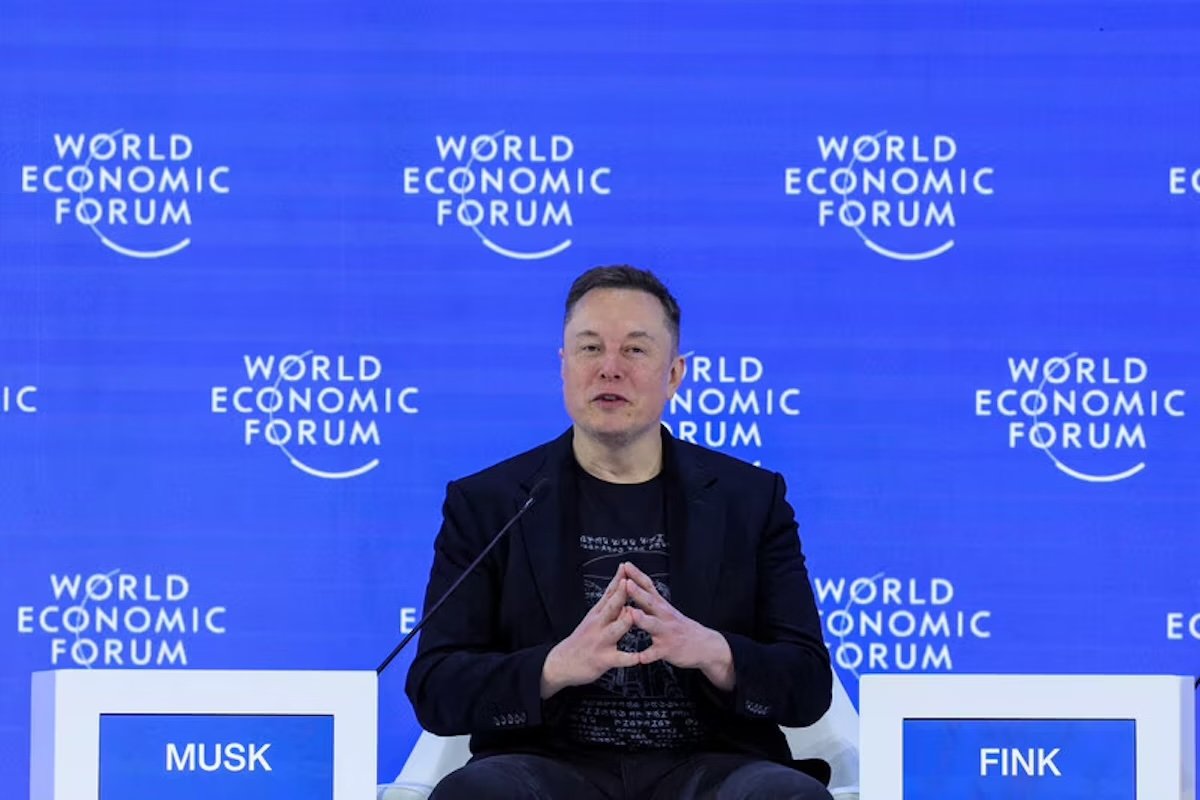
But that assumption is now being challenged. At the World Economic Forum in 2026, Elon Musk made a provocative remark: "It's clear that very soon, maybe even later this year, we'll be producing more chips than we can turn on — except for China." His core argument was that the biggest bottleneck to AI advancement is not computing hardware but a shortage of electrical power.
The launch of DeepSeek in 2025 has further disrupted conventional wisdom. Unlike other AI models that use the entire model for every query, DeepSeek activates only the relevant parts, improving performance per unit of compute. This algorithmic efficiency shows that hardware constraints can be partially compensated through optimization. Nations, companies, and investors are now realizing they may have less need to stockpile GPUs or chase the next hardware breakthrough.
Powering the AI Revolution
Every AI query — whether generating text, an image, or a video — requires billions of calculations, all running on electricity. One ChatGPT query uses about 10 times as many resources as a Google search. Generating a single AI image consumes as much power as charging a smartphone. Multiply that by hundreds of millions of queries daily, and the energy math becomes staggering.
According to Bloomberg NEF projections, data centers will account for 38% of the growth in electricity demand in the United States between 2024 and 2030, compared with just 6% in China. By 2030, US data centers will command almost 7% of total power demand, versus 2% in China. By 2035, US data center power demand is projected to reach 106 gigawatts — more than the entire output of America's nuclear fleet, which stands at 97 gigawatts.
A data center can be built in as little as 18 months, but bringing a new power supply online takes three times longer. In 2024, the US built only 888 miles of transmission lines, when it needs about 5,000 miles every year. In March 2025, the Center for Strategic and International Studies reported that electricity supply had become the biggest bottleneck for US companies. In data center-heavy states like Virginia, power prices have risen by as much as 267% over the past five years.
The International Energy Agency predicts global data-center electricity demand could rise from 415 terawatt-hours in 2024 to approximately 945 TWh by 2030, with AI as the single largest driver. This is why the AI race has moved from computational efficiency to energy abundance.
China's Clean Energy Advantage
In the West, governments and energy companies remain focused on protecting traditional industries like oil and natural gas. China, meanwhile, has invested heavily in solar panels, batteries, and wind power — not primarily as climate tools, but as industrial tools to create jobs, drive innovation, and strengthen the economy. As a result, China now possesses approximately 430 gigawatts of hydropower, 550–600 GW of wind power, and 850–900 GW of solar power, alongside 1,150 GW of coal-fired generation. These assets provide a stable energy foundation capable of supporting any industrial expansion or AI infrastructure challenge.
In 2024, China generated over 10,000 TWh of electricity — more than double any other country. Over the next five years, it could add more than 3.4 terawatts of new generating capacity, vastly exceeding expected additions in the United States. This matters because AI deployment ultimately depends on access to reliable and affordable electricity.
The United States retains extraordinary strengths: top universities, deep capital markets, an innovation culture, global dominance in the semiconductor industry, and the world's most influential AI companies. But as the landscape evolves, AI is no longer just a software competition — it is an infrastructure competition. In infrastructure, expertise and scale matter.
The upcoming decade will reveal whether the decisive factor in the AI race will be silicon or electricity. If AI becomes a competition over electrical power, then the most important geopolitical story of the next decade may not be happening in Silicon Valley. For more on how energy infrastructure shapes regional dynamics, see our analysis of China's Nuclear Export Push Reshapes Southeast Asia's Energy Future and China's Hami Nuclear Expansion: Hardening Deterrent for Taiwan Contingency.